Ayyakonda: A village steeped in tradition

In the heart of Kurnool district lies Ayyakonda, a village that defies time with its deeply rooted customs and traditions.
Kurnool : In the heart of Kurnool district lies Ayyakonda, a village that defies time with its deeply rooted customs and traditions. Also known as "I Konda," this small settlement in the Gonegandla mandal is home to approximate-ly 200 families from the Mala Dasari community. For over two centuries, these families have preserved a unique way of life, standing as a cultural enclave in an evolving world.
Honoring the Departed: Burials at Home
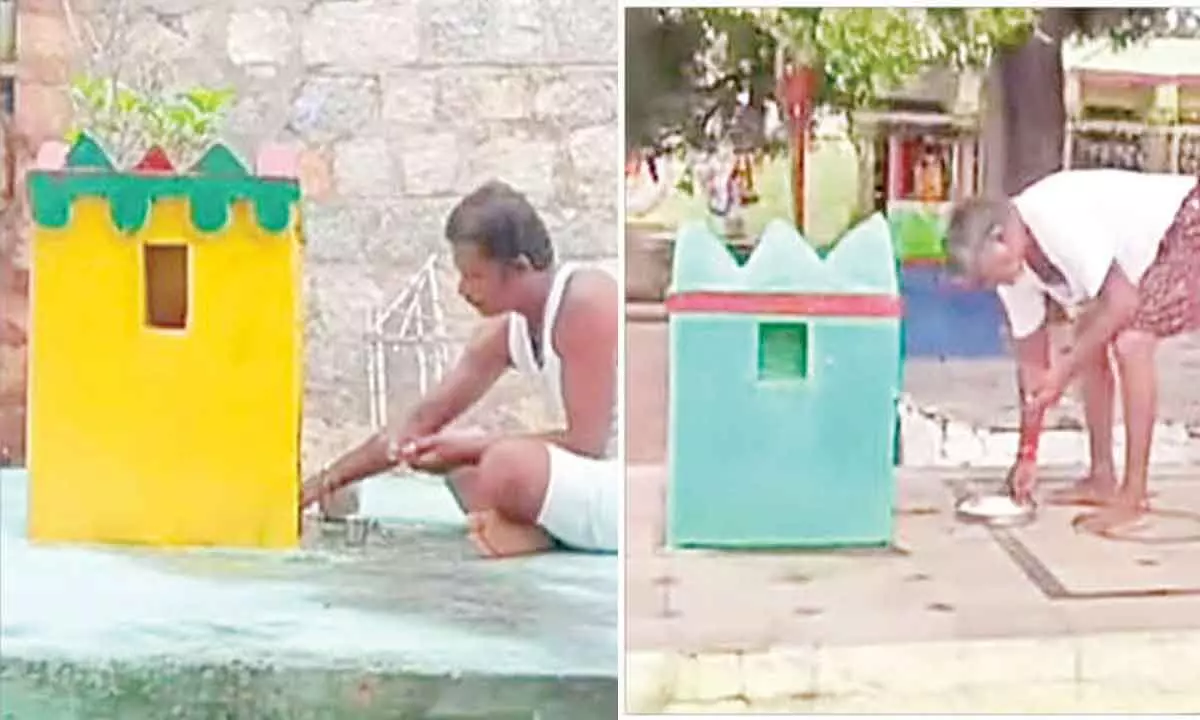
One of the most striking customs in Ayyakonda is the practice of burying the deceased within the premises of their homes. Unlike most villages that have designated burial grounds, here, tombs are constructed in front of homes, serving as both memorials and sacred places of worship.
The villagers believe that their ancestors continue to guide and protect them. Before every meal, the first portion of food is offered at these tombs as a mark of respect. "We see them as part of our daily lives," says Jayalakshmi, an agricultural laborer.
This practice underscores the villag-ers’ profound connection with their ancestry, where death does not mark separation but a deeper bond between the living and the departed.
Marriage:A Tradition of Exclusivity
Endogamy is strictly observed in Ayyakonda, with marriages confined within the Mala Dasari community. This practice has been upheld for generations, ensuring the purity of their traditions. A past incident reinforced their belief in this custom. Two families from the Valmiki Boya community once attempted to settle in the village, only to mysteriously fall ill and leave. "We believe our village is under the pro-tection of our splinter gods," shares a resident. Whether due to coinci-dence or divine intervention, the villagers remain steadfast in their mar-riage customs.
A Ban on Cots:The Curse That Became Tradition
Among the unusual customs of Ayyakonda is the prohibition of sleeping on cots. Every villager, including pregnant women and the elderly, sleeps on the floor. This practice is not religious but stems from an old legend.
A local priest recounts that during the marriage of a powerful landlord, Nalla Reddy, his in-laws refused to give him a cot as dowry. Enraged, he cursed Ayyakonda, declaring that no one in the village should ever sleep on a cot again. Over time, this decree became a tradition. However, modernization is gradually influencing change, with some families intro-ducing piped cots into their homes.
Spiritual Life:Guardian Deities and Ancestral Worship
The spiritual core of Ayyakonda is anchored in its temples—Nalla Reddy Gudi and Gangamma Gudi. These sacred spaces, along with the ancestral tombs, are the epicenter of the villagers' faith. Festivals and rituals dedi-cated to their deities are observed with unwavering devotion. "Our gods protect us, and we make sure to honor them with prayers and offerings," an elder explains.
Preserving Heritage in a Changing World
Despite the encroachment of modernization, Ayyakonda remains a proud guardian of its traditions. While some may view these customs as restric-tive, for the villagers, they are sacred elements of identity and belonging. As India advances, villages like Ayyakonda serve as poignant reminders of the country’s rich cultural diversity. Whether these customs will endure the test of time or gradually fade remains uncertain, but for now, Ayya-konda stands resilient—where the past and present exist in harmony.