Energy Efficiency Services Limited (EESL)

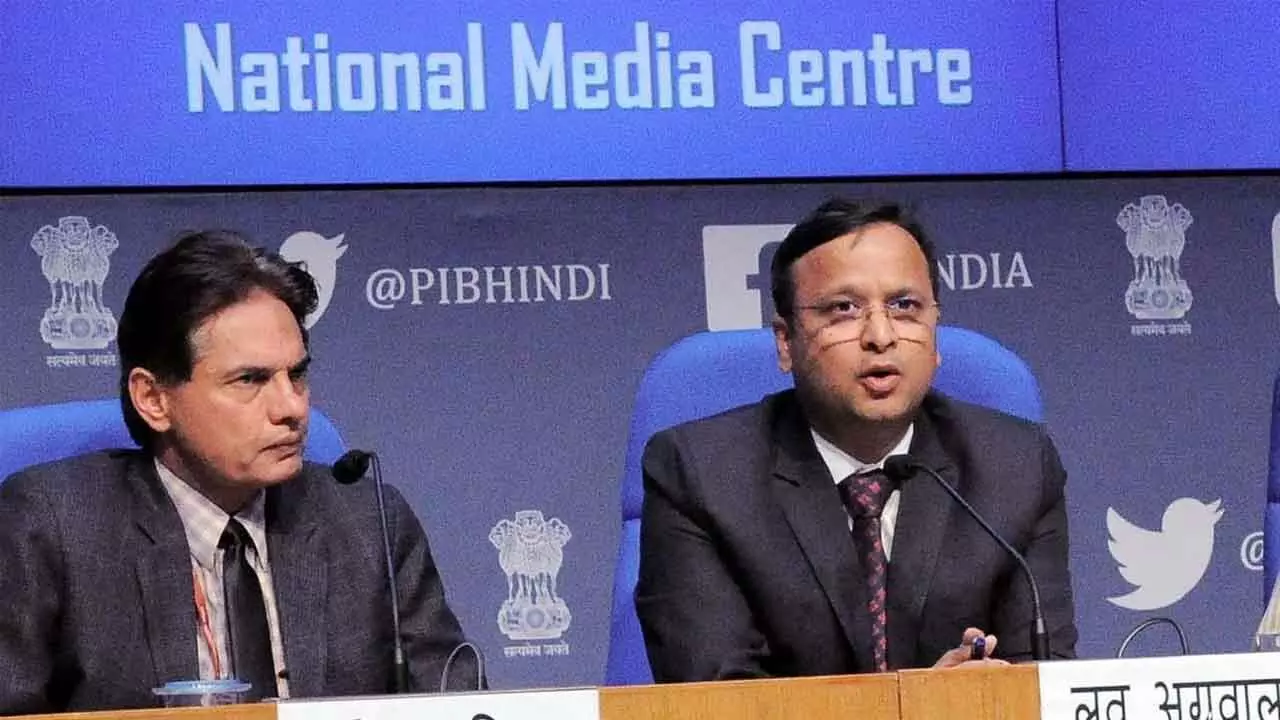
Anil Mallik, Secretary women & Child development Government of India along with Additional Secretary Lav Agarwal, addressing the stakeholders and emphasised the need for adopting the best practices particularly the Energy Efficient Induction Stoves for sustainable economic development and Environmental Benefits..( File photo)
A Joint Venture of PSU's under Ministry of Power, Govt. of India
- India’s Clean Cooking Mission Gains Momentum Nationwide
- Clean Cooking Mission Gains Pace; Andhra Pradesh Leads National Shift
- EESL Constitutes Special Cells Nationwide Amid Global Energy Challenges
- Action Plan Rolled Out to Meet Rising Demand for Energy-Efficient Induction Stoves
- Induction Cooking 30% More Efficient Than Traditional LPG Methods
- Centre Appreciates Andhra Pradesh’s Vision for 100% Anganwadi Coverage
- Andhra Pradesh Emerges as Trendsetter in National Efficient Cooking Programme (NECP)
- Anil Malik - Secretary, Ministry of Women & Child Development (GOI), Hails AP’s Move to Eliminate Fossil Fuel Use in Anganwadis
- AP Initiative Positioned as a Role Model for Other States to Follow
- EE Induction Stoves to Anganwadis on Saturation Basis: A Proactive Step, Says Additional Secretary Lav Agarwal
- AP CMO Reviews Progress with EESL to Fast-Track Full Implementation
- Chief Minister N. Chandrababu Naidu is Keen on Timely Completion of 100% Anganwadi Coverage...CMO
Vijayawada AP, 22nd March 2026: The Government of India’s ambitious National Mission for Efficient and Clean Cooking under the National Efficient Cooking Programme (NECP) is rapidly gaining momentum across the country, marking a transformative shift towards sustainable energy, economic efficiency, and women’s welfare.
Several States and Union Territories—including Uttar Pradesh, Andhra Pradesh, Assam, Rajasthan, Jharkhand, Bihar, Madhya Pradesh, Gujarat, Kerala, and Ladakh—have expressed strong interest in adopting technology-driven Energy Efficient (EE) induction cooking solutions. These modern systems are not only safer and environmentally friendly but are also nearly 30% more efficient and significantly more economical than traditional LPG-based cooking methods.
Launched by the Ministry of Power previously by involving BEE and EESL, the NECP aims to deliver direct economic benefits to households, strengthen India’s clean energy ecosystem, and accelerate progress towards national commitments under the Sustainable Development Goals (SDGs).
With a proven track record in implementing large-scale energy efficiency programmes such as UJALA and the Street Lighting National Programme (SLNP), Energy Efficiency Services Limited (EESL)—a joint venture of Central Public Sector Undertakings under the Ministry of Power—has been designated as the national implementing agency for NECP.
EESL has initiated a focused action plan, including the establishment of dedicated state-level cells to aggregate demand and fast-track implementation.
Global technology based Energy Efficient Induction Stove developed by EESL which ensures 30 percent more efficient than traditional LPG methods.
In a major endorsement, the Centre has recognized the Andhra Pradesh–EESL partnership as a benchmark model for clean cooking reforms. Following high-level discussions with Union Minister for Power, Housing and Urban Affairs Shri Manohar Lal, Chief Minister Shri N. Chandrababu Naidu has taken decisive steps to roll out energy-efficient cooking solutions across the state.
Under Phase I, EESL has successfully supplied energy-efficient induction stoves along with quality utensils to 11,400 Anganwadi Centre’s (AWCs) in collaboration with the Women and Child Welfare Department. Independent third-party assessments have reported high satisfaction levels among beneficiaries.
Building on this success, Phase II has been initiated, with orders placed for supplying induction stoves to the remaining 44,346 AWCs—aiming for 100% coverage of all 55,746 centres.
This landmark initiative positions Andhra Pradesh at the forefront of India’s clean energy transition, advancing environmental sustainability, economic prudence, and women-centric welfare. It also reinforces India’s global commitment to climate action and sustainable development. Under these Circumstances and amidst the prevailing Global situation where the many countries are grappling with an energy crisis and supply short falls, the ambitious vision and early decision of AP Government was appreciated by the Union government top officials.
Anil Mallik - Secretary, Ministry of Women & Child Development, Govt. of India in a recent National conference in Udaipur, Rajasthan has complimented the Govt. of Andhra Pradesh for taking a bold decision to supply Energy Efficient Induction Stoves with Utensils to all AWCs on Saturation basis with the support of EESL. “With this timely Initiative the Andhra Pradesh took lead in eliminating Fossil fuel in all Anganwadi’s & others need to follow they’re on some day or the other”, Anil Mallik said.
Lav Agarwal, Additional Secretary in the same dept. of GOI has termed the significant step of AP Govt. as a benchmark initiative which will have major impact on economic and ecological benefits as well as women empowerment.
Consequent to the Chief Minister's direction PS Pradyumna Secretary to CM has interacted over on line meeting with A. Surya Kumari Secretary and M. Venu Gopal Reddy Director of the W&CW dept. and Akhilesh Kumar Dixit CEO, EESL, Delhi and emphasized the need to complete the process of supplying 100 percent EE Induction Stoves to all 55,746 AWCs and make the Centres as a role model to others in the country..
Economic and Environmental Benefits of Transitioning from LPG to Induction Cooking
Energy Efficiency: Induction cooktops are 30% more efficient than traditional LPG methods.
Cost Savings: Switching to 1200W induction stoves will significantly reduce recurring LPG costs, with projected annual savings of ₹24 crore.
Environmental Impact: The move is expected to avoid approximately 28,327 tons of CO₂ emissions annually.
Safety and Health: Induction cooking eliminates open flames, reducing fire hazards and improving kitchen safety.
Better Working Conditions: The shift will provide cleaner, cooler, and safer working environments for Anganwadi workers, especially during hot summer months.