Forest dept ramps up efforts to deal with human-elephant conflict

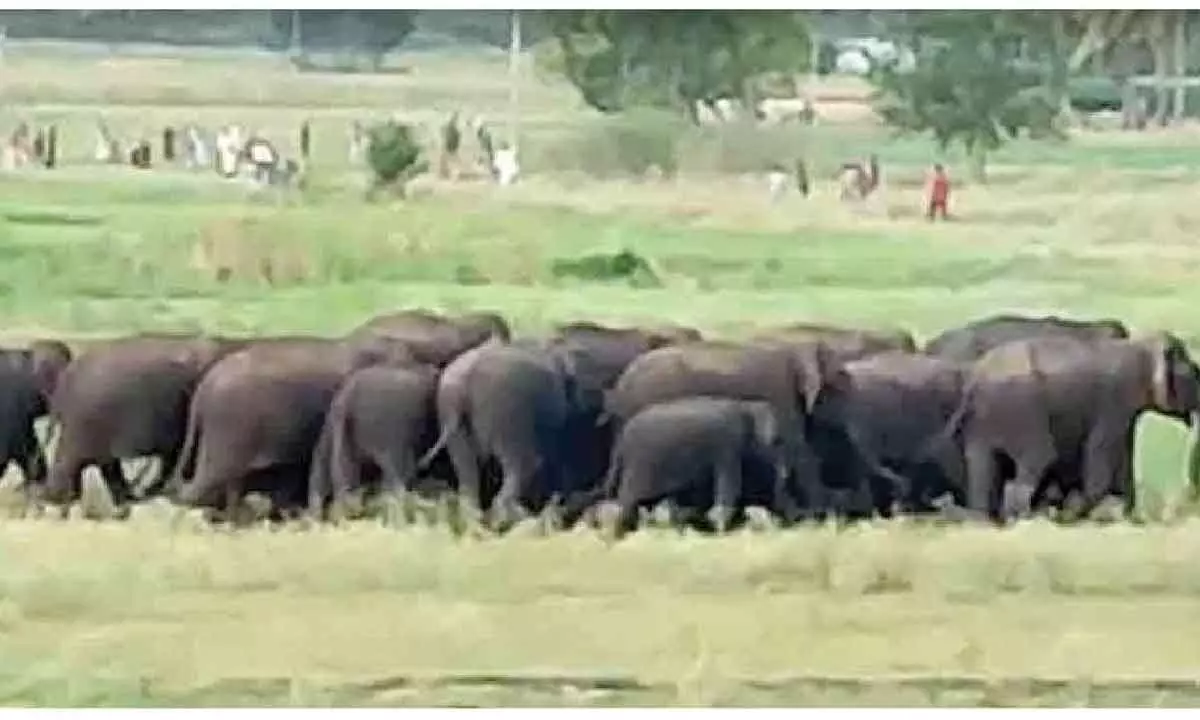
The human-elephant conflict in Chittoor and Tirupati districts has reached a critical juncture, with frequent elephant raids threatening lives and livelihoods.
Tirupati : The human-elephant conflict in Chittoor and Tirupati districts has reached a critical juncture, with frequent elephant raids threatening lives and livelihoods. The latest tragedy occurred in Naravaripalle, where a young local leader, M Rakesh Choudary, was fatally attacked. This follows several similar incidents, including the trampling of a farmer, Reddy Naik, in PMK Than-da, Ramakuppam Mandal and the death of Raja Reddy in Bandarlapalli near Piler on October 15.
The crisis extends beyond human fatalities. In August, the carcass of a young elephant was found near Talakona forest, highlighting the growing strain on wildlife. Over the past 13 years, 46 elephants have died in Chittoor due to electrocution, accidents and human interventions. The district, home to 90–110 resident elephants and numerous migratory herds, faces shrink-ing forest habitats and increased human encroachment, intensifying the conflict.
Chittoor’s geography, encompassing the Koundinya Wildlife Sanctuary and Seshachalam ranges, makes it a crucial corridor for elephant movement. Elephants, driven by the need for food and water, are increasingly entering farmlands, destroying crops and sowing panic among villagers. Recent sightings of a 15-elephant herd near Pulicherla panchayat have further heightened tensions.
In response, the forest department is ramping up efforts to mitigate the crisis. Speaking to The Hans India, conservator of forests, C Selvam, emphasised the importance of adhering to safe-ty protocols, particularly at night. “Movement in alert zones must be avoided and no one should attempt to drive elephants away on their own”, he stated. Forest teams are monitoring elephant movements, issuing alerts through Panchayat-level WhatsApp groups and compensating farmers for crop losses after thorough evaluations.
Residents are urged to report elephant movements to the forest or police departments, which are working closely to manage the situation.
He further explained that forest staff maintain a safe distance while driving elephants, avoiding direct interaction with the herd to prevent agi-tation. Crowds make the task more challenging, so elephants are guided away cautiously and from a distance to ensure their gradual retreat without causing distress.
To manage the herds, the district has two Kumki elephants, with plans to introduce four more from Karnataka. A dedicated camp is being established in Palamaner to train and deploy these elephants.
While these measures aim to address the immediate threats, experts underscore the need for long-term solutions, including habitat restoration and reducing human encroachment.