Meet to boost drug and device safety monitoring held

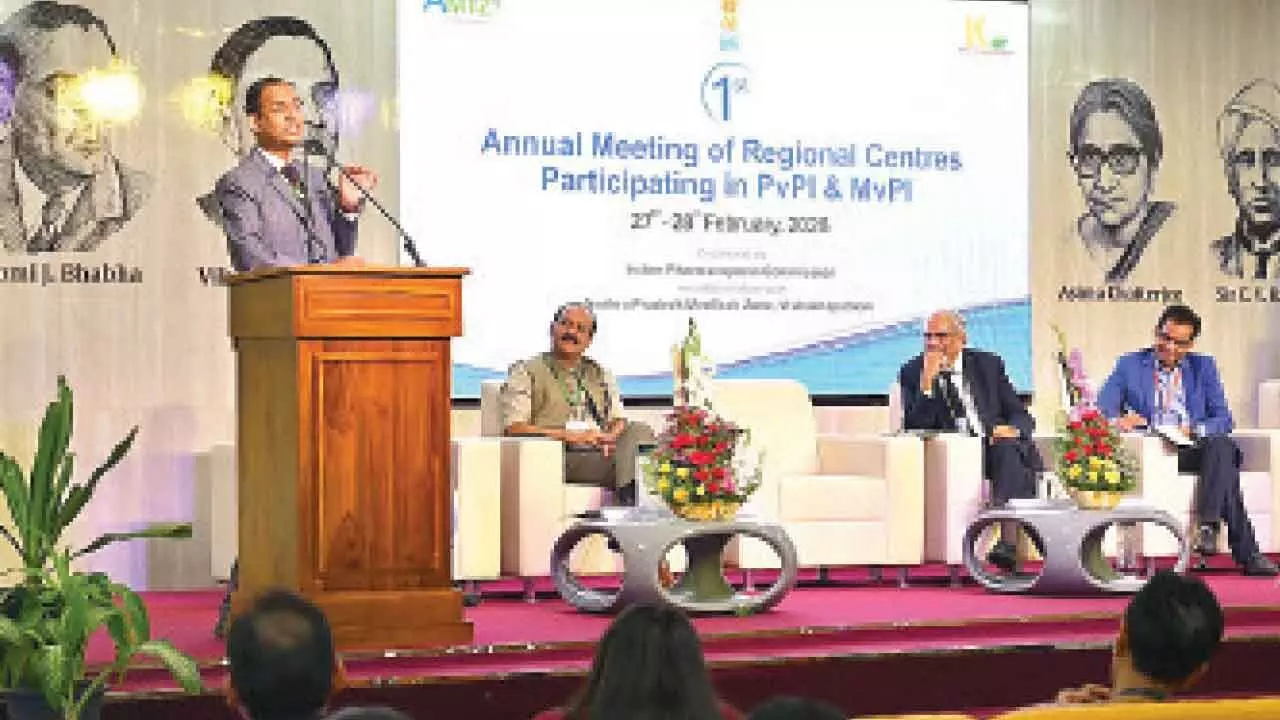
Visakhapatnam: The first annual meeting of regional centres under the Pharmacovigilance Programme of India (PvPI) and the Materiovigilance Programme of India (MvPI) was held in Visakhapatnam on Friday. The meeting aimed to improve coordination among regulators, hospitals, Adverse Drug Reaction (ADR) Monitoring Centres, and Medical Device Monitoring Centres.
The event was organised by the Indian Pharmacopoeia Commission (IPC) along with the Kalam Institute of Health Technology (KIHT) and the Andhra Pradesh MedTech Zone (AMTZ). Experts and officials from across the country took part in the discussions.
With the growing use of medicines and medical devices, monitoring their safety has become increasingly important. Pharmacovigilance focuses on identifying and preventing side effects caused by medicines, while materiovigilance deals with risks related to medical devices. Strengthening these systems helps protect patients, improve regulatory standards, and support better decision-making in healthcare.
Senior officials from regulatory bodies, top medical institutions, and the World Health Organization Country Office for India shared their views on global best practices and India’s expanding role in patient safety monitoring.
During the inaugural session, V Kalaiselvan, Secretary-cum-Scientific Director of IPC, said India must move from simple awareness-based reporting to a results-driven pharmacovigilance system with measurable outcomes.
Senior representatives from the All India Institute of Medical Sciences (AIIMS), including Professors Ashok Puranik and Y K Gupta, along with Jitendra Sharma, Managing Director and Founder CEO of AMTZ, and Kavita Kachroo, Chief Operating Officer of KIHT, stressed the need for strong collaboration among institutions to build effective monitoring systems.
Jitendra Sharma said patient safety should now include not only pharmacovigilance but also materiovigilance, biovigilance, and radiovigilance, as medical devices are becoming more advanced and widely used.
He added that what started as a small initiative has grown into the world’s largest medical technology cluster, helping India produce safer and more affordable medical devices.
The ADR PvPI 2.0 mobile application was also launched during the event. The app aims to make it easier to report adverse drug reactions, improve real-time data collection, and increase participation in drug safety monitoring across the country.