Queer citizens continue to face social & legal challenges

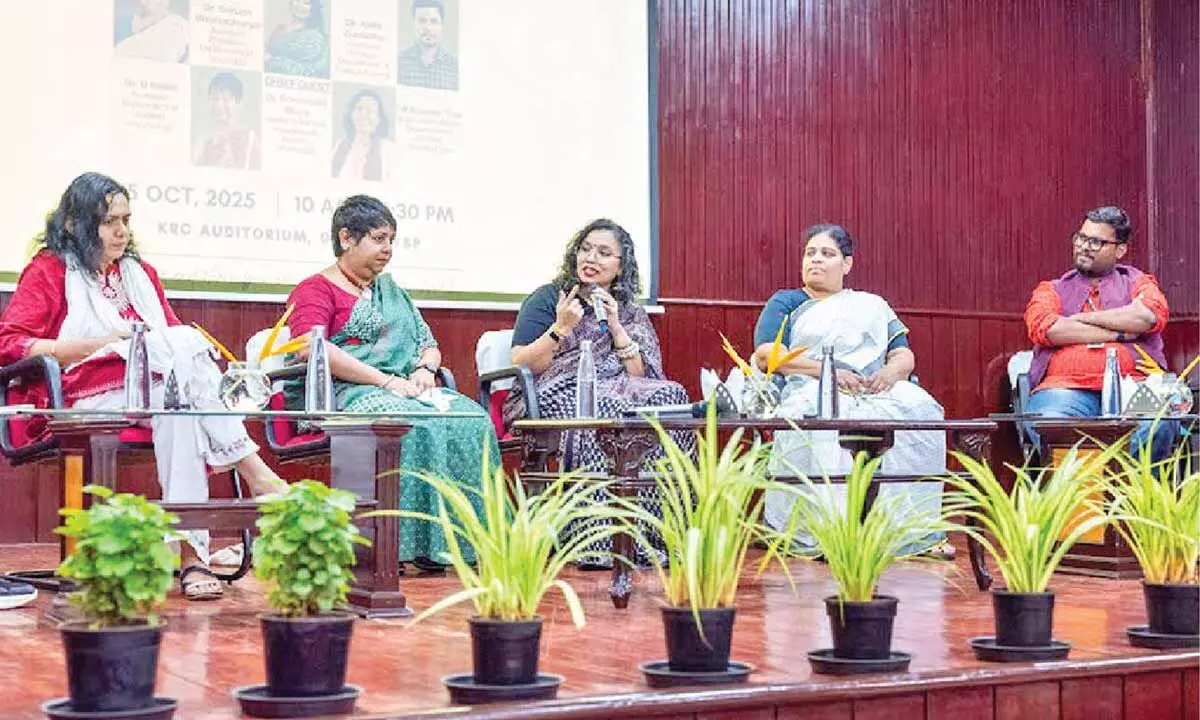
The discussions centred on the ongoing social challenges faced by the queer community
Visakhapatnam: Despite significant legal progress made in recent years, queer citizens in India continue to face persistent social and legal barriers, mentioned academic experts during a thought provoking panel discussion that focused on ‘Indian queer realities.’
Organised by the Student Life at GITAM Deemed to be University here on Thursday, the panel saw experts across disciplines, including B. Nalini, Professor, applied psychology, Srirupa Bhattacharya, Assistant Professor, Sociology, Naveen Teja, Assistant Professor, School of Law, Asifa Zunaidha Assistant Professor, Political Science and Sravanthi Maya, health and medical psychologist.
Reflecting on India’s rich gender-diverse heritage, the panelists highlighted that transgender community held respected roles in ancient and medieval society, often serving as political advisors, administrators, generals and royal guards.
However, the status was drastically undermined during the British colonial era. The Criminal Tribes Act of 1871 marked a dark turn, as it labeled several communities, including the Hijras, as ‘habitually criminal’. The Act mandated registration, surveillance, and restrictions on movement systematically marginalising these communities and disrupting their traditional roles, the panelists highlighted.
A key turning point came with the landmark 2014 Supreme Court judgment, which recognised transgender persons as a legal ‘third gender’ and affirmed their right to self-identify without requiring medical intervention.
While this legal recognition was celebrated as a progressive step, the panelists acknowledged that challenges continue to persist. However, they expressed optimism, noting that the younger generation is increasingly embracing inclusivity and demonstrating solidarity with queer communities.