Rs. 10,319 cr works to be grounded under AMRUT 2.0

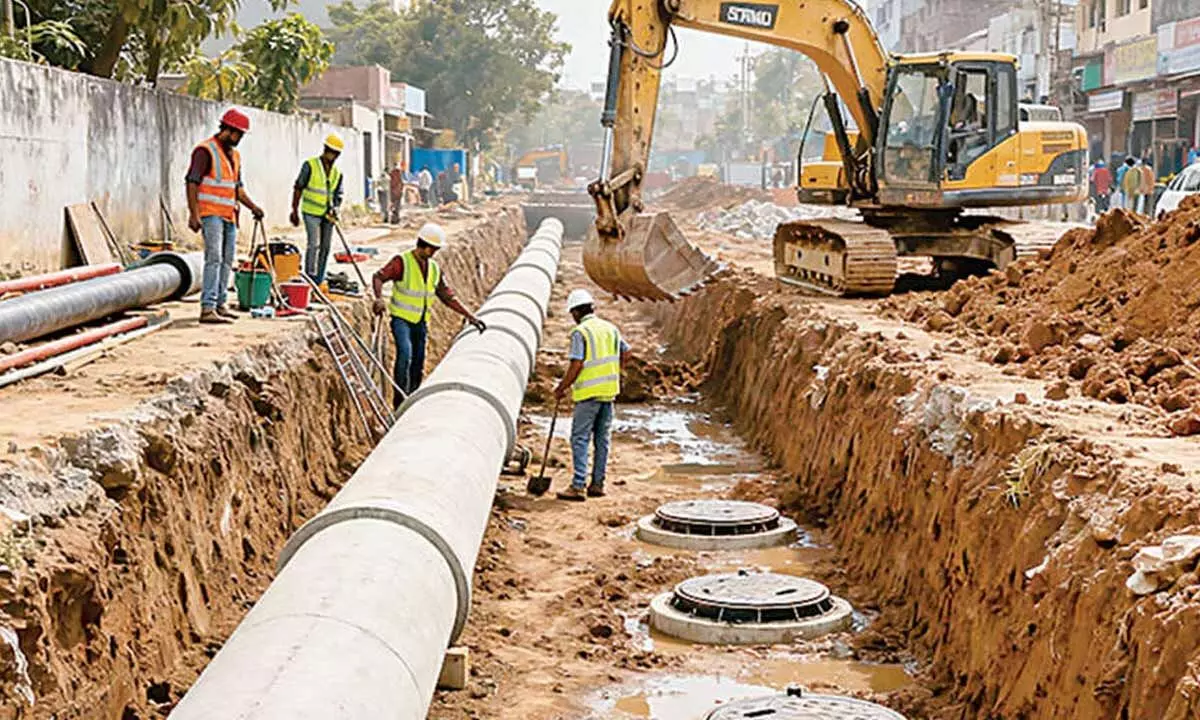
The state govt approves 281 projects under AMRUT 2.0 to enhance urban water supply and sanitation, implemented via the Concessionaire Hybrid Annuity Model
Vijayawada: The state government approved 281 projects worth Rs 10,319.93 crore under the AMRUT 2.0 programme to upgrade water supply and sanitation systems in urban areas across the state. The projects will be implemented under the Concessionaire Hybrid Annuity Model through the Andhra Pradesh Urban Finance and Infrastructure Development Corporation (APUFIDC).
The projects were cleared under the Revised State Water Action Plan Tranche I and II. Of the total project cost, Rs 6,477.03 crore has been earmarked for capital expenditure and Rs 1,498.97 crore for operation and maintenance over ten years. The remaining Rs 2,343.93 crore covers the interest component.
Funding will come from multiple sources: Rs 2,470.56 crore from the Central government under AMRUT 2.0, Rs 2,490.72 crore from the state government, Rs 924.78 crore from the 15th and 16th Finance Commissions and Rs 590.97 crore from urban local bodies.
To fast-track implementation, the government has allowed several financial relaxations. Concessionaires can now furnish performance security of 2.5 per cent of the contract value in the form of a bank guarantee or insurance surety bond.
The standard 7.5 per cent retention in each running bill has been waived to align with the Hybrid Annuity Model followed by the National Highways Authority of India.
The APUFIDC has been authorised to raise up to Rs 2,980.90 crore as concessionaire support, covering 60 per cent of the capital expenditure in each package. The remaining 40 per cent will be borne by the authority. Implementing agencies have been instructed to revise cost estimates using the Schedule of Rates for 2025–26 as issued by the Water Resources Department.
Officials said the project mark a major push toward improving urban water infrastructure through modern financing mechanisms and private sector participation under AMRUT 2.0.