tate govt announces Rs. 66,523 cr urban infra mission

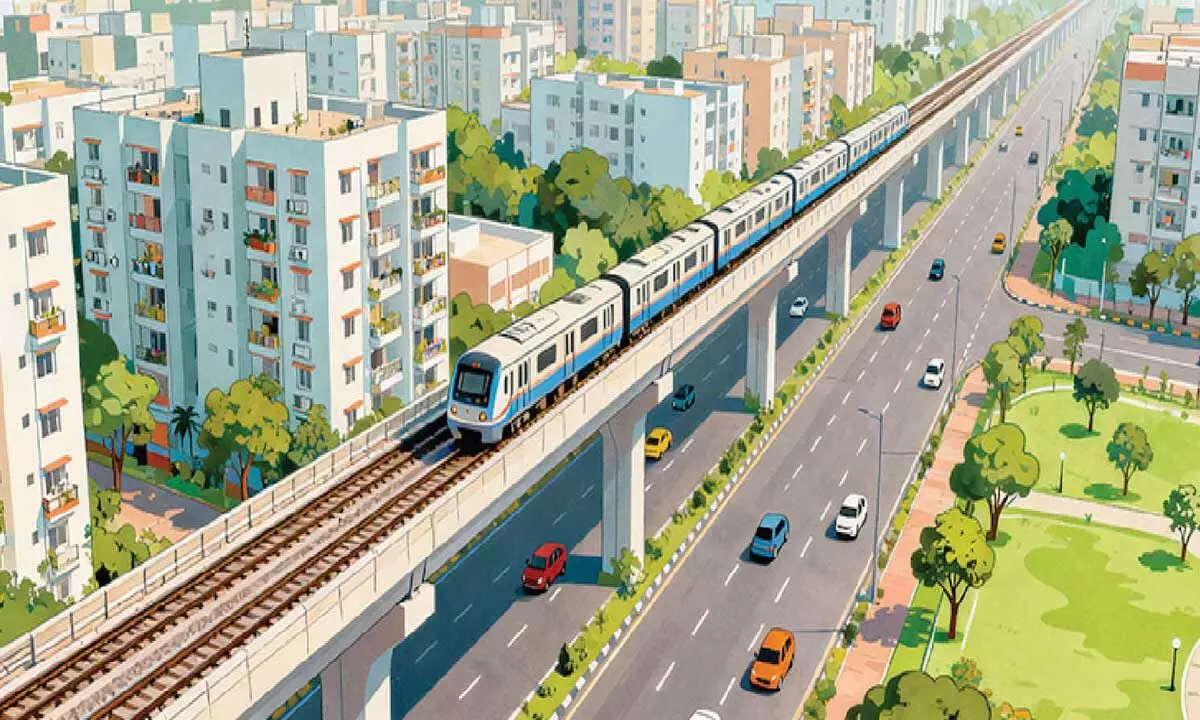
The massive PPP-driven mission is set to reshape the state’s urban landscape with smart cities, modern mobility, green standards and next-gen utilities
Vijayawada: The state government on Monday announced Rs 66,523 crore urban infrastructure acceleration mission through Public–Private Partnership (PPP) to transform the state’s cities into high-growth, future-ready economic hubs.
The municipal administration and urban development (MAUD) department projected an investment requirement of Rs 66,523 crore by 2029 across 12 priority sectors —including smart water systems, modern transit corridors, integrated mobility, sustainable housing, and next-generation urban utilities — excluding Amaravati’s capital city development.
These interventions are expected to contribute Rs 2.8 lakh crore to the Gross State Domestic Product (GSDP), according to an official release. To catalyse PPP-led urban transformation, the state government has allocated Rs 2,000 crore as Viability Gap Funding (VGF) in the current year’s budget. The projects are estimated to generate 2.3 lakh direct and indirect jobs, with a focus on 45 per cent skilled youth employment and 35 per cent in women’s participation in emerging urban services and technologies.
“Our benchmarks aim to meet global urban infrastructure standards while ensuring a superior living experience for citizens. These initiatives will create unprecedented economic momentum and firmly position Andhra Pradesh as one of India’s fastest-growing urban development hubs,” said S Suresh Kumar, principal secretary o MAUD department.
As part of this mission, Andhra Pradesh will prioritise development of five smart cities with deep IoT integration, 2,500 km of upgraded urban road networks, 15 new urban transit systems and statewide adoption of green building norms targeting 40 per cent higher energy efficiency.
The state aims to attract Rs 35,000 crore in Foreign Direct Investment (FDI) into eight proposed economic zones by deploying innovative financing models, technology-driven governance, and structured PPP frameworks.
A dedicated PPP unit, a full policy framework, and a detailed execution and risk-mitigation roadmap have already been established.
The Principal Secretary also highlighted strong progress on the state’s 33-project PPP pipeline, spanning Waste-to-Energy, Housing, Urban Mobility, Tourism, Renewable Energy and Commercial Infrastructure.
Notably, Rs 1,254 crore waste-to-energy projects across Nellore, Rajahmundry–Kakinada, Kurnool, Kadapa, Vijayawada and Tirupati clusters are advancing steadily, while major initiatives like MIG Housing, Rushikonda Land Monetisation, and the Iconic Tower have entered active bidding stages.
The principal secretary directed all implementing agencies to fast-track approvals, expedite statutory clearances, and address stakeholder concerns to ensure timely execution of ongoing and upcoming projects.