Thundershowers bring relief from heat

Lightning strike claims one life near Amaravati
Vijayawada: Thundershowers accompanied by lightning lashed several districts of Andhra Pradesh on Wednesday, bringing much-needed relief from the prevailing heatwave-like conditions, even as one person lost his life in a lightning strike. A man died after being struck by lightning near Mary Matha High School in Tullur under the Amaravati region, police said.
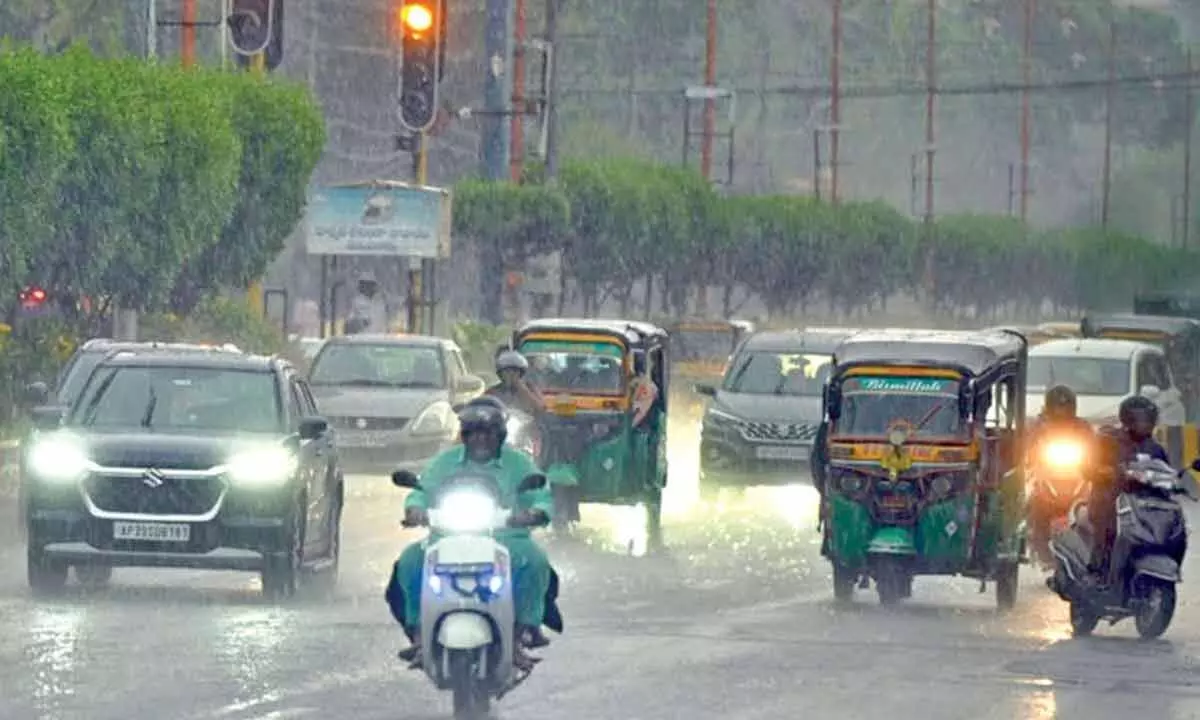
The weather changed abruptly in Krishna district, with rain reported in Vuyyuru, Kankipadu, Penamaluru, Gannavaram and Unguturu. Vijayawada witnessed moderate rainfall accompanied by thunder and lightning, causing inconvenience to people due to the unexpected showers. In Nuzvid of Eluru district, lightning struck a house, partially damaging the parapet wall.
According to the Andhra Pradesh State Disaster Management Authority (APSDMA), thunderstorm activity intensified during the afternoon and continued till late night in some areas.
NTR, Krishna, West Godavari, Eluru and Prakasam districts received moderate to heavy rainfall, while Konaseema, Sri Sathya Sai and Nandyal districts recorded moderate showers accompanied by lightning.
APSDMA Managing Director Prakhar Jain urged the public to avoid standing under trees during thunderstorms. He warned that gusty winds with speeds of 40–50 kmph are likely in some regions and advised people to remain alert.
Further, he said sudden rainfall followed a week of high temperatures ranging between 36°C and 38°C across the State, including Vijayawada, where heat and humidity had caused considerable discomfort.
Weather experts attributed the change to moisture build-up and intense surface heating, which triggered thundercloud formation.
The untimely showers have raised concerns among farmers, as crops such as green gram, black gram, red gram, groundnut and maize are currently in the harvesting stage. In several areas, farmers rushed to cover their produce with tarpaulin sheets to prevent damage. Experts noted that such pre-summer thundershowers are common in March, though they are usually brief and localised.