




- SC refuses to entertain plea of Delhi riots accused to attend law classes in Ghaziabad
- AICC chief Kharge's remarks against PM Modi reflect Congress' declining political culture: Karnataka BJP
- PM Gati Shakti model paves way for people-centric infrastructure
- Google Messages tests AI scam detection to flag risky texts and links.
- Dhanush’s Fan Club Rebranding Fuels Tamil Nadu Political Buzz, TVK Dismisses Challenge
- Instagram Arrives on Apple TV With Reels, Videos and Live Shows
- No merger with NCP(SP) ahead: Ruling NCP reaffirms alliance autonomy
- Assam’s conviction rate jumps to 30.88 pc from 6.1 pc in five years: CM Sarma
Aegis PPF R&D: How PPF Is Tested for Heat, Monsoon, Dust and Rock Chips
In Short
Explore how Aegis PPF is tested for extreme heat, monsoon humidity, dust, road debris and rock chips to protect car paint in Indian driving conditions.

Share :
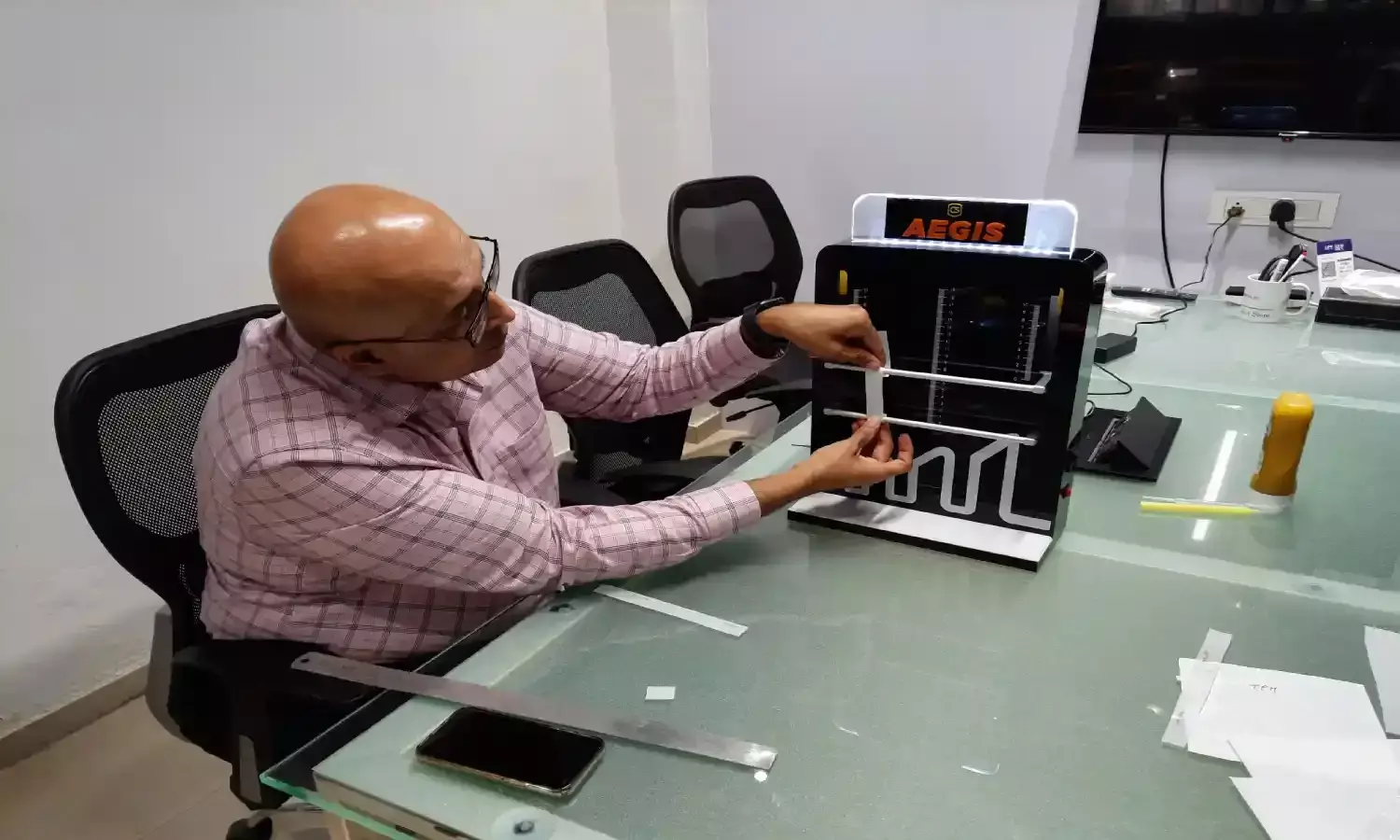
Aegis PPF R&D: How PPF Is Tested for Heat, Monsoon, Dust and Rock Chips
In India, a car may experience prolonged exposure to high temperatures, intense sunlight, humidity, heavy rainfall and airborne contaminants. Highway driving can also expose vehicles to small stones and road debris, while urban driving brings the risk of minor abrasions, accidental contact and surface contamination.
These factors are among the reasons more car owners are opting for paint protection film (PPF) to help preserve the original colour and shine of their vehicles. A premium PPF must maintain its appearance, adhesion and protective properties through repeated exposure to these elements. This makes research, material selection and product testing essential to developing a film intended for long-term use.
What Goes into Testing a Paint Protection Film?
Testing car PPF involves evaluating multiple performance characteristics rather than relying on a single measure of quality. Each test is designed to reveal how a particular material or component responds to a specific type of stress.
- Heat and temperature resistance: Since vehicles can remain parked outdoors for extended periods, temperature exposure tests and thermal cycling can help assess whether a film maintains its physical properties and appearance as conditions change. These evaluations can also help identify potential issues with the film or its adhesive.
- Weathering and UV exposure: These tests assess how the film responds to prolonged sunlight exposure. Accelerated weathering evaluations can help identify changes in colour, clarity and surface condition. These are important considerations when developing films designed to remain optically clear over a vehicle’s paintwork.
- Humidity and water exposure: These evaluations are particularly relevant in monsoon conditions. Assessing how a film and its adhesive respond to moisture can help identify potential weaknesses in adhesion or changes in appearance. Water exposure tests alone, however, cannot replicate every challenge associated with prolonged outdoor use.
- Impact and abrasion testing: These tests help assess how the film responds to contact, surface wear and controlled impacts. They are particularly relevant because one of the primary functions of PPF is to help protect the underlying paint from everyday damage.
- Self-healing and surface-performance evaluations: These tests examine how the film responds to light surface marks under specified conditions. Films with self-healing properties are engineered to recover from minor scratches, scuffs and abrasions when heat is applied to the affected area, allowing the surface to return towards its original condition.
Aegis Films has been developing films designed to balance physical protection, optical clarity, flexibility, surface durability and reliable adhesion. Its R&D lab conducts a series of tests to evaluate how its PPF products perform under the various conditions vehicles encounter outdoors.
Anckur Sama, founder of CarzSpa Detailing Studios and Aegis Films, explains why regional driving conditions are an important consideration in the company’s product-development approach. “Much of the established PPF technology in the market was developed around requirements and conditions seen in other parts of the world, including Europe. When we looked at the realities of driving in India and across South Asia, we felt there was a need to pay closer attention to the combination of heat, humidity, road exposure and everyday wear that vehicles experience here. A film needs to do more than look good when it is first installed; it needs to retain its performance as the car is used.”
As Indian car owners become more aware of paint protection, expectations are shifting from an attractive finish at the time of installation to reliable performance throughout the ownership period. Discussing Aegis Films’ XG Series, its most advanced PPF range, Anckur Sama says, “We wanted to explore whether combining polycarbonate with TPU could help us push the performance of PPF further, particularly in areas such as strength, clarity and self-healing. The XG Series emerged from that direction of R&D and testing. The important part is not simply introducing a different material, but engineering a film in which the material combination delivers meaningful benefits for the vehicle owner.”
Ultimately, the purpose of testing is not simply to demonstrate that a film can withstand a particular challenge in isolation. It is to build confidence that the finished product can protect a vehicle’s original paint while maintaining its appearance and functionality under the conditions for which it was designed.
For a market as varied as India, that means treating local driving conditions as an important part of the engineering process, rather than an afterthought.
Centre okays capital acquisition proposals worth Rs 2.12 lakh crore for defence forces
17 athletes to represent India across 11 sports at 2026 Youth Olympic Games in Senegal
Congress a gathering of ‘mad people’, led by Kharge and Rahul: Nishikant Dubey
Israel elections: 7.3 million voters set to elect 120-member parliament
Is Actor Dhanush Eyeing a Political Debut? Will His Next Act Be Cinema, Welfare or Politics?
Cyclone Arnab To intensify To Very Severe Storm, Red Alert For Andhra Pradesh And Odisha
Delhi CM Gupta launches trial run of Namo Yamuna Cruise Safari; service to begin before Chhath Puja
Fire Breaks Out at Delhi’s North Block After Short Circuit, Six Fire Engines Rushed to Spot
Owaisi’s ‘Abdul’ Pitch Irks Akhilesh Yadav. Puts SP on the Defensive
Rahul Gandhi’s convoy vehicles collide on Purvanchal Expressway in UP; several injured


