
Modi calling Nitin Nabin his ‘boss’ is not mere optics

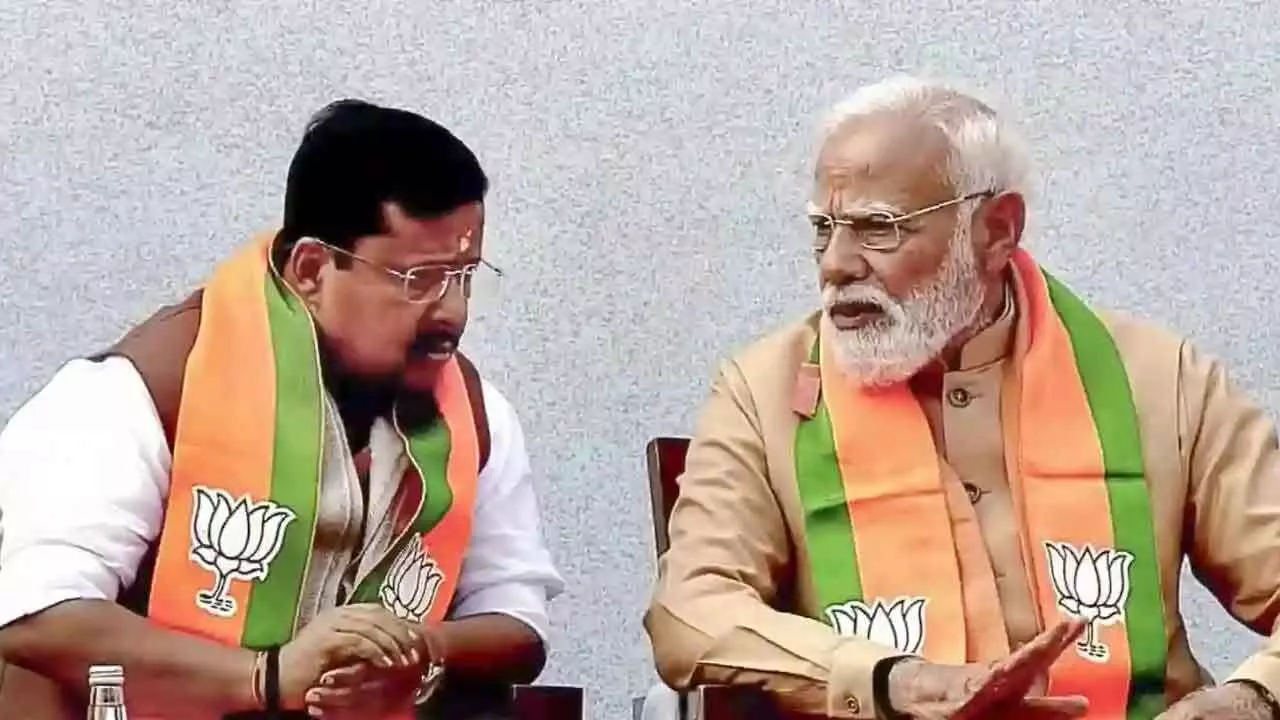
By any reckoning, Nitin Nabin’s rise is spectacular—from a leader of the Bharatiya Janata Party who was little known outside his native Bihar to the national president of the ruling party. It is an open secret that he is the chosen one, chosen by the BJP’s big two, Prime Minister Narendra Modi and Home Minister Amit Shah.
The saffron party, however, ensured that the elevation of the youngest president ever—Nabin is 45 years old—had the semblance of propriety. As many as 37 sets of nomination papers backed his candidacy; these were submitted to returning officer K. Laxman. The proposers included the BJP top brass, including Modi, Shah, Rajnath Singh, Nitin Gadkari, Dharmendra Pradhan, Bhupendra Yadav, Kiren Rijiju, Hardeep Puri, and outgoing president JP Nadda, among others.
In choosing Nabin, the Modi-Shah duo has ignored something they criticise quite often—dynasticism in politics. Nabin is the son of senior BJP leader and four-time Bihar Assembly legislator Nabin Kishore Prasad Sinha. After the death of his father, Nitin entered politics in 2006. A five-time MLA, he is a Minister in the Bihar Cabinet.
Since both optics and words matter a great deal in politics, the images from and statements made during his coronation on Monday say a lot. There is a photograph showing him sitting and writing something on a desk while Modi, Shah, Singh, and Gadkari are standing behind him.
Then Modi said that Nabin is his “boss.” It seems that PM Modi was trying to convey a message to his senior party leaders and RSS grandees that Nabin should not be taken lightly because of his young age and/or inadequate experience.
Equally significant was Modi’s emphasis on the primacy of the party organisation. Over the past decade, the BJP has increasingly become a leader-centric party, with Modi’s persona dominating elections, governance, and internal party discourse. While this centralisation has delivered unprecedented electoral success, it has also weakened institutional processes and the autonomy of the organisation. By foregrounding the importance of the party structure at Nabin’s coronation, Modi appeared to be consciously rebalancing this equation.
This emphasis serves multiple purposes. First, it reassures the cadre and the RSS that the BJP remains an organisation-driven party, not merely an electoral machine revolving around one or two individuals. Second, it strengthens the hands of the new president at a time when the BJP faces complex challenges: managing generational transitions, accommodating ambitious regional leaders, and preparing for state and national elections in a rapidly changing political landscape. Third, it allows Modi and Shah to delegate day-to-day organisational firefighting to a trusted lieutenant while retaining strategic control.
In that sense, Nitin Nabin’s elevation is not just about rewarding loyalty or projecting youthfulness; it is about reinforcing the BJP’s command-and-control structure through a president who owes his position entirely to the top leadership and is therefore unlikely to challenge it. The symbolism of the coronation—images, words, and choreography combined—makes it clear that while the party organisation is supreme, it operates in seamless alignment with Modi and Shah’s vision.
Nabin’s real test will begin now: translating symbolic authority into effective organisational control, managing egos of far more experienced leaders, and ensuring that the BJP’s formidable electoral machinery remains disciplined and responsive. His coronation has sent all the right signals. Now, he has to deliver.


