SC diktat will have little bearing on other courts

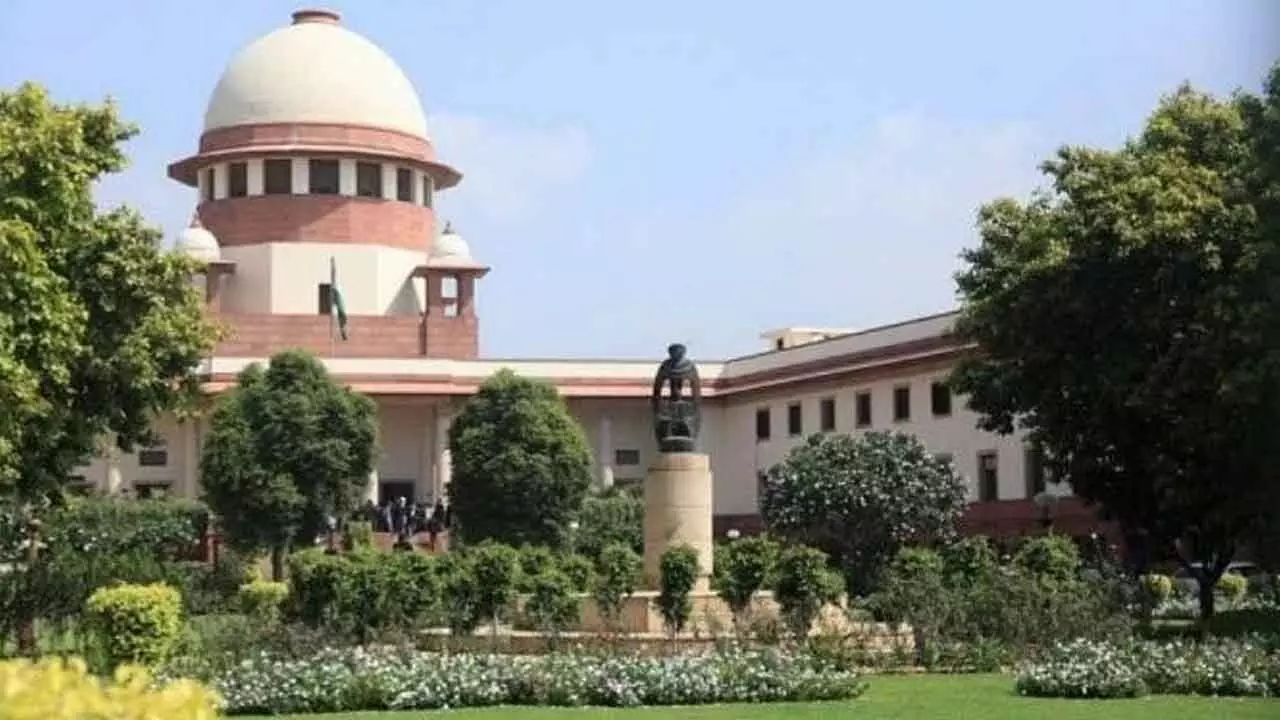
First the spine-chilling facts about the state-of-affairs in India vis-à-vis the judicial delivery system. A startling reality is that presently there are over five crore cases pending disposal across all courts in the country. Even more bizarre is that many have been ‘pending’ for decades together. It is mindboggling to think that the bail applications pending in High Courts are approximately between 1.25 and 1.3 lakh, which is a substantial increase considering that it hovered around 60, 000 to 65,000 cases before 2020. There has been a considerable increase in the bail appeals filed annually, which stands around 4.3 lakh today as against the above 3.4 lakh a few years back. Given this precarious situation, many take potshots at the ‘lethargic’ legal delivery system in the country, which, many opine, remains the bane. This applies to all types of bail, including regular, anticipatory, default and interim bail. Lest one forgets, the Supreme Court has established clear guidelines for the expeditious disposal of bail applications, recognising the importance of personal liberty under Article 21 of the Constitution. As per its ruling, regular bail applications should be resolved within two weeks, and anticipatory bail applications within six weeks, unless situations dictate otherwise.
However, despite such constitutional mandates and rulings by the apex court, there has been no relief for the people given that ‘speedy disposal’ seems like a term that is yet to see the light of the day, as regards Indian courts, where delays are becoming increasingly common. Of course, the legal fraternity has its own points of view.
While on the one side there has been a steady increase in bail appeals across High Courts with each passing year, a dearth of judges and other judicial staff, on the other hand, are unable to handle the overload of pending cases as regards hearing and disposing of cases. In some instances, the pending bail applications are leading to prolonged detention of the applicants, which reflects poorly on the system. The general presumption is that such inordinate delays in disposing bail applications could eventually lead to a situation whereupon fairness and efficiency could take a backseat. This being the situation on the ground, one wonders if the Supreme Court’s latest ‘diktat’ will have any bearing on the functioning of other courts. This is not the first time that High Courts have been given guidelines as regards handling bail applications. The earlier such ‘firm’ directions by the apex court have had little to zero impact as the figure of pending bail applications keeps mounting.
Against this backdrop, one wonders the effect of the Supreme Court’s reiteration that bail matters should not be delayed even by a day.
“We have time and again emphasised the importance of the liberty of citizens. There should not be a single day’s delay in deciding liberty of citizens in bail matters,” said a bench of Chief Justice of India Bhushan R Gavai and Justice AG Masih, while hearing the bail plea of one Vedpal Singh Tanwar in a money laundering case. In the Srikant Upadhyay v State of Bihar (2024) case, Justice Ravikumar, heading a Division Bench, ruled that while bail is the general principle in criminal cases, this does not extend to anticipatory bail, which needs an exceptional power. It was likewise regarding the Satendra Kumar Antil v. CBI (2022) case.
Although all courts have been asked to follow the Supreme Court directions and expeditiously dispose of bail applications, the common man, caught in the ‘justice delayed is justice denied’ syndrome, remains doubtful.