Phalguna: When the calendar ends in colour, celebration and renewal

As winter loosens its grip and spring quietly steps in, the Bharatiya lunar calendar reaches its final chapter — Phalguna. Falling between February and March, it marks the closing month of the traditional year. But this is no abrupt ending. Phalguna functions as a carefully designed cultural pause — a period where nature, society and the human mind reset together.
In a way of life that aligned timekeeping with seasons, Phalguna stands apart as a month of joyful closure. Unlike modern year-ends driven by deadlines and fatigue, this concluding phase invites reflection with colour, celebration with restraint, and renewal with awareness.
A Month Written by Nature
Phalguna announces itself visibly. Trees begin to flower. The air softens. Winter crops mature. Birds grow more active and daylight stretches longer into the evening.
Ancient communities observed these ecological cues closely. Festivals were not randomly assigned; they were synchronised with environmental shifts. As the earth thawed and bloomed, human emotion too was encouraged to soften.
The principle was simple: when nature renews itself, human beings must consciously renew themselves.
Phalguna’s structure reveals layered intent, ecological (align with seasonal transition), physiological (support metabolic adjustment), psychological (encourage release and reflection), social (reinforce collective identity), spiritual (prepare for inner renewal).
Maha Shivaratri: The Science of Stillness
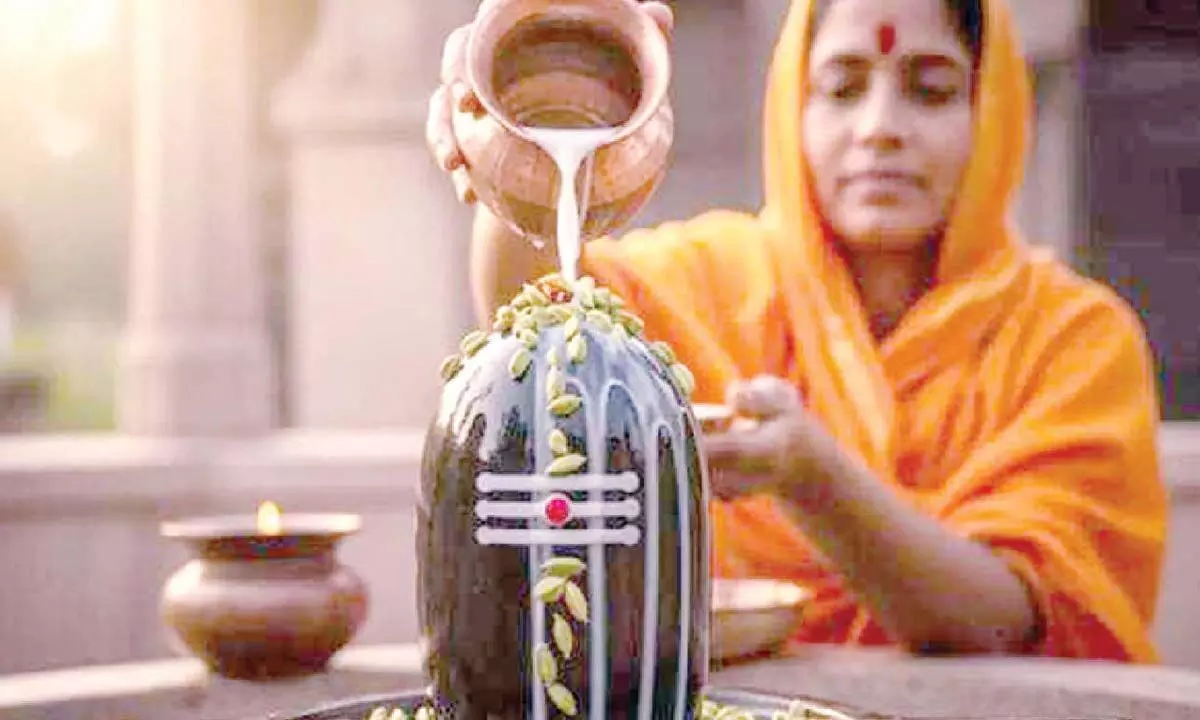
Within this celebratory month arrives Maha Shivaratri, the “Great Night of Shiva.” At first glance, its fasting and night vigil seem austere in contrast to Phalguna’s festivity. But its timing reveals deep psychological and physiological insight.
Shivaratri falls on the 14th night of the waning moon — a phase when gravitational influences subtly affect water bodies. Considering the human body is largely water, traditional thought held that such lunar positioning influences internal equilibrium. Staying awake in an upright posture was believed to stabilise the system.
From a biological perspective, the practice of fasting during seasonal transition allows the digestive system to recalibrate. As winter diets tend to be heavier, a brief fast supports metabolic adjustment before warmer months.
The night vigil has psychological dimensions as well, which disrupts routine, heightening awareness, Meditation lowers stress responses, Chanting regulates breathing patterns and Silence enhances introspection
In yogic understanding, Shivaratri represents a night when planetary positions are supportive of inner stillness. Whether interpreted spiritually or scientifically, the festival offers a structured opportunity for detoxification — physical, emotional and mental.
Placed in Phalguna, Shivaratri provides balance. If Holi is an outward expression, Shivaratri is inward alignment. One releases; the other refines.
Holi: The Social Science of Colour
The most visible celebration of Phalguna is Holi. Yet beyond the vibrant colours lies a carefully structured social and seasonal framework. In recent times, the focus of celebration has often shifted towards excessive partying, alcohol consumption and the use of synthetic, harmful colours. Such trends dilute the deeper intent of the festival. It becomes important, therefore, to pass on to the next generation not just the excitement of Holi, but the meaning behind its rituals and their thoughtful design.
Holika Dahan, the ceremonial lighting of fire, symbolises the burning of negativity, ego and destructive tendencies. Gathering around the flame strengthened community bonds and reminded participants of shared values. The ritual marked a conscious decision to let go of what no longer serves individual or collective wellbeing.
Even the cuisine prepared during Holi carries significance. Seasonal dishes were designed to support the body’s transition from winter to spring. Ingredients such as jaggery, nuts, lentils and fermented items helped regulate digestion and energy levels during climatic change. Food was not separate from ritual; it was part of the holistic design of the celebration.
The following day, colour transforms social space. The playful application of natural colours traditionally representing the shared celebration reduces social tension and strengthens emotional bonds. After months of winter restraint, this collective expression functions as a healthy emotional release.
Human–Nature Synchronisation
Phalguna subtly adjusts lifestyle patterns from Diets becoming lighter and fresher, Outdoor gatherings increase, Music, dance and storytelling flourish and Physical movement rises with pleasant weather.
Exposure to sunlight boosts mood-regulating hormones. Community engagement reduces isolation. Seasonal food aids digestion during climatic change.
Long before wellness became industry jargon, Phalguna functioned as nature-assisted alignment.
Another understated dimension of Phalguna is its role in dissolving rigid structures. Phalguna becomes a community reset button with Shared meals, collective rituals and public participation creating social cohesion.
This temporary relaxation of hierarchy is not disorder; it is maintenance. Societies that allow periodic release often sustain long-term stability.
Brahmotsavam: When the Divine Steps Into the Streets
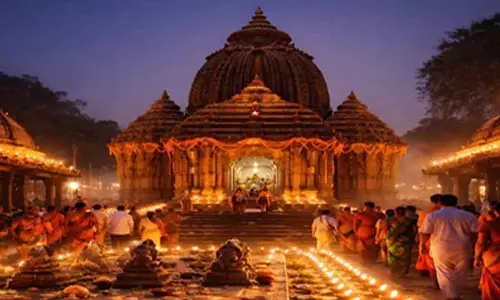
Brahmotsavam is the sacred moment when the deity symbolically steps out of the temple sanctum to move among the people. It is a reminder that the divine is not confined within stone walls. During this festival, God comes out to experience nature, community and celebration alongside devotees — without distinction of status or background.
Yet, an interesting contrast often appears. While the deity is taken out in grand processions through streets and open spaces, many devotees continue to rush inside the temple seeking darshan. The deeper message of Brahmotsavam is subtle: when the divine is touring the town, visiting every lane and household, it is an invitation to meet the sacred where we stand — in open air, under the sky, amid society.
Phalguna is one of the seasons when many temples host this grand annual celebration, carrying sacred presence beyond sanctums into public life.
Brahmotsavam follows a meaningful sequence. It begins with Dwajarohanam, marking the start of sacred time. During Vahana Sevas, the deity is taken in procession on symbolic mounts representing virtues. The Rathotsavam brings the community together as devotees pull the chariot, symbolising shared responsibility. The festival concludes with Chakrasnanam or Teerthavari, signifying purification and renewal.
During Phalguna, temples across celebrate Brahmotsavam with a shared ritual framework but distinct regional character. At Tirumala and Tirupati, grand Dwajarohanam, Vahana Sevas, Garuda Seva and Rathotsavam draw massive participation. Kapaleeshwarar Temple in Mylapore blends Shaiva tradition with the Ther festival and Nayanmar processions. Srisailam integrates Shivaratri-linked austerity with hill chariot rituals, while Udupi combines monastic scholarship, Rathotsava and devotional music. Across these kshetras, the sequence—flag hoisting, symbolic processions, chariot pulling and ceremonial bath—transforms temples into public cultural spaces, aligning devotion with spring renewal and collective celebration.
Through these rituals, the temple extends beyond its walls, turning streets into sacred spaces and devotion into a collective experience.
Telangana’s Phalguna Landscape
In Telangana, Phalguna Brahmotsavam takes on at Sri Lakshmi Narasimha Swamy Temple, Yadadri, the hill shrine hosts elaborate processions culminating in a grand chariot festival., Sri Sita Ramachandra Swamy Temple, Bhadrachalam integrates Ramayana devotion with festive pageantry along the Godavari. Vemulawada Rajarajeshwara Temple, Shivaratri-linked rituals extend into Phalguna celebrations. Kondagattu Anjaneya Swamy Temple and Sri Lakshmi Narasimha Swamy Temple, Dharmapuri reinforce the bond between temple ritual, youth participation and river ecology.
(The writer is a creative economy expert)