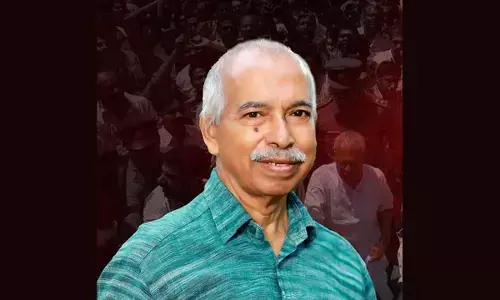
Abhaas: A deep exploration of the guilt complex

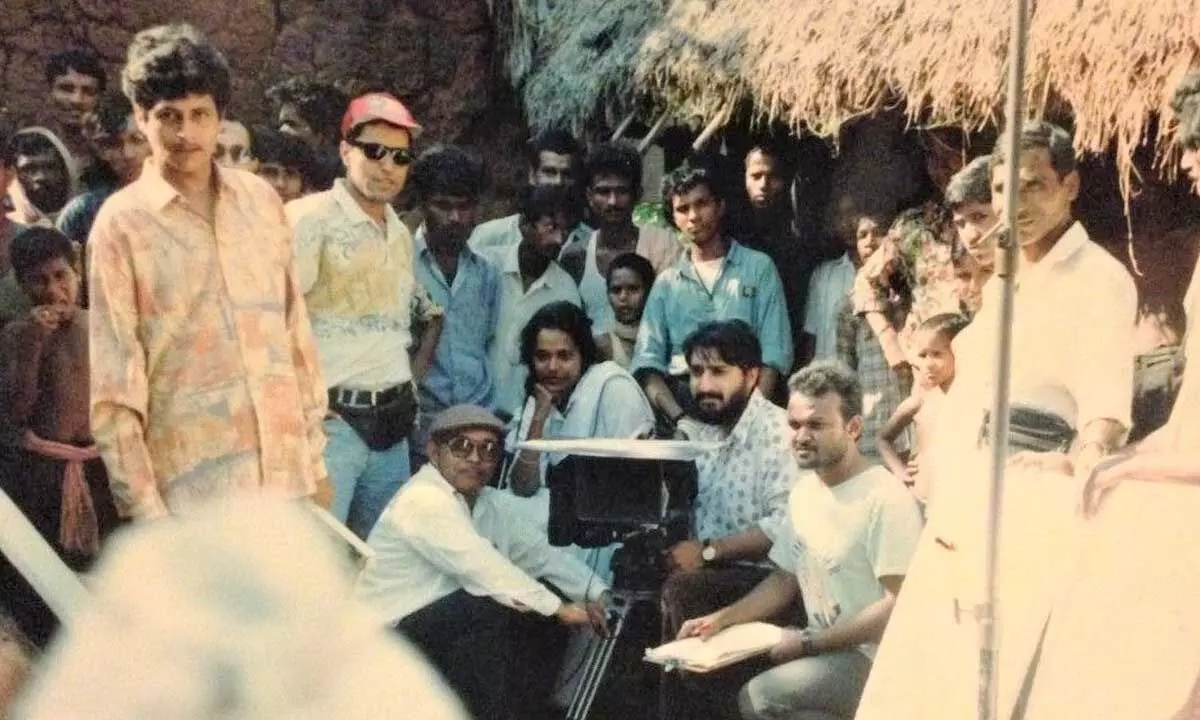
Cinema has long been a battleground for the female voice—a space where narratives about women are often told through a male perspective, reducing them to mere symbols of suffering, virtue, or desire. But Aabhaas, directed by Bijaya Jena, the only National Award-winning filmmaker from Odisha, challenges this tradition. The film explores guilt while questioning who bears its weight and who receives redemption. Through Kokila, played by Jena herself, it presents a silent yet powerful feminine presence, echoing the unspoken tragedies of women trapped in patriarchy
“My intention was not to make a film on sexual exploitation. With Abhaas, I tried to explore the philosophical and psychological aspects of crime and guilt complex”, said the National award-winning film director, Bijaya Jena, during the special screening of her film, “Aabhas” at the Sarathi Studios in the city on the golden jubilee celebrations of the Hyderabad Film Club under the segment
“The Creator Presents the Film” early this week.
Jena was the guest of honour on this occasion and was very receptive to the battery of questions and perspectives shared by the esteemed audience after the screening concluded. Her film had received wide acclaim from film critics, curators and auteurs like Volker Scholdorff and Nicholas Meyer.
It was screened at the 1997 Festival International du Film de la Rochelle, France, the 1997 Penang Film Festival, Malaysia and the 1997 Cairo International Film Festival. In 2013, Abhaas was telecast on BBC Channel 4, BBC as part of the “100 Years of Indian Cinema” celebration. It was also shown by the Mauritius Broadcasting Corporation in October 2014.
Set in 1955 in the feudal landscape of Khurda, Odisha, the story revolves around a landlord Ray (late actor Murali from Kerala) , his widowed cousin KOKILA( played by Bijaya Jena) and a younger brother Chandra(Akshay Anand) in feudal estate in Odisha in 1955. Ray, a philanthropist, one evening, in a moment of weakness imposes himself and impregnates Kokila, who dies when her abortion goes wrong. A police investigation implicates Chandra. Ray is haunted by his guilt.
The film, soaked in all its poignance, exhibits themes of conscience, guilt and morality in the compass of right vs wrong. Jena, during the Q&A session, revealed how she was deeply influenced by the novel “Crime and Punishment” written by Fyodor Dostoevsky before she embarked on Abhaas.
Even 27 years later, the thought provoking strikes the right set of emotional chords with the viewer. The movie reminds the earlier works of Ray and Amrohi in its poetic soliloquies, paradigms and artistry with the feminist theme immersed in an oppressive silence.
Abhaas hits at the cerebral level
The movie is quietly devastating and impressive in its persuasive charm. It has an unhurried quality to it and boasts of intuitive performances by Murali, Akshay and Bijaya. One of the strengths of the film is actor Murali’s performance in the role of the master of the house who is persecuted by an obsessive sense of guilt to which he eventually succumbs. No wonder, Malayalam cinema is revered for the impeccable quality of its actors and their legacy. Abhaas effectively transcends time and age.
Even though it is set in the mid-1950s, it has a succinct recreation of the ethos and cultural milieu of Odisha.
The palace of the landlords, the fountain, the farming lands and the barren roads distinctly transport you to the bygone era. The film is quite understated in its emotional canvas. There is no melodrama or facile outburst – which were the eminent ploys of filmmakers during the 90s. Jena clearly eschews those aspects and proves her prowess in direction, she is the only filmmaker from Odisha to win a national award.