Holi skin and hair care tips to protect against colour damage

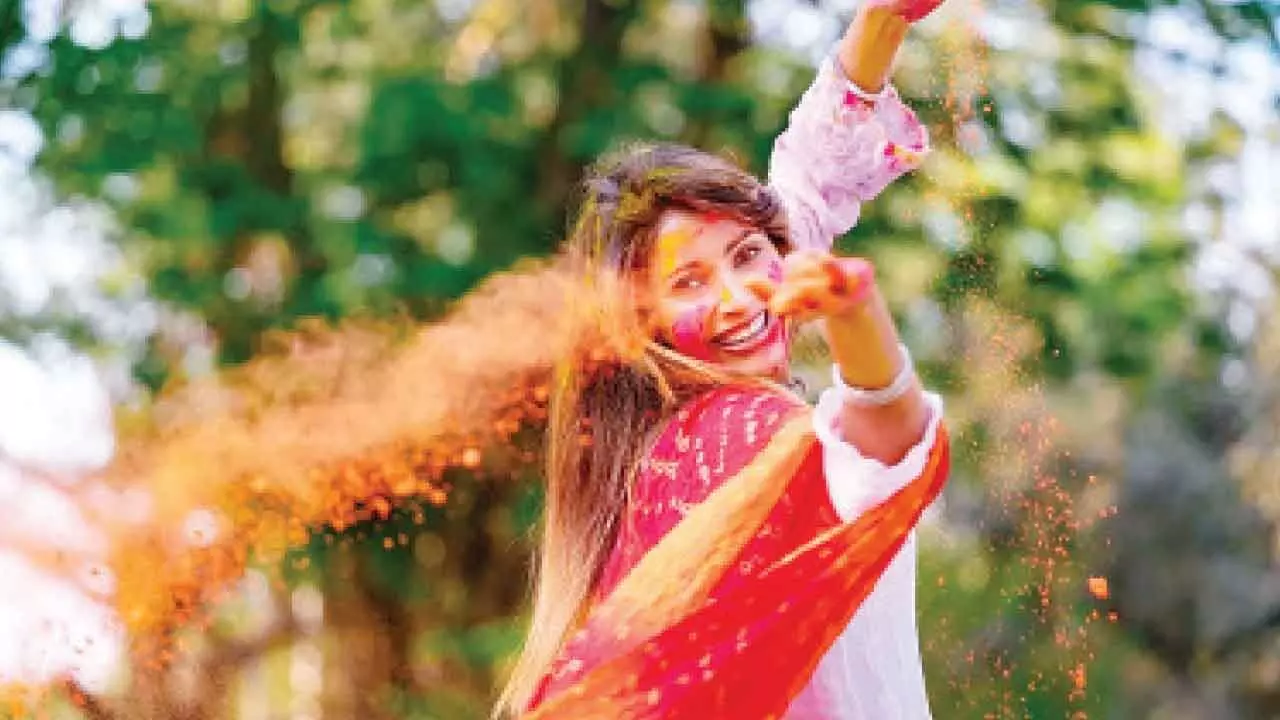
Holi Hai!! The vibrant festival of colours and happiness is just around the corner. Barely a few days are left before you head out to play joyfully and get soaked in the colour game. The Holi fever has set in, and it is the time of the year when you are excited about looking like a multi-coloured canvas.
The festival brings with it a mishmash of dry gulal and buckets of water. When you decide to indulge in a burst of colours, what bothers people most is how to deal with skin and hair issues caused by the rampant use of harmful, toxic colours that can make your skin and hair dry and frizzy.
While you’ve zeroed in on where you’re going to celebrate Holi with splashes of colours, make sure to follow these Holi skin care tips to give your hair and skin extra protection from chemical-laden, harsh colours and to counter the ill effects on colour-stained faces, parched hair, and irritated skin.
Holi is celebrated at a time when nature renews and refreshes itself. With a little care, we can do the same and sustain our youth and beauty.
The dry “gulal” and the wet colours of today are not derived from natural sources. They contain chemicals, shiny particles of mica, and even lead, which not only irritate the skin but also collect on the scalp. Since Holi is played outdoors, sun exposure can also have a detrimental effect on the skin. Apart from harmful UV radiation, sun exposure depletes moisture, causes tanning, and makes the skin dry. The skin can become dry and dull after playing Holi.
Remember to apply sunscreen 20 minutes before going out in the sun. Use a sunscreen of SPF 20 and above. If your skin is prone to pigmented patches, select one with a higher SPF. Most sunscreens have built-in moisturizers. If your skin is very dry, first apply the sunscreen, wait for a few minutes, and then apply a moisturizer. Light daytime make-up may be used. Touch up your eyes with eye pencil or kajal and use a lip gloss.
The real problem is the removal of colours after playing Holi. Do not wash your face with soap immediately, because soap is alkaline and causes further dryness. Instead, use a cleansing cream or lotion. Apply and massage it on the face, then wipe off with moist cotton wool. Remember to cleanse the area around the eyes too, using a light touch. A cleansing gel helps dissolve the colours and facilitates their removal.
To make your own cleanser, take half a cup of cold milk and add one teaspoon of any vegetable oil, like sesame (til), olive, or sunflower oil. Mix well. Dip cotton wool into this mixture and use it to cleanse the skin.
Sesame seed (til) oil can be used to remove colours from the body by massaging it onto the skin. This not only helps remove the colours but also gives added protection to the skin. Sesame seed (til) oil helps counteract sun damage. While bathing, scrub the body gently with a loofah or washcloth. Immediately after your bath, apply a moisturizer to the face and body while the skin is still damp. This helps seal in moisture.
The day after Holi, you may have to deal with the effects of sun exposure, like dryness or tanned skin. Mix two tablespoons of honey with half a cup of curd. Add a pinch of turmeric. Apply this to the face, neck, and arms. Leave it on for 20 minutes and wash off with water. Honey is a powerful natural moisturizer and helps soften the skin, while curd nourishes and restores the normal acid-alkaline balance. It also helps remove tan.
Hair Care
The dry “gulal” and wet colours of today are not derived from natural sources. They contain chemicals, shiny particles of mica, and even lead, which collect on the scalp and irritate it. Apply a protective leave-on conditioner or hair serum before playing Holi. They coat the hair and protect it from chemical colours, pollutants, and sun exposure. They also add shine to the hair.
While washing the hair, first rinse with plenty of plain water to remove dry colours and tiny particles of mica. Then apply a mild herbal shampoo, working it into the hair with your fingers. Massage the scalp gently and rinse thoroughly with water. Add the juice of a lemon to a mug of water and use it as a final rinse. This helps restore the acid-alkaline balance of the scalp.
Beer can also be used as a final rinse. It will soften and condition the hair. Add the juice of a lemon to the beer. Pour it over the hair after shampooing. Leave it on for a few minutes and rinse off with plain water.
If there is itching, add two tablespoons of vinegar to a mug of water and use it as a final rinse. This helps reduce itching. However, if the itching continues and there is rash or redness, there may be an allergy to the colour. Consult a doctor as soon as possible.
Within the next few days, give your hair a nourishing treatment. Mix egg yolk with almond oil or olive oil and massage it lightly into the hair and scalp. Then dip a towel in hot water, squeeze out the water, and wrap the hot towel around the head like a turban. Keep it on for 5 minutes. Repeat the hot towel wrap 3 or 4 times. This helps the hair and scalp absorb the oil better. Wash your hair after an hour.
The next day, give your hair another nourishing treatment. Mix one tablespoon of pure coconut oil with one teaspoon of castor oil. Heat slightly and apply to the hair. Then dip a towel in hot water, squeeze out the water, and wrap it around the head like a turban. Keep it on for 5 minutes. Repeat 3 or 4 times. Wash your hair after an hour. Conditioning with henna helps restore damage to the hair, adding shine and body. To the henna powder, add four teaspoons each of lemon juice and coffee, two eggs, two teaspoons of oil, and enough curd to make a paste. Apply to the hair and wash it after an hour.
Make Your Own Natural Colours for Holi
Simmer Tesu flowers in water and leave overnight. Strain and use the water to play Holi. Tesu flowers leave a yellow colour. The botanical name of Tesu is Butea monosperma.
Henna powder can be mixed with gram flour (besan) or maize flour (makki) and used as a dry green colour. Turmeric (haldi) can be used as both a dry and wet colour. Mix turmeric with gram flour for a dry colour, or add it to water and boil. Leave overnight and then use. Boil beetroot in water to get a bright magenta colour. Cool and use the water. Or extract beetroot juice, add a little water, and use it.