Sankranti on a plate: How telugu kitchens celebrate the harvest

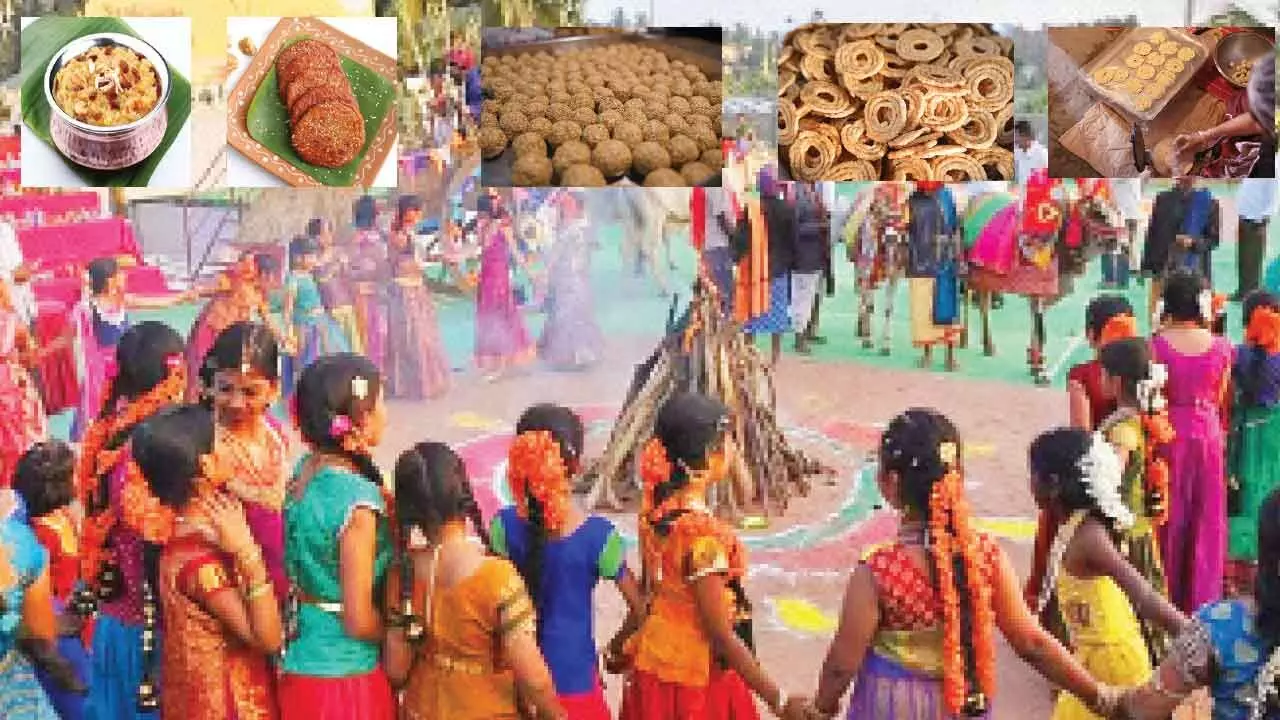
In Telugu homes, Sankranti is not marked by dates alone but by what enters the kitchen. The festival announces itself through the fragrance of freshly harvested rice, molten jaggery, roasted sesame and ghee warming on the stove. More than a celebration, Sankranti is a seasonal pause — a moment when food becomes a ritual of gratitude to the land, cattle and human labour that sustain life.
“For Telugu people, Sankranti is the moment when the first yield is tasted with awareness,” says Gopi Byluppala, food systems architect, cultural entrepreneur and founder of The Culinary Lounge. “The festival menu is consciously built around newly harvested crops — fresh rice, newly set jaggery, sesame, groundnuts, sugarcane, winter greens and seasonal vegetables. Every dish is a way of saying thank you.”
This idea of tasting the year’s first harvest before daily consumption begins defines Sankranti food across Andhra Pradesh and Telangana. Dishes such as pongali, ariselu, boorelu, pulagam and payasam are not merely festive favourites — they symbolise offering the land’s produce back to the divine before the family eats.
The non-negotiables of a Sankranti meal
Despite regional diversity, a few ingredients remain constant across most traditional Telugu households. Rice, the first crop of the year, forms the backbone of the meal — used in sweet and savoury pongali, pulagam, payasam and the main festive spread. Bellam (jaggery) is equally central, appearing in ariselu, chakkera pongali, boorelu, paramannam, gavvalu and laddus.
“Nuvvulu (sesame) and groundnuts are essential to Sankranti,” explains Gopi. “They appear as laddus and chikkis, while pulses like senagapappu and minapappu are used for garelu, boorelu stuffing and festive dal preparations.”
Local produce naturally shapes the menu. In irrigated regions, coconut, sugarcane and fresh vegetables feature generously, while drier regions express their identity through millets, sesame and groundnuts — not as alternatives, but as traditional staples rooted in the soil.
Andhra and Telangana: Sweet contrasts
Sankranti sweets reflect subtle cultural differences. In Andhra Pradesh, the festival leans heavily towards rice-and-jaggery classics such as ariselu, boorelu or poornalu, and chakkera pongali. In Telangana, especially in rural households, millets like jonna and sajja often enter festive sweets, alongside nuvvula laddus and groundnut chikkis.
Even shared dishes change character across regions. Pongali in coastal areas tends to be softer, richer with ghee and gently flavoured, often accompanied by mild vegetable sides. In Telangana and Rayalaseema households, pepper and chilli are more assertive, with sharper pachadis on the side.
Ariselu too tell a regional story — thinner and crisp-chewy in coastal kitchens, denser and more jaggery-forward elsewhere, often finished with sesame mixed into the dough or sprinkled on top.
Savouries that appear only once a year
Certain savoury items are closely tied to rural Sankranti kitchens and are rarely cooked otherwise. Pulagam, karapupusa, chakkilalu, sakkinalu, palakayalu and traditional pongal require time, patience and collective effort.
“These dishes demand community labour and long hours,” says Gopi. “That is why many of them now appear only once or twice a year. Sankranti keeps them alive.”
Climate, crops and cuisine
Geography quietly dictates Sankranti menus. River-fed regions produce rice-heavy spreads with multiple jaggery sweets and fresh vegetables. Semi-arid regions foreground millets, oilseeds and groundnuts alongside festive rice dishes. In forest and tribal areas, Sankranti meals remain simple and deeply connected to the land — pulagam made from first paddy, local greens, seasonal tubers and, on Kanuma, meat where customary. Traditionally, the first offering is shared with cattle before humans eat.
The evolving Sankranti kitchen
Traditionally, Sankranti cooking revolved around the authority of the grandmother or mother, with younger women and children assisting. Over time, urban households have seen more shared participation, with men and younger family members taking active roles. While many families now buy part of the festive spread, one or two home-made items — sweet pongal, ariselu or bobbatlu — remain non-negotiable.
Old tools also make a brief return. Rubbu rolu, wooden pestles, brass and bronze vessels and firewood stoves reappear, lending flavours modern appliances cannot replicate.
Food, memory and inheritance
For Gopi, Sankranti is inseparable from memory. “I grew up experiencing both Coastal Andhra and Rayalaseema cuisines,” he recalls. “Katta pongal in Tirupati, bellam pongal offered to Ammavaru, ariselu, boorelu and garelu were constants. My grandmother’s Kalagampu kura still instantly takes me back to childhood.” Many such recipes, he notes, are passed down orally — cooked by memory rather than measurement — surviving through repetition and care rather than written records. As lifestyles change, Sankranti food continues to adapt. Yet its core remains unchanged. In every Telugu home, the festival plate still carries the same meaning — respect for the land, gratitude for the harvest and a reminder that food, at its best, is culture made edible.