How can students explore teen entrepreneurship

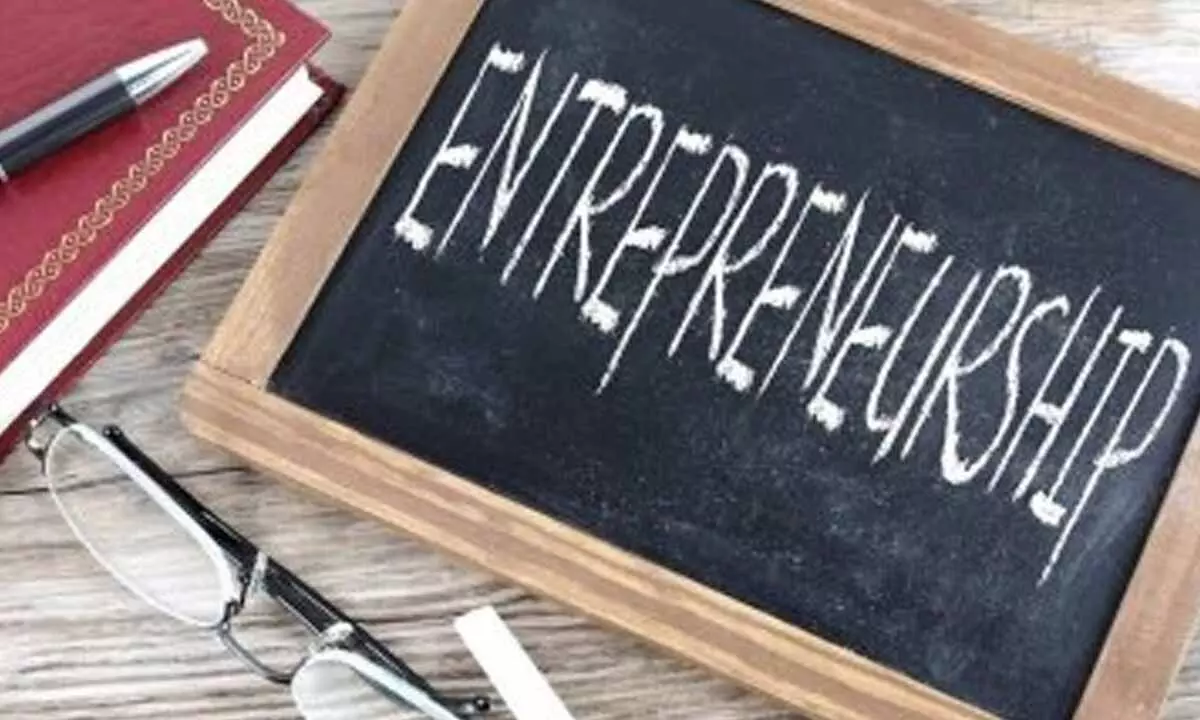
As India’s education ecosystem adapts to a rapidly evolving world of work, industry leaders and academic institutions are observing a marked change in how young people approach careers. Beyond conventional employment, students are increasingly inclined towards building solutions, experimenting with ideas and exploring entrepreneurship at an early stage enabled by access to technology, AI-led learning and industry exposure. Leaders across academia and the skilling ecosystem believe that nurturing this mindset early will be critical to preparing youth for future-ready careers.
Young innovators benefit from PRINCE2 Course assistance in organising thoughts and transforming ideas into workable projects. With the use of these abilities, pupils can progress from experimentation to concentrated execution. Additionally, they teach prospective business owners how to work together more efficiently, regularly fulfil deadlines, and scale ideas sustainably.
Dr. B. Chennakesava Rao, Principal, Vallurupalli Nageswara Rao Vignana Jyothi Institute of Engineering & Technology
"We are seeing a clear shift in how students approach their careers today. Along with securing jobs, many are keen to build products, work on real problems and explore entrepreneurship much earlier than before. Exposure to AI and industry-linked learning is accelerating this trend, helping students move faster from ideas to execution. It is also encouraging a mindset where career paths are seen as evolving journeys rather than fixed outcomes.
Young minds today need a system that supports their risk-taking ambitions. As accelerators, we must create an innovative graduate experience that builds entrepreneurial confidence and capability in students through experiential learning, industry connection and AI applications."
Rahul Attuluri, CEO and Co-Founder, NxtWave
“Students should explore entrepreneurship early because the world no longer rewards potential alone. It rewards proof. Building something, even small, teaches how ideas become outcomes. That experience stays relevant whether a student becomes a founder, joins a startup, or works in a large organisation.
In fact, the easiest way for students to explore entrepreneurship is to build something small and real. A tool, a service, a prototype, or a digital product. Momentum matters more than scale at the start. With AI, building prototypes has never been faster and easier. Nurturing youth towards entrepreneurship should be a key priority for India.”
Karun Tadepalli, CEO & Co-Founder, byteXL
“Louis Braille was just 15 when he created a system that gave millions of visually impaired people access to literacy and independence. Vitalik Buterin founded Etherium crypto-currency when he was just 19. Boyan Slat was just 18 when he started building what became The Ocean Cleanup. The question was never whether young minds can change the world. It’s whether we create the conditions for them to try. This is the era to turn curiosity into solutions, ideas into working models, and crises into opportunities. What will matter most is how you think, how you imagine, and how courageously you act. We are entering a world where machines will handle efficiency, but only humans can create meaning. For young people, this is not a threat, it’s an invitation to tinker around. Remember, some of the world’s most transformative ideas began as teenage experiments.”