Here is what the 2026-27 Union Budget might look like

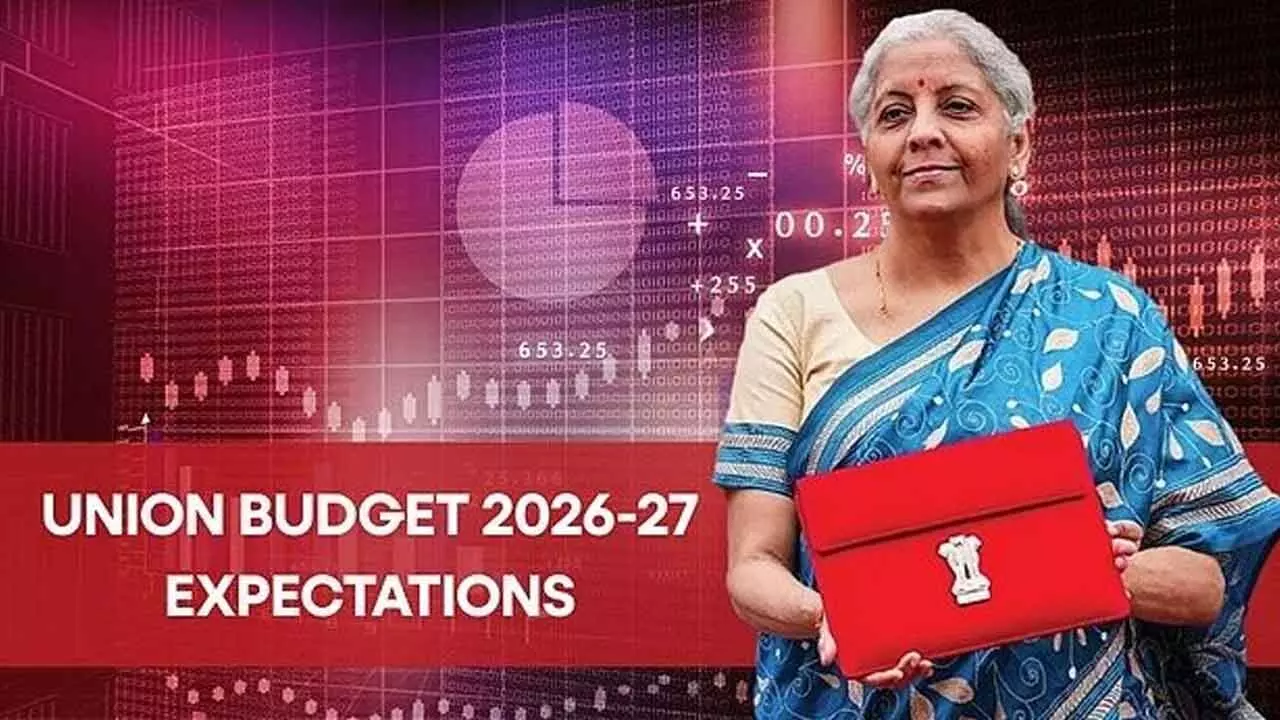
“Presenting the budget” used to be a big attraction until a few years ago. Even if children did not understand the word or its meaning, they knew adults were glued to it — so they too would gather around the radio and listen to the Finance Minister’s budget speech. Subsequently, when the elders spoke, the kids would hear that car prices might be rising this year, or that taxes paid by employees might go up or down, and they’d join in: if the elders complained, they would complain; if the elders sighed with relief, they would sigh too, just to pass the time.
Listening to the budget speech was fun in those days. Those pleasures are gone now. Those complaints and celebratory sighs have evaporated into thin air. The budget has become synonymous with indifference and apathy. The reason is that governments haven’t consistently followed the budgets they presented. Today, educators, economists, and those who used to praise budget figures either don’t care anymore or openly dismiss them.
All the TV channels — hosts, presenters, everyone — started treating the finance minister, who was about to present the budget, as if he was a celebrity an hour before the presentation. Some acted as admirers, others as fierce critics, and instead of weapons of war the channels wielded verbal weapons, turning the whole scene into a kind of comedy.
Because the briefcase in the finance minister’s hand before the presentation resembled another “Akshaya Patra” (inexhaustible vessel), all the TV channels repeatedly portrayed the upcoming budget as a cure-all — a solution to every economic problem — even suggesting the minister would personally hand out sweets. They kept broadcasting this image over, and over, amping up the drama like filmmakers readying a climax, offering viewers their own mix of help and entertainment.
Amid all these, the budget to be presented in 2026 seems like a beacon of hope. The budget makes a point of crediting the government’s economic experts with the achievement of preventing US President Donald Trump’s previously proposed 50 per cent tariff from doing major damage in 2025. That’s true — it helped dispel fears that India’s economy might collapse and that the country could become desperately poor. By calming those worries at the end of last year, our financial experts’ competence is reflected in this year’s budget. Let’s look forward to this year’s budget for that reason.
It would be good if the ensuing budget prioritises strengthening of financial resources. Even if this government does not claim credit for economic reforms — the P V and Manmohan Singh era — everyone knows that today’s economic progress depends on openness and facilitation, and that our economic condition advances along that path.
If 2025 is remembered as the year when reforms consistently supported the economy, that momentum could help 2026 move forward smoothly. We must expand and strengthen the country’s financial resources and systems. Budget proposals should channel investments and expenditures to build financial strength. Strengthening systems is a continuous process, but there are some areas where we must strengthen without skimping on spending — defence is one of them. We should not dilute the focus on defence. We must not be tempted by small signs of improving conditions to divert funds away from defence investments. The 2025 budget estimates need to increase from 26.4 per cent to about 30 per cent. Given the current situation, it is imperative that there is an enhanced allocation to Defence Research and Development Organisation (DRDO) by at least Rs. 10,000 crore. Defence indigenisation happening in Uttar Pradesh and Tamil Nadu should be further encouraged, while the production must be expanded.
We should focus on a plan to establish another defense industrial corridor in eastern India. There’s nothing wrong with asking that this budget include proposals that give the highest priority to environmental protection — it’s only right to seek a future that is secure in every way. These are times when oil and mineral resources must be given utmost priority. Our country should be able to develop oil fields and produce petroleum, so that we are not dependent on others. We need to see whether any budget proposals address oil and mineral production, imports, and exports. When it comes to managing production, exports, imports, and investment in other goods, the Finance Minister and experts in that ministry must, based on India’s experience, give priority in budget design to measures that carefully and strongly bolster the fiscal position.
Tax matters are not easy for ordinary people to understand — even financial experts and the officials in the ministry only come to terms with what they announce through experience; there is no fixed rule about when things will be settled. Only financial specialists can really shed light on these issues. Employees and others pay the taxes they are required to — but powerful businesspeople, industrialists and politicians can, by some trick or sleight of hand, find a hundred ways to escape the “tax-net,” and sometimes they do. Collecting taxes and bringing exporters into the tax net is very difficult.
Taxes are just one part of raising revenue. For the central government, GST has become a new source of income. On a broad level, an individual household’s budget, how much is spent and how much revenue is generated, whether through income or borrowing — is something every household prepares each year. And that small personal budget is linked to the national budget. That connection has a broad impact on the country’s economic progress and on the welfare of its citizens.
The national budget has its effect on global systems and on other countries; it must withstand those impacts. Only if our Prime Minister and Finance Minister design an economic system each year that can compete on equal footing with other nations will the world take notice of our development.
(The writer is a retired IPS officer, who has served as an Additional DGP
of Andhra Pradesh)