Policy gaps are stalking the Palamuru–Ranga Reddy project

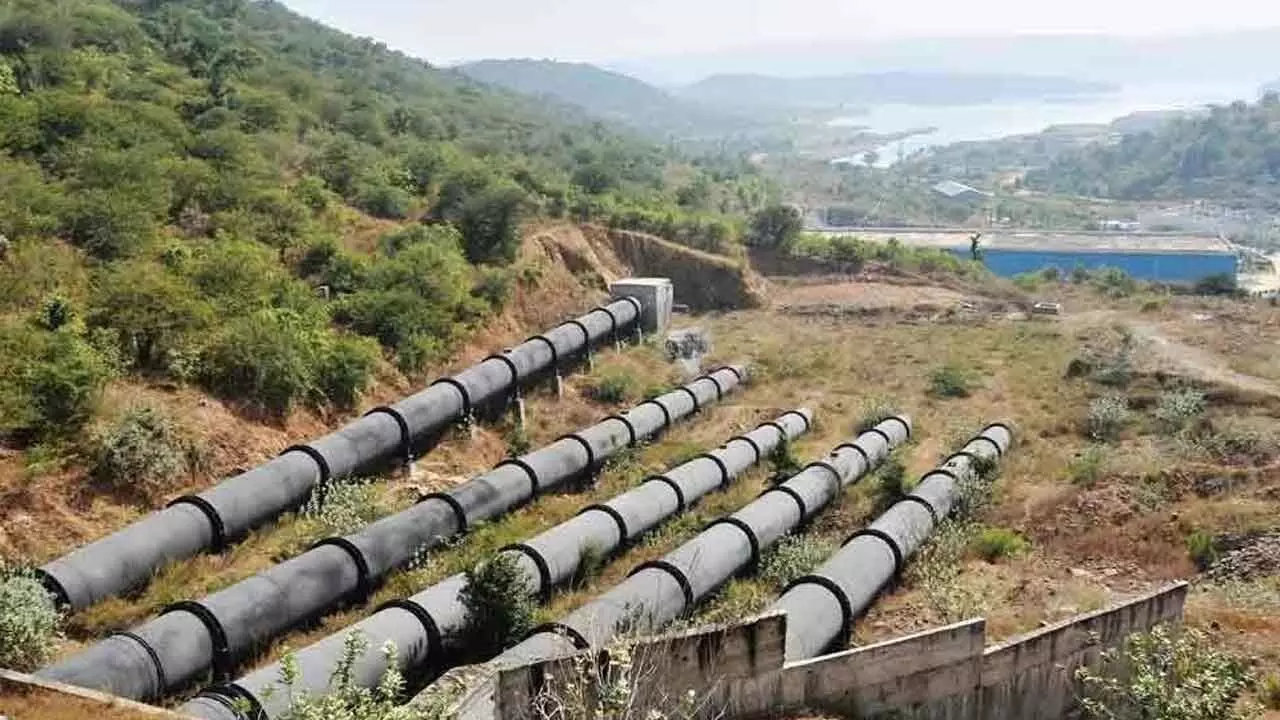
The Palamuru-Ranga Reddy Lift Irrigation project, conceived as a transformative intervention for the drought-prone southern Telangana region, is emerging as a case study on how policy ambiguities, procedural delays and inter-State complexities can derail large infrastructure projects.
Nearly a decade after its ambitious announcement, the project has consumed substantial public resources without delivering irrigation benefits on the ground. Envisioned to lift 90 TMC of water from the Srisailam reservoir, the project was designed to provide irrigation to about 12.3 lakh acres and drinking water to nearly 1,200 villages spread across Nagarkurnool, Mahabubnagar, Narayanpet, Rangareddy, Vikarabad and Nalgonda districts. Administrative approval was granted in June 2015 at a projected cost of ₹35,000 crore. Subsequent revisions pushed the cost to beyond ₹55,000 crore. Despite expenditure exceeding ₹27,000 crore during the previous BRS government’s tenure, its irrigation potential has not been realised.
This has expectedly triggered renewed political debate following the Congress government’s efforts to revive stalled works and re-examine water allocation strategies.
One of the primary issues affecting the project was the initiation of construction without obtaining all the mandated statutory and environmental clearances. Proceedings before the National Green Tribunal (NGT) brought these lapses into focus, leading to imposition of environmental compensation on the State. Officials familiar with the process acknowledge that regulatory non-compliance contributed to work stoppages and uncertainty for contractors, slowing down its execution. Another major concern was the absence of a Detailed Project Report (DPR) for several years after administrative approval. Although the project received a government order in 2015, the DPR was submitted seven years alter in 2022. Public finance experts point out that large-scale expenditure prior to technical finalisation weakens institutional oversight and complicates later revisions. Policy choices regarding water sourcing further complicated the project.
In August 2022, the State government proposed sourcing 45 TMC from Krishna river and 45 TMC from Godavari river. While Krishna allocations were governed by provisional arrangements, the Godavari component remained under consideration before the relevant tribunal. The Central Water Commission (CWC) subsequently indicated that full approval for 90 TMC allocation could not be granted until the Godavari issue was resolved. This effectively stalled the project’s water clearance, creating uncertainty over timelines and phasing.
The current Congress government has maintained that, given the circumstances, seeking phased allocation beginning with Krishna waters was necessary to avoid further delays. BRS leaders, however, have alleged that this approach amounts to dilution of the original project objectives. Officials counter that phased allocation is an administrative necessity rather than a policy retreat.
It should be noted that technical experts had earlier suggested lifting water from the Jurala project backwaters as a less contentious alternative. This option, they argued, could have reduced inter-State complications and expedited approvals. The decision to source water directly from Srisailam placed the project firmly within the ambit of inter-State river water disputes, increasing dependence on tribunal outcomes and central clearances. Additionally, court submissions made earlier by the State characterising the project as primarily intended for drinking water requirements requiring a much smaller quantum have been cited by critics as weakening Telangana’s irrigation claims. The Palamuru–Ranga Reddy project is inseparable from broader inter-State water-sharing disputes.
Following provisional arrangements in 2015, Andhra Pradesh continues to receive a larger share of Krishna waters compared to Telangana. Opposition parties have argued that Telangana’s interests were not asserted strongly during negotiations. In the Godavari basin, developments such as lift irrigation proposals downstream progressed even as tribunal adjudication remained incomplete. Farmers’ groups in southern Telangana have been repeatedly expressing concerns that delayed responses could have long-term implications for water security in the region.
Within Telangana, the pace of Palamuru–Ranga Reddy has also been contrasted with the rapid expansion of the Kaleshwaram Lift Irrigation Project. While the latter saw major capacity enhancements and financial allocations, projects in southern Telangana progressed slowly. Irrigation engineers have noted that a more balanced distribution of resources could have ensured earlier outcomes in drought-prone districts. They argue that sequencing and regional equity are critical in a State with diverse agro climatic needs.
Since assuming office, the Congress government has placed Palamuru–Ranga Reddy among its priority projects. According to official data, 11 pumping units have been installed, significant earthwork and concrete work has been completed, and canal excavation has resumed. The government has stated that it is prepared to invest further to achieve the original irrigation potential of 12 lakh acres. Whether these efforts translate into measurable outcomes will depend on securing clear water allocations, resolving regulatory issues, and maintaining fiscal discipline. The trajectory of the Palamuru–Ranga Reddy project highlights systemic challenges in irrigation planning where political urgency, technical preparedness and institutional coordination often move at different speeds.
As Telangana continues to invest heavily in water infrastructure, the project underscores the need for rigorous planning, regulatory compliance and transparency to ensure that public investment translates into tangible benefits for farmers.