Beyond code generation: Preparing students for AI-enhanced software development

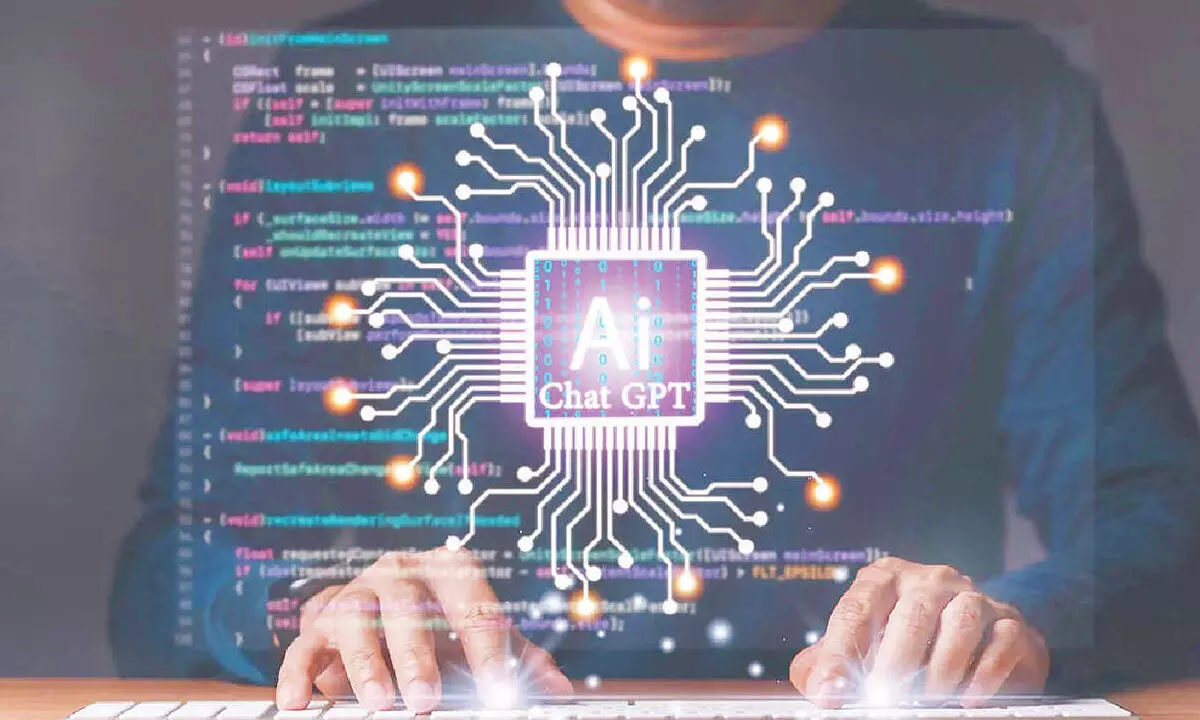
Generative AI has gone from an experimental stage to a part of the mainstream software development workflow. Surveys indicate that by the year 2025, nearly four out of five department heads will have used generative AI in their work. Students are beginning to notice, coding is not what it once was amid the emergence of generative AI tools like ChatGPT and GitHub Copilot. The mode of learning and participating in programming practice is changing extremely quickly, and we must investigate those changes dispassionately. Instead of speculation or hype, this is about understanding the trends through research and data, where we are now, and where coding might be headed next.
Developers globally were using or planning to use AI coding assistants in some capacity, with at least a substantial portion using the tools daily. The initial studies of these tools have reported observable effects: developers are sometimes completing habitual coding tasks faster, and in some situations, the time to follow a prototype through to a simple debugging task has dropped dramatically.
But the story is not as simple as “AI makes coding faster.” Productivity metrics often focus on how quickly a task is completed, rather than just the quality, maintainability, or security of a software system over time. While AI assistants can quickly generate code that is boilerplate and syntax-error-free, in cases where there is no human oversight, they can also embed unknown vulnerabilities, logical mistakes, or implausible architectural patterns into the code that are not apparent.
In fact, in situations where organizations are scaling their use of AI assistants, there is evidence of deploying fewer small syntax errors alongside an increasing number of security issues when using AI assistants without a human review process.
How the role of programmers is changing
There are three realities regarding how coding may look in the future.
From coding to problem framing
The archetype of a programmer being someone who writes all the code is already gone. AI can now produce most of the boilerplate coding for software. It is no longer unique to humans to write code; what will remain unique to humans is the ability to frame problems, decompose larger problems into smaller solvable units, and combine these solutions into larger systems. The emphasis will now shift to requirements analysis, architecture, and system thinking.
Verification and security move front and center
The newer workflow puts a lot more emphasis on testing, debugging, and coding securely. The future programmer will need to be proficient in writing tests, running code audits, and writing code that is secure and compliant. The testing skills will include skills in automated tests, threat modeling, or vulnerability assessment that are at the forefront of the developer’s domain.
Ethics, law, and collaboration matter more
Copyright questions, issues of equity and fairness in datasets, bias, and accountability are all inherently tied to software development. Students need to prepare for these issues and be aware of the ethical and legal issues that they will be challenged with as they are working with AI-generated code. The collaborative aspect of coding will only become more important, including the expectation of AI assistants on the team.
Relevant skills for students
The implications for students entering a professional practice are relatively clear.
• Improve fundamentals:It’s still important to understand algorithms, data structures, operating systems, networks, and databases. Without understanding the fundamentals, any evaluation you do for the AI-generated solutions is unable to use the understanding of your context to know what is right or what is wrong.
• Understand prompting and critical assessment:Write a good prompt and then assess what that prompt generates. It is not great to just accept AI suggestions at face value; from the start of a career in design, being disciplined and critical of the prompt output will always make you more valuable.
• Use testing and automation:Make a habit of embedding testing in everything you do; Continuous Integration & Deployment (CI/CD) and automated security, etc., will become part of your natural behaviours.
• Learn to read and review code:Understanding code, or at least making some reasonable analysis of code you did not create yourself, will only become more important. Code is only useful if you can read it, test it, and place it in your own protected system.
• Knowledge of the domain:Coding is no longer isolated from the application areas or the art of coding. Whether it is healthcare, finance, or embedded systems, having an understanding of the domain will allow you to assess the relevance and safety of generated solutions.
• Commit to lifelong learning:Change is accelerating. Tools will change, but your ability to adapt, curiosity, and ability to learn through research and practice will define your longitudinal trajectory of success.
AI tools like ChatGPT and Copilot will continue to alter how much code is produced and the speed at which it is produced. But they will not eliminate the need for skilled engineers. The demand for conscientious, critical, and ethically actionable programmers will increase. The future will belong to those who articulate and balance technical strength with systems-level thinking, due diligence with respect to research evidence, and combining human judgment with machine assistance. It is the role of students to develop those higher-order skills. Coding as a job will not become obsolete - it will change. The biggest challenge, and opportunity, is to ensure that you are not only using AI tools but are also becoming skilled at the practice of leading, validating, and using them responsibly.
The author is Dean Academics, Noida International University.