How youth leadership can shape India@2047

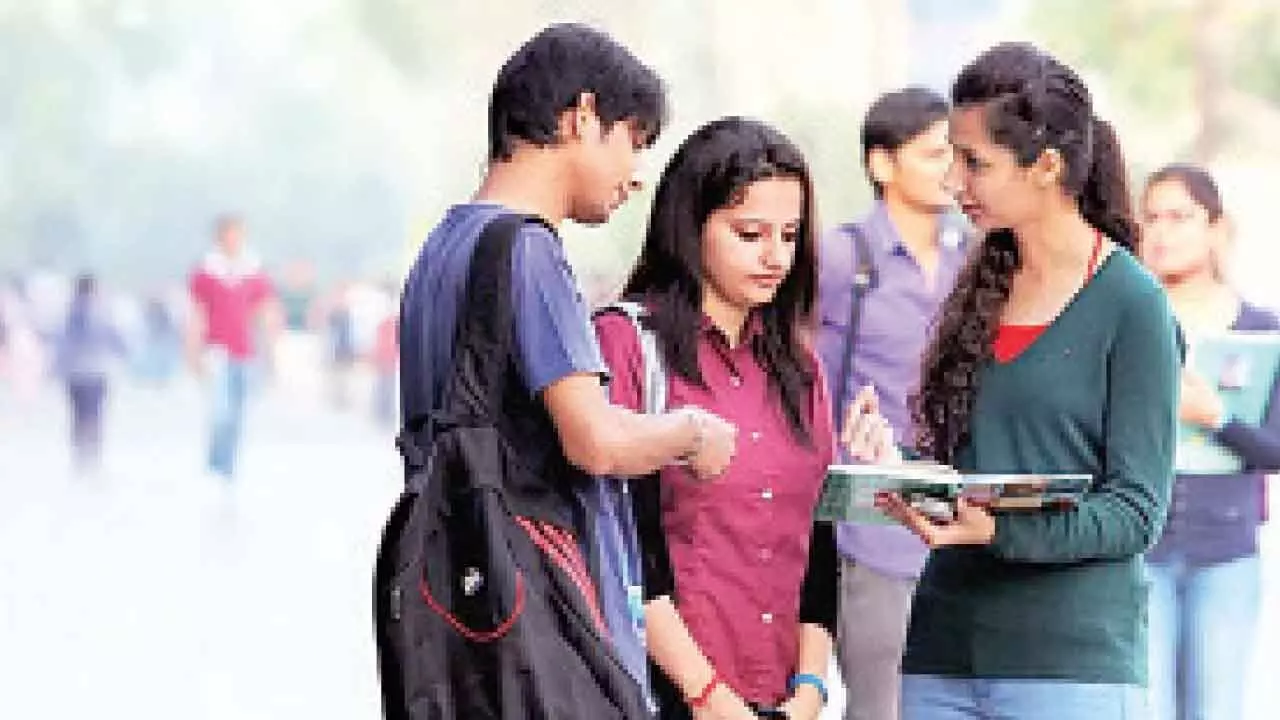
In an era defined by uncertainty and rapid transformation, the role of youth in shaping education has never been more critical. As someone deeply immersed in institution building and higher education leadership for over two decades, I have seen how empowering young people can redefine learning landscapes. The transition from passive learners, absorbing information in silos, to active leaders who question and collaborate is no longer optional; it is imperative for India’s future. Education must nurture ethical and adaptable individuals who can thrive in interconnected worlds, blending technology with human insight, as Steve Jobs once envisioned.
At the heart of this evolution lie interdisciplinary liberal education models. By integrating the arts with the sciences and humanities, these approaches develop capabilities such as critical thinking and ethical judgment, while cultivating a broader global outlook. In my experience, the freedom to design academic pathways across disciplinary boundaries fosters deep ownership of learning. A student combining environmental science with public policy, for instance, approaches climate challenges with nuance and responsibility. This reflects the aspirations of today’s generation, which seeks purpose-driven pathways where employability connects meaningfully with personal values and social contribution. As a result, classrooms evolve into collaborative spaces where curiosity and leadership take root.
India’s growing confidence as a higher education destination further amplifies this potential. NITI Aayog projects that, with sustained reforms, India could host up to 1.1 million international students by 2047, reshaping global student flows and the country’s role in international higher education. Beyond numbers, this creates an opportunity to transform learning ecosystems. Collaboration between Indian youth and peers from Europe, Africa, or Southeast Asia on sustainability, technology, or governance challenges moves education beyond content delivery towards cultural intelligence and shared problem-solving. Observations from international academic collaborations suggest that such exchanges enrich research, stimulate innovation, and strengthen India’s soft power as a knowledge society.
Central to this vision is experiential learning, strongly advocated by the National Education Policy (NEP) 2020. Its emphasis on curriculum flexibility, global partnerships, and hands-on engagement bridges theory with practice. From project-based pedagogy to inquiry-driven learning, NEP shifts the focus towards holistic development, integrating creative expression, physical education, and vocational exposure to support balanced growth. These experiences prepare youth for volatile job markets by building resilience and adaptability. Engagement with real civic challenges, such as urban resilience, water management, or digital inclusion; demonstrates that leadership is grounded less in authority and more in responsibility. NEP’s provisions for credit mobility and interdisciplinary centres further encourage partnerships with industry and civil society, embedding leadership into everyday learning.
This transition, however, is not without challenges. Access disparities remain stark, particularly for rural youth and students from marginalised communities who lack exposure to global or experiential opportunities. India’s linguistic and social diversity, while a civilisational strength, can become a constraint when institutions fail to integrate it meaningfully into pedagogy. Equally significant is institutional resistance to change. Rigid hierarchies often view interdisciplinary education as disruption rather than renewal, and youth voices are frequently sidelined in academic governance. Leadership formation deepens when students are treated not merely as beneficiaries of reform, but as partners in shaping curricula and campus culture. Faculty empowerment, through sustained training in innovative pedagogies, remains essential, as teachers are the frontline architects of educational transformation.
Addressing these challenges requires deliberate and inclusive strategies. Investments in digital infrastructure can help bridge urban-rural divides, and curricula must consciously leverage India’s diversity as a strength. Global alliances should be built on reciprocity, ensuring internationalisation contributes meaningfully to local innovation.
Empowering youth to evolve from learners into leaders extends beyond individual success; it shapes the trajectory of society itself. As India moves steadily towards its vision for 2047, the true measure of our education system will be an ecosystem anchored in purpose and inclusivity, with the confidence to engage globally. By amplifying young voices and trusting their capacity to lead, we invest not only in the future of education, but in the future of the nation.
(The author is former Deputy Vice Chancellor, Sai University Vice Chancellor, Alliance University, Bengaluru, former Vice Chancellor I/C, Presidency University)