Turning waste into ‘black gold’: Vasuki Iyengar’s DIY composting revolution in Garden City
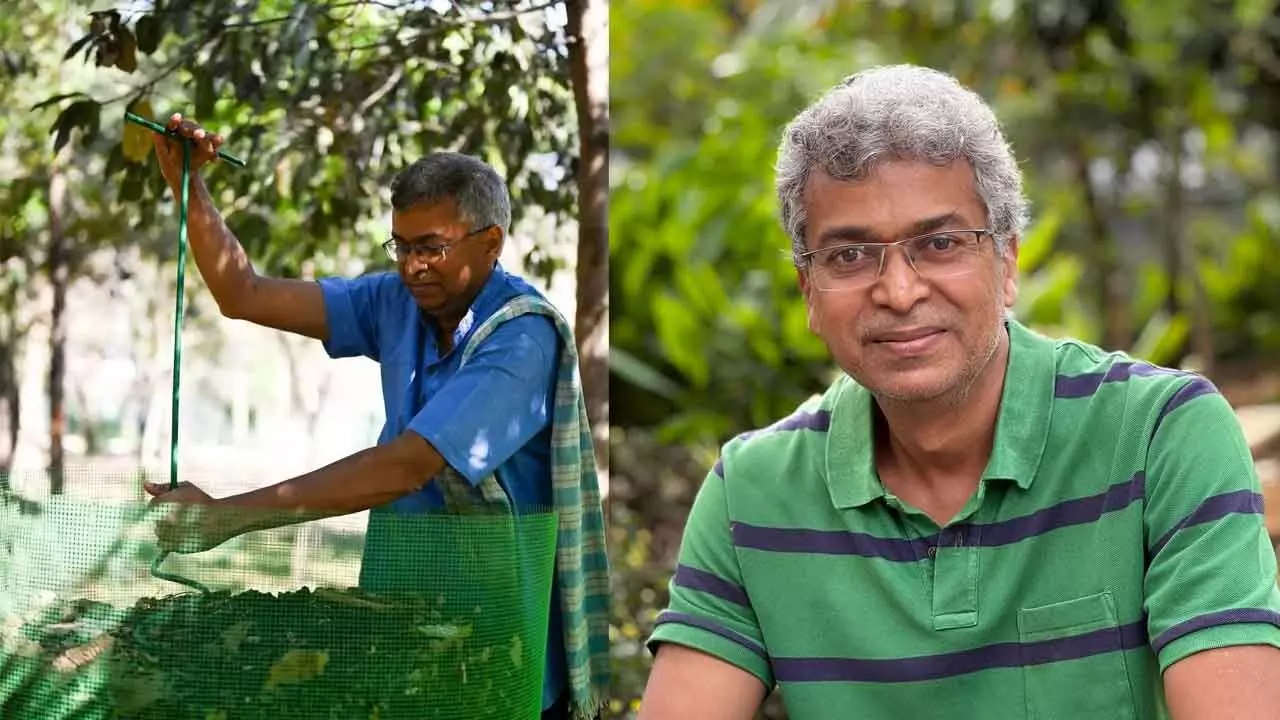
At the heart of this eco-advocate’s approach is the segregation of waste at its source. Iyengar has devised simple, do-it-yourself solutions that not only ease the burden on municipal systems but also empower citizens to take control of their waste
Bengaluru: Bangalore’s mounting solid waste crisis is finding an unlikely remedy in the innovative methods of environment and sustainability expert Vasuki Iyengar. A software entrepreneur turned eco-advocate, Iyengar is championing a grassroots approach that transforms everyday green waste into nutrient-rich compost—what he proudly calls “black gold.”
Originally hailing from Manchenahalli in Chikkaballapur district, Vasuki Iyengar graduated in computer science from Siddaganga Engineering College in the 90s and spent nearly a decade in the United States before returning to Bangalore in 2005. Instead of building a conventional home on Kanakapura Road, he dedicated a significant portion of his property to cultivating a garden—a testament to his early environmental commitment. His hands-on experience with nature and the pressing challenges of waste disposal in the city steered him toward pioneering sustainable practices.
In recent years, Bangalore has grappled with a daily generation of 5000 tonnes of solid waste—a figure that barely scratches the surface of the actual problem. This issue intensifies during the colder months of January and February, when trees shed their leaves, and large-scale events like weddings produce heaps of waste. Recognizing these challenges, Iyengar has devised simple, do-it-yourself solutions that not only ease the burden on municipal systems but also empower citizens to take control of their waste.
At the heart of Vasuki Iyengar’s approach is the segregation of waste at its source. He urges households, temples, parks, educational institutions, and even event organizers to separate green waste from dry waste. Green waste—which includes kitchen scraps, fruit and vegetable peels, leftover food, and even temple offerings—should be collected in designated bins. Dry waste, such as paper, plastic, and thermocol, belongs in a separate container. This basic step, he asserts, can dramatically cut down the volume of garbage that ends up in landfills.
Drawing from his early entrepreneurial experiences in waste management—initially focusing on sorting recyclables like plastic, paper, and e-waste—Iyengar shifted his vision after attending a transformative training course at the Hulimavu Bio Centre led by terrace gardening pioneer Dr. Vishwanath Kadur. “I realized that making compost from green waste was a simple yet powerful solution to the waste disposal problem,” he recalls. This epiphany led to the creation of his social enterprise, “Soil and Health,” around 2016. The enterprise’s mission extends beyond profit, aiming instead to educate the public on home composting techniques and sustainable waste disposal.
Iyengar’s practical advice to households centres on the “4R” rule: Refuse, Reduce, Reuse, and Recycle. He encourages citizens to be mindful of their purchases—eschewing single-use plastics and harmful products—and to repurpose items wherever possible. Beyond this, he offers detailed, step-by-step instructions on home composting.
For example, a household of three can manage its green waste efficiently using six PVC pipes (6 inches in diameter and 6 feet long), buried one foot underground. By drilling small holes for aeration and layering kitchen waste with dry leaf powder or cocopeat, nutritious compost can be produced in as little as 45–50 days. For those with limited space, Iyengar recommends “jugad composting” using recycled containers, proving that sustainable practices can be both accessible and adaptable.
Vasuki Iyengar’s eco-friendly initiatives extend far beyond composting. He is actively involved in projects such as green temples, the Swachhagraha Learning Centre in HSR Layout, and even zero waste marriage ceremonies. Through these diverse efforts, he envisions transforming Bangalore—and ultimately cities around the world—into lush, sustainable “Nandanavana” (Garden City).
“If there is the will, any city can reclaim its green heritage,” Vasuki Iyengar asserts. “It starts at home, with each of us taking small steps to reduce waste and nurture our environment.” His message resonates as a clarion call for community action: with collective effort and simple, mindful practices, the path from waste to wealth is well within reach.