




- Erpula Nagaraju takes charge as TPCC social media state secretary
- Delayed road works leave Wanaparthy residents in distress
- Ala Venkateshwar Reddy demands white paper on ST schemes
- Action taken against panchayat leaders over fund irregularities
- BJP seeks official Telangana Liberation Day observance
- Kodad mega job mela will offer jobs to 3,500 youth: Uttam
- Sircilla weaver showcases exceptional skill through heritage-themed silk saree
- Engineers’ services crucial for country’s development: MLA Naini
KDIGO guidelines set fresh benchmarks for managing anaemia in CKD patients
In Short
The Deccan Hospital in Hyderabad highlights the updated KDIGO 2026 guidelines for diagnosing and managing anaemia in chronic kidney disease patients.

Share :
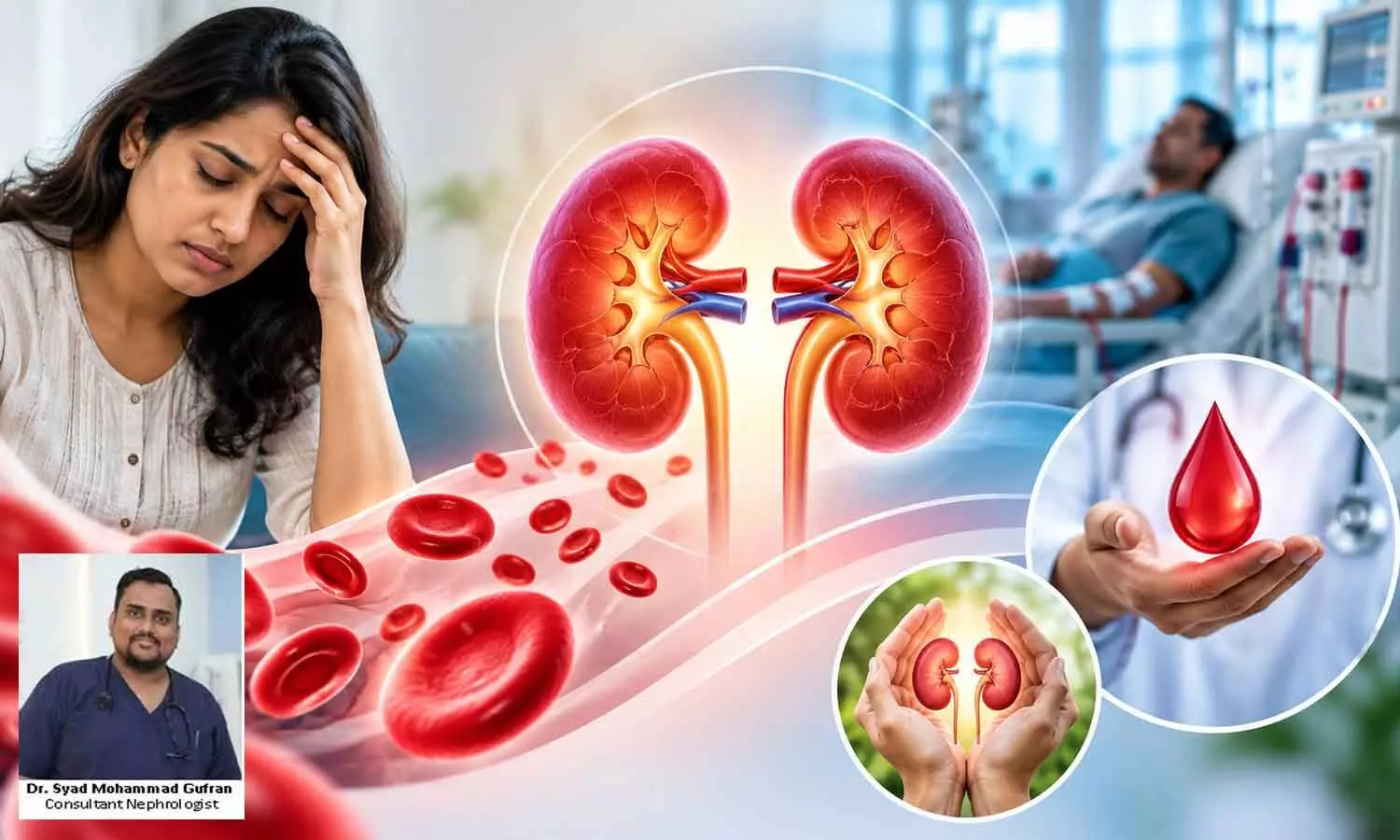
KDIGO guidelines set fresh benchmarks for managing anaemia in CKD patients
Hyderabad: Anaemia is one of the most common complications of chronic kidney disease (CKD). Patients may experience tiredness, weakness, breathlessness, reduced concentration and poor quality of life. Anaemia in CKD is also associated with increased cardiovascular risk and a greater need for blood transfusions.
Recognising the importance of this problem, Kidney Disease: Improving Global Outcomes (KDIGO) has published its 2026 Clinical Practice Guideline for Anaemia in CKD, updating the previous 2012 guideline. The new guideline incorporates more than a decade of evidence and provides updated recommendations for patients with CKD, including those receiving dialysis and kidney-transplant recipients.
Why Does Kidney Disease Cause Anaemia?
Healthy kidneys produce erythropoietin, a hormone that helps the bone marrow produce red blood cells. As kidney function declines, erythropoietin production may decrease.
However, anaemia in CKD is not simply an erythropoietin deficiency. Iron deficiency, inflammation, blood loss—particularly in dialysis patients—nutritional deficiencies and other medical conditions can also contribute. Therefore, identifying the underlying cause is an important first step.
What Is New in the KDIGO 2026 Guideline?
The updated guideline emphasises a systematic and individualised approach to:
♦ Evaluation and diagnosis of anaemia
♦ Identification of iron deficiency and other reversible causes
♦ Appropriate use of oral and intravenous iron
♦ Use of erythropoiesis-stimulating agents (ESAs)
♦ Consideration of newer therapies, including HIF-PHIs where appropriate
♦ Reducing unnecessary blood transfusions
♦ Management of anaemia in haemodialysis and peritoneal dialysis
♦ Management of anaemia in kidney-transplant recipients
Rather than recommending one treatment for everyone, KDIGO emphasises consideration of symptoms, co-existing illnesses, treatment-related risks and patient preferences.
Iron Deficiency Should Not Be Overlooked
Iron deficiency is a common and treatable contributor to anaemia in CKD. Appropriate laboratory evaluation helps doctors determine whether iron therapy is required.
Depending on the patient’s kidney function, dialysis status, severity of deficiency, previous response and other clinical factors, oral or intravenous iron may be considered.
What About EPO Injections?
Erythropoiesis-stimulating agents, commonly known as EPO or ESA injections, remain an important treatment for selected patients.
However, the goal is not simply to normalise the haemoglobin level. Treatment needs to balance potential benefits against cardiovascular and thrombotic risks. ESA therapy should therefore be individualised and carefully monitored.
Why Is This Particularly Important for Dialysis Patients?
Patients on dialysis may experience ongoing blood loss and increased iron requirements. Regular monitoring and appropriate treatment can help manage anaemia and potentially reduce the need for blood transfusions.
For patients who may be candidates for kidney transplantation, avoiding unnecessary blood transfusions is particularly important because transfusion-related sensitisation can complicate future transplantation.
Kidney-Transplant Patients Also Need Monitoring
Anaemia can persist or develop after kidney transplantation. Causes can include reduced graft function, medications, infections, inflammation and iron deficiency.
The new KDIGO guideline specifically addresses anaemia management in kidney-transplant recipients, recognising that their needs differ from those of patients with non-transplant CKD.
Advanced Kidney Care at The Deccan Hospital
The Deccan Hospital, Somajiguda, Hyderabad, provides comprehensive kidney care through its Nephrology services, covering the evaluation and management of chronic kidney disease, acute kidney problems, hypertension-related kidney disease, dialysis and other renal conditions.
For patients with advanced kidney disease, specialised nephrology care is particularly important for timely assessment, appropriate dialysis planning and evaluation for kidney transplantation when indicated.
The hospital’s integrated approach to Nephrology and kidney-transplant care aims to provide patients with specialised evaluation, treatment and long-term follow-up throughout their kidney-care journey.
A Message to Patients
If you have chronic kidney disease and experience persistent tiredness, weakness, breathlessness, dizziness or reduced exercise tolerance, discuss anaemia with your doctor.
Do not start iron supplements or EPO injections without medical advice. The correct treatment depends on appropriate blood tests and the individual’s overall kidney and cardiovascular health.
The Key Message
The KDIGO 2026 guideline represents an important advance in the management of anaemia associated with CKD. The emphasis is not simply on increasing haemoglobin, but on finding the cause, correcting reversible factors, improving symptoms and quality of life, reducing avoidable transfusions and treating each patient according to their individual risks and needs.
Early recognition and appropriate nephrology care can significantly improve the wellbeing of people living with chronic kidney disease.
(The writer is with the Deccan Hospital Somajiguda, Hyderabad Comprehensive Nephrology • Dialysis • Kidney Transplant Care)
Govt opens doors to fee on large UPI payments
22-A controversy: CM Revanth to expose Dharani loopholes in Assembly
Local BRS leaders stalling re-entry of turncoat MLAs!
Vice-President to be chief guest at Hyd Liberation Day fete
Reading for pleasure is akin to unlocking a hidden treasure
Learn security lessons from Bolarum arms theft shocker


