Mahabharata and conflict management

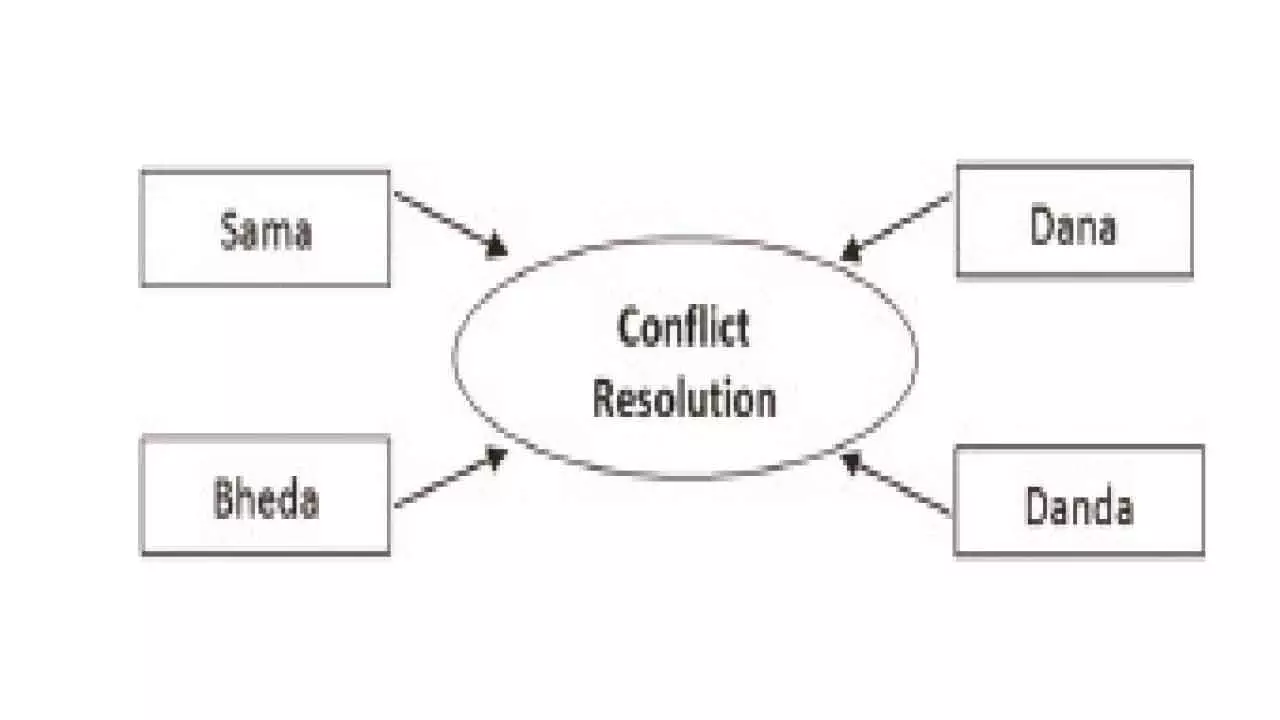
In today's fast-paced world, conflicts arise in families, workplaces, and societies. Mahabharata, a saga of dharma and adharma, offers profound insights into resolving disputes. Drawing from its narratives, here are five practical ideas for conflict management.
First, embrace diplomacy. Lord Krishna's peace mission to the Kaurava court exemplifies this. Despite Duryodhana's arrogance, Krishna proposed fair solutions like returning Indraprastha to the Pandavas, showing how dialogue can avert escalation.
Second, seek wise counsel. When Arjuna faced moral turmoil on the Kurukshetra battlefield, he turned to Krishna, who imparted the Bhagavad Gita's wisdom. This stresses the importance of consulting mentors to gain clarity and overcome internal conflicts.
Third, practice compromise. The Pandavas, after exile, agreed to a reduced claim of five villages instead of their full kingdom. Though rejected by the Kauravas, it demonstrates flexibility to foster peace, preventing total war.
Fourth, uphold justice firmly. Bhishma's vow-bound loyalty to Hastinapur, despite knowing the Kauravas' wrongs, teaches standing by principles. However, his eventual guidance to Yudhishthira post-war underscores balancing duty with righteousness in resolutions.
Fifth, promote forgiveness. After victory, Yudhishthira forgave the defeated, integrating survivors into his rule. This act healed divisions, proving reconciliation rebuilds stronger bonds.
These Mahabharata tales remind us that conflicts, if managed with empathy and ethics, can lead to harmony. In modern India, applying them could resolve communal or corporate strife effectively.
TS Karthik, Chennai-10