




- AITUC holds massive rally
- NTR dist all set for urban local body elections
- Machilipatnam, Vuyyuru and Pedana ready for municipal polls
- SARAS Mela showcases rural women’s entrepreneurial strength
- e-KYC must for crop insurance claims on cyclone-hit crops
- NTR police deploy over 2,300 personnel for ULB elections
- Former CJI releases Telugu translation of Tagore’s ‘Gitanjali’
- KU men’s hockey team selected for South Zone tourney
SEC assures free & fair polls
In Short
Punetha says months of preparations completed

Share :
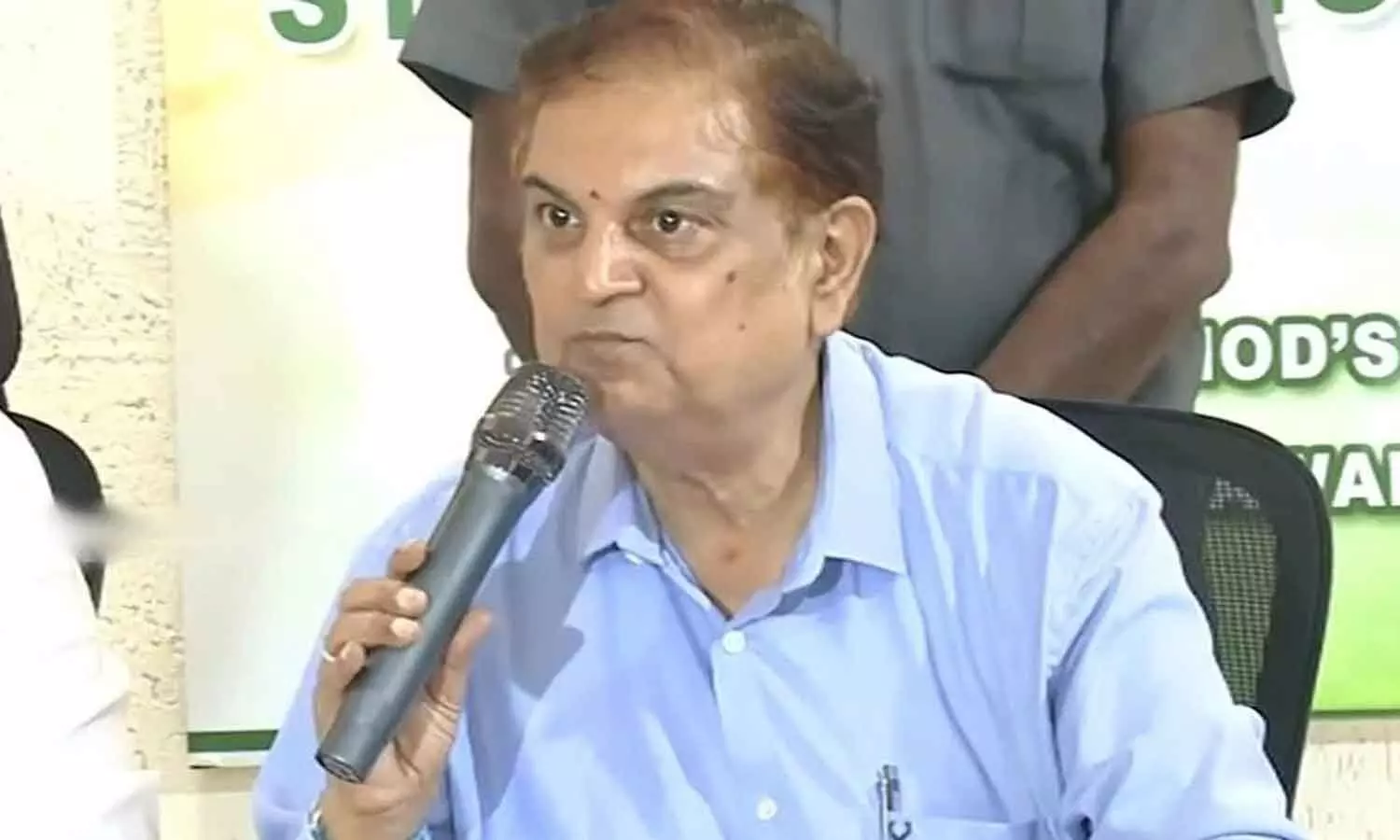
Anil Chandra Punetha
Amaravati: State Election Commissioner Anil Chandra Punetha said on Saturday that all arrangements had been completed to conduct the urban local body elections peacefully, freely and transparently across Andhra Pradesh.
He said the Commission's foremost responsibility was to ensure that every voter could reach the polling station and exercise their franchise without fear, pressure or obstruction.
Addressing the media at the State Election Commission office in in Vijayawada, Punetha said preparations had been underway for the past three to four months through a series of review meetings and continuous monitoring. The Commission had held regular discussions with government department secretaries, municipal commissioners and other departmental officials.
On Friday, the commissioner held a comprehensive meeting with collectors, police officers and election observers to assess polling preparations, logistical requirements and the law-and-order situation.
Punetha said returning officers, presiding officers and other election personnel had received the necessary training. Instructions had been issued at every level to prevent procedural errors and ensure that adequate staff were available for the smooth conduct of polling.
Emphasising transparency, Punetha said collectors had been instructed well in advance to install CCTV cameras, introduce webcasting and make other monitoring arrangements at polling stations.
Responding to requests from political parties, the Commission had extended the retention period for election-related video footage from 40 to 60 days. Further, in compliance with Supreme Court directions, footage connected with election disputes pending before tribunals or courts would be preserved until the cases were disposed of.
He said the Commission was currently focused on completing the urban local body elections. Preparations for MPTC and ZPTC elections would continue across all districts, with those polls expected to be held within four to five days after the urban elections. Apart from general observers, expenditure observers had also been appointed for the next phase.
SEC secretary A Mallikarjuna said polling stations had been classified as hyper-sensitive, sensitive and normal, with police deployment arranged accordingly. Hyper-sensitive stations would have a '1+4' security arrangement and sensitive stations a '1+2' arrangement.
A total of 1,543 route mobile units had been deployed to facilitate the safe movement of ballot boxes from distribution centres to polling stations and from polling stations to collection points and strong rooms. The units would also ensure route clearance.
Striking forces and special striking forces, under the supervision of DSPs and additional SPs, had been constituted to respond to law-and-order problems. Flying squads would monitor violations of the Model Code of Conduct, while special police forces and additional personnel had been deployed in sensitive areas and locations where violence had occurred. A total of 36,351 police personnel had been deployed, supported by reserve teams and Quick Reaction Teams under senior police officers.
The Commission would receive updates on the polling process every two hours on Sunday.


