Three-yr-old overcomes extremely rare critical complications

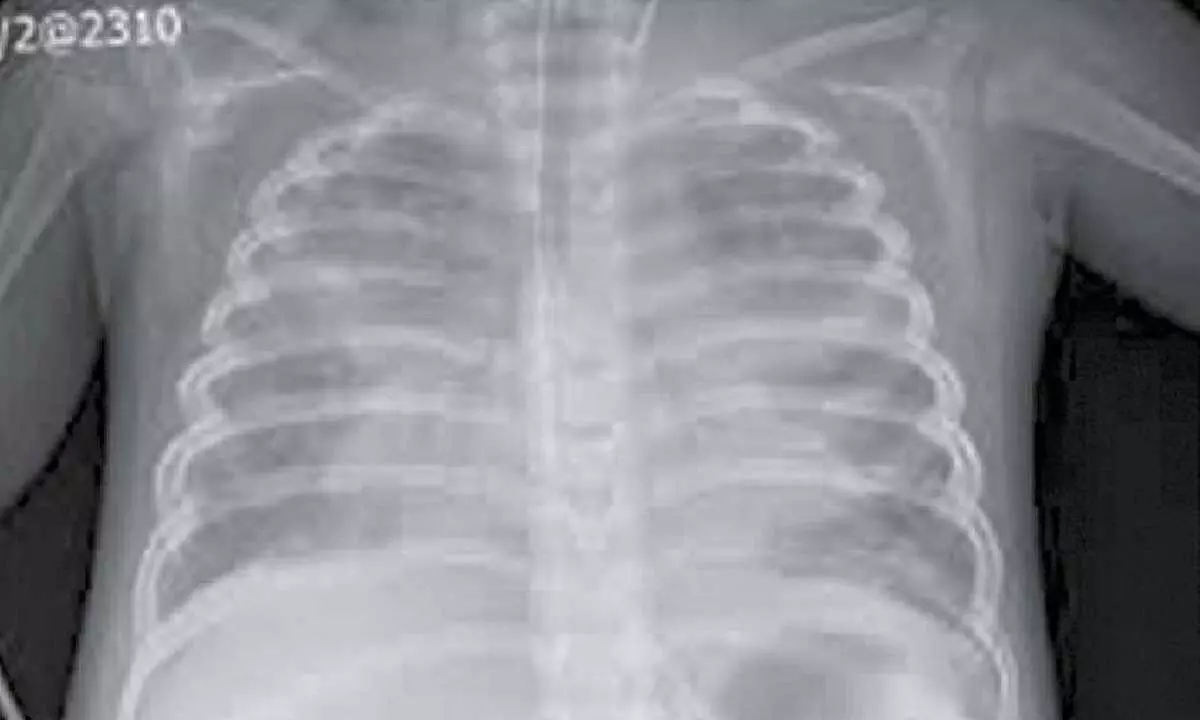
In spite of extreme complications like pneumonia, septic shock, and polyneuropathy, the multidisciplinary team - consisting of paediatric intensivists, neurologists, pulmonologists, and ENT specialists - coordinated with the family in close association to sail through every crisis
Bengaluru: In a complex case within paediatric critical care, physicians at Rainbow Children’s Hospital, Bannerghatta Road, have treated successfully a three-year-old boy from Bengaluru who suffered from tuberous sclerosis, refractory seizures, alongside severe Paediatric Acute Respiratory Distress Syndrome (PARDS). This was one of the most challenging, high-risk cases, where the child’s rare genetic condition demanded specialist, aggressive care and seamless teamwork, testing clinical skill, judgement, and coordination to steer him through a perilous course to recovery. In India, the prevalence of tuberous sclerosis complex is about 1 in a lakh individual, and PARDS affects approximately 6% of all patients requiring mechanical ventilation in Paediatric Intensive Care Unit (PICU). It is also important to highlight that in severe cases of PARDS, the case mortality rate is 32% which is significant in highlighting the importance of survival in this specific case.
The 3 year-old boy came to the hospital earlier this year and presented with fever, tachypnea, and profound dyspnea. Due to the acute type 1 respiratory failure, he was put on mechanical ventilation due to PARDS. His condition was further complicated by difficult-to-control seizures requiring high doses of repeated anti-epileptic drugs. Without urgent and aggressive intervention, the risk to life was extremely high.
The child received continuous intensive care and invasive mechanical ventilation in the PICU.“This was one of the most challenging cases we have encountered in our PICU,” said Dr. Anupam Jaiswal, PICU Lead Consultant, Rainbow Children’s Hospital, Bannerghatta. “The child faced multiple, simultaneous life-threatening complications, and every decision had to be swift, precise, and personalised.” Dr. Prakash Vemgal, Director of Pediatrics, Rainbow Children’s Hospital, Bannerghatta added; “The rarity and severity of his condition meant there was no room for error. His survival and recovery reflect the importance of integrated paediatric critical care, sustained multidisciplinary teamwork, and the trust and cooperation of his family.”
In spite of extreme complications like pneumonia, septic shock, and polyneuropathy, the multidisciplinary team - consisting of paediatric intensivists, neurologists, pulmonologists, and ENT specialists - coordinated with the family in close association to sail through every crisis.
The child was discharged couple of months back and has, since then needed 3 additional hospital admissions over time for ongoing care and device problems for tracheostomy closure. Following the acute crisis, he is on less seizure medications, controlled seizures, breathing and speaking normally, eating and is able to walk independently in the absence of home ventilation.
The family went through significant emotional burdens and yet chose to work with the medical team which greatly contributed to this child’s change in health. Today he is able to live and enjoy an active and social life like his peers which is a remarkable change from the repeated critical health episodes he was facing.