




- Govt upgrading all govt schools with corporate facilities: Narayana
- Awareness programme held at Medicover Nellore
- DGP calls for strong security plan for local body polls
- ‘Home Aayah’ scheme to skill SHG women
- Taxpayer-friendly recommendations hailed
- Pawan Kalyan to visit Polavaram tomorrow
- Serve devotees with dedication, staff told
- KIMS Bollineni performs first kidney transplant in city
Can’t bring everything to a halt: SC tells Centre
In Short
The Supreme Court directs the Centre to ensure no complete prohibition of metro and train services in Delhi, emphasizing proportionality and commuter convenience during protests.

Share :
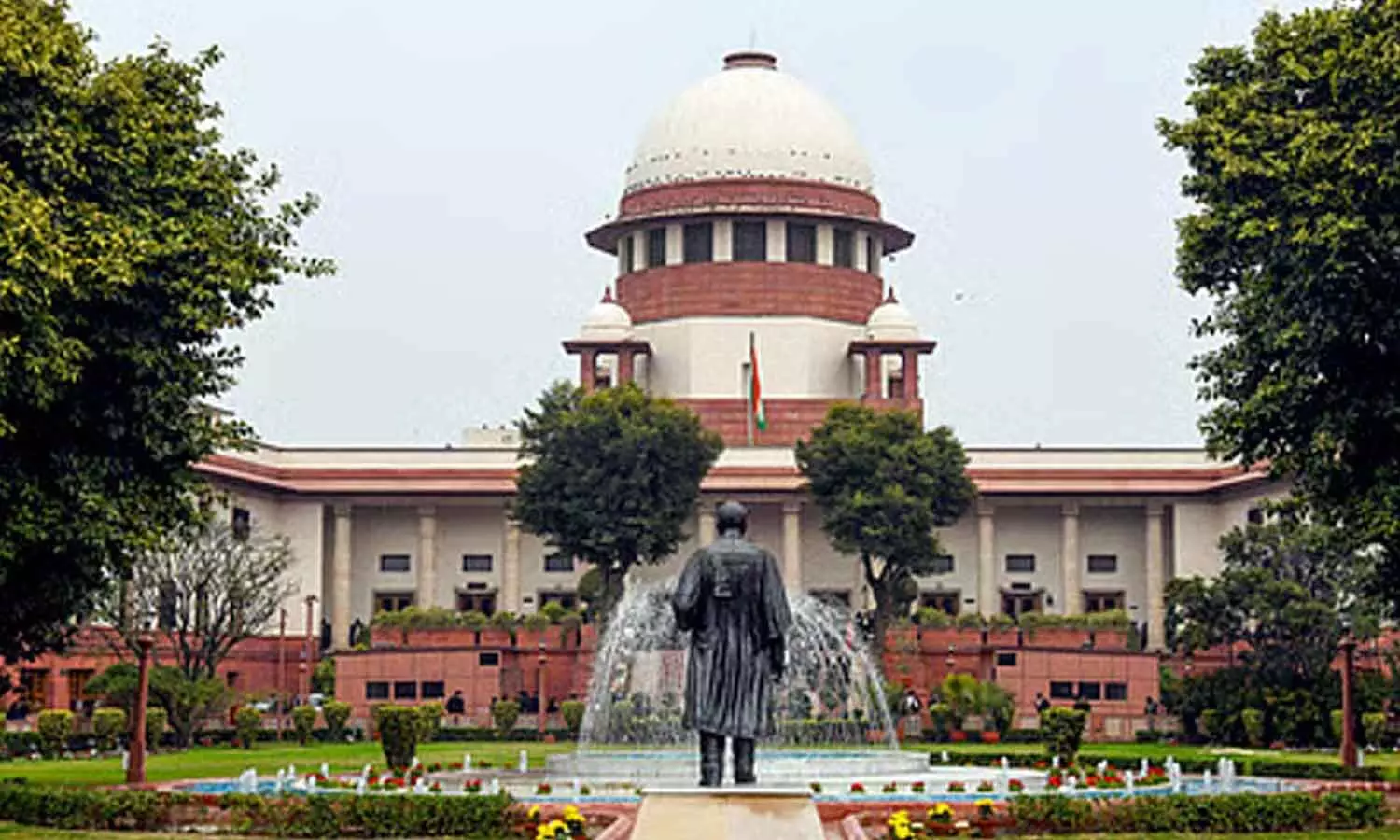
Supreme Court
New Delhi: The Supreme Court on Friday directed the Centre to ensure that there is no "complete prohibition" of the movement of metro and trains coming to Delhi on October 10 due to a CJP protest, saying they cannot bring everything to a halt. Though law enforcement agencies have the right to take steps to restrict unruly movement, citizens should not be unduly harassed, the top court said.
The bench comprising Chief Justice of India (CJI) Surya Kant and Justices Joymalya Bagchi and V Mohana was hearing a plea against the closure of 57 metro stations and cancellation of trains to Delhi in view of the protest.
The protest call has been given by the Cockroach Janta Party (CJP) and some student organisations against Chief Election Commissioner Gyanesh Kumar over alleged irregularities in the functioning of the Election Commission. "The only issue before us is whether the complete stoppage of metro trains and railway services from certain stations requires reconsideration," the bench said.
It told Solicitor General Tushar Mehta, appearing for the Centre, that there is a distinction between complete prohibition and regulation of the movement of metro and other trains. "The Solicitor General has fairly agreed to impress upon the authorities to reconsider the prohibition and allow the movement of metro trains and other railway services in a suitably regulated manner so that no inconvenience is caused to the residents of Delhi and the public at large, keeping in mind the principle of proportionality.
"In terms of that assurance, we make it clear that there shall be no complete prohibition on the movement of metro trains," the CJI ordered after hearing a battery of senior lawyers led by senior advocate Kapil Sibal in a packed courtroom.
The CJI said the restrictions must go no further than necessary to address the anticipated threat. "You have to prevent certain things. Take measures only to the extent necessary to prevent them," he said, adding that preventive action should not bring all movement to a halt. The bench directed the Centre to give due publicity to the decision taken by the authorities regarding the movement of metro trains and other railway services. It asked the Centre to take appropriate decisions in "a suitably regulated manner" to ensure that the "inconvenience to the public at large is minimised".
During the hearing, the bench expressed serious concern over the closure of entry and exit gates at several Delhi Metro stations and the cancellation of trains. "One should not use a hammer to kill a fly," the bench said.
It said that while the law enforcement agencies are entitled to take preventive measures to maintain public order, these must be proportionate to the threat and should not cause undue hardship to ordinary citizens. "We are mainly concerned about the complete closure of these metro station entries. We have serious concerns about this," the CJI told Solicitor General Mehta at the outset.
The court said its concern was not with the protesters or any individual, but with thousands of commuters travelling every day from Gurugram, Greater Noida and other parts of the NCR to Delhi for work, education and other essential activities. "They are students, employees and senior citizens who travel by public transport. We are speaking on behalf of the common citizens of this city," the CJI observed.
Kudos to GST Council for charting a new path
Ati Sarvatra Varjayet: Opposition must know where to draw the line
One El Niño and so many consequences
Rs 5,000-cr German aid to boost TG urban makeover
Rev up road projects in CURE: CM Revanth to officials
Pay for 10 days, travel for 30 days to ASR International Airport


