Trump’s Education Overhaul: Federal Dept Faces Uncertain Future

Trump Officials Face Fallout Over Military Plans Leak
Trump signs an executive order to dismantle the U.S. Education Dept, shifting control to states. Congress approval is needed. Legal battles ahead.
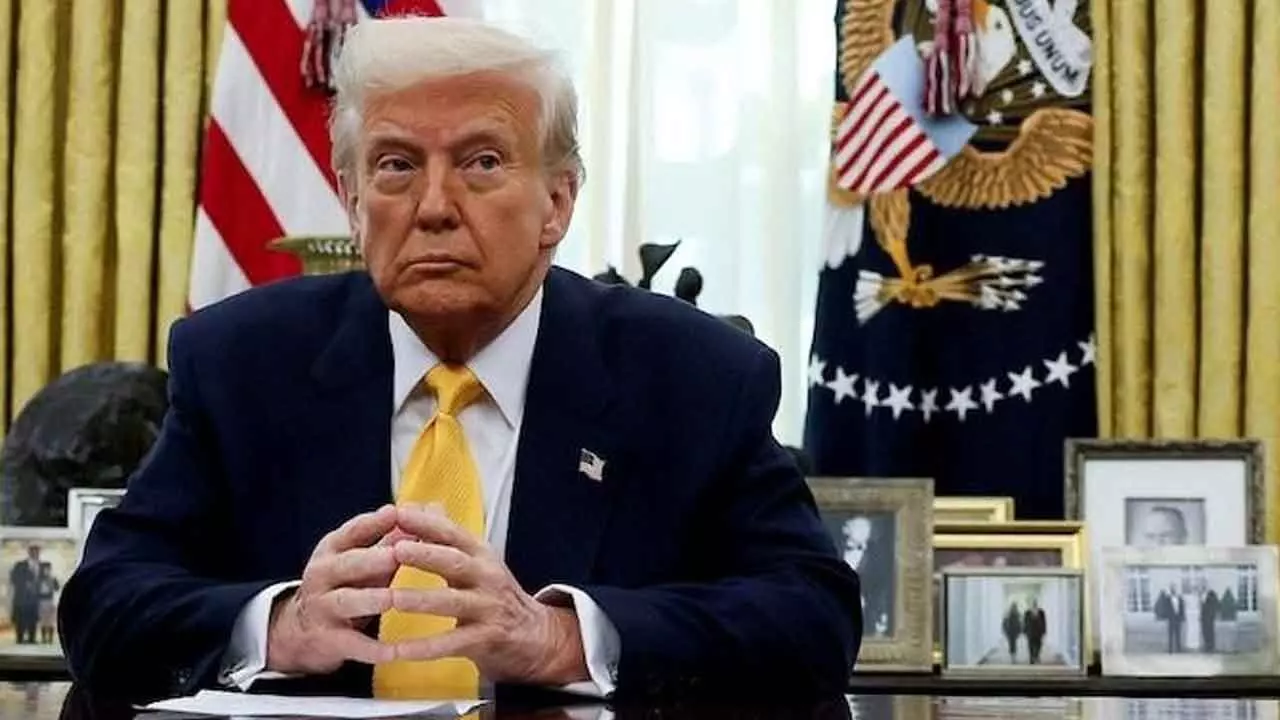
President Donald Trump signed an executive order on Thursday to dismantle the U.S. Department of Education, fulfilling a key campaign pledge to shift control over education policy from the federal government to individual states.
The order, titled "Improving Education Outcomes by Empowering Parents, States, and Communities," tasks Education Secretary Linda McMahon with overseeing the transition. Trump argues that eliminating the department will provide families with more educational choices and reduce federal oversight, which conservatives have long criticized as bureaucratic overreach.
Established by Congress in 1979 during the Carter administration, the Department of Education manages federal education policy, enforces civil rights laws, and administers student financial aid programs, including Pell Grants for low-income students. It also collects and analyzes national education data to identify systemic issues.
Since Trump’s inauguration, staffing at the department has declined significantly. The workforce, which numbered 4,133 before his presidency, has nearly halved. By March 11, only about 2,183 employees remained, with many departing through voluntary resignations or administrative leave. The restructuring aligns with broader federal workforce reductions led by the Department of Government Efficiency, overseen by Elon Musk.
The directive argues that the federal education system is failing students. Citing data from the National Assessment of Educational Progress (NAEP), the order highlights that in 2024, 70 per cent of eighth graders scored below proficiency in reading, while 72 per cent fell short in mathematics.
“The Federal education bureaucracy is not working,” the order states, advocating for a decentralized approach where states and local communities assume primary responsibility for education policies.
NAEP data indicates that student performance in reading and math has remained relatively unchanged since 2022. While reading scores for eighth graders have fluctuated slightly since the 1970s, math scores saw steady growth until 2012 before declining and stabilizing in 2024.
Internationally, U.S. students rank 19th in skill levels, according to the Organisation for Economic Cooperation and Development (OECD) Better Life Index. In mathematics, the U.S. placed 28th among 37 OECD nations in 2022, while in science, it ranked 12th, based on Pew Research Center findings.
A 2024 All4Ed poll found that 58 per cent of Americans oppose dismantling the Department of Education. Critics argue that the move prioritizes politics over policy, with Ted Mitchell, president of the American Council on Education, calling it “political theater, not serious public policy.”
The plan requires congressional approval, as only lawmakers can dissolve a federal cabinet-level department. While some Republican lawmakers support the initiative, achieving the necessary votes poses a challenge. The Senate, with 53 Republican members, falls short of the 60 votes needed for approval. A previous House vote in 2023 saw bipartisan opposition, with 60 Republicans joining Democrats in rejecting a similar proposal.
Trump’s order assures that student loans and financial aid programs will continue. The Department of Education manages $1.69 trillion in outstanding student loan debt for nearly 43 million borrowers. The administration has pledged that these services will remain intact, with responsibilities shifting to other federal agencies and state governments.
“We’re preserving these programs in full and reallocating them to agencies that will manage them effectively,” Trump said Thursday. However, the specifics of this transition remain uncertain.
Sen. Bill Cassidy (R-La.) expressed support, stating, “I agree with President Trump that the Department of Education has failed its mission.” Cassidy pledged to introduce legislation to carry out the executive order’s goals.
However, given past congressional resistance and the composition of the current House and Senate, the plan faces significant political and legal obstacles. The final outcome will depend on negotiations within Congress, legal challenges from advocacy groups, and how states respond to the proposed decentralization of education policy.
The order’s implementation timeline remains unclear, as its success hinges on congressional approval. Lawmakers will debate the issue in the coming weeks, determining whether Trump’s vision for reshaping U.S. education moves forward or stalls in legislative deadlock.