Aviation Minister Confirms Air India Crash Investigation Remains Domestic Operation

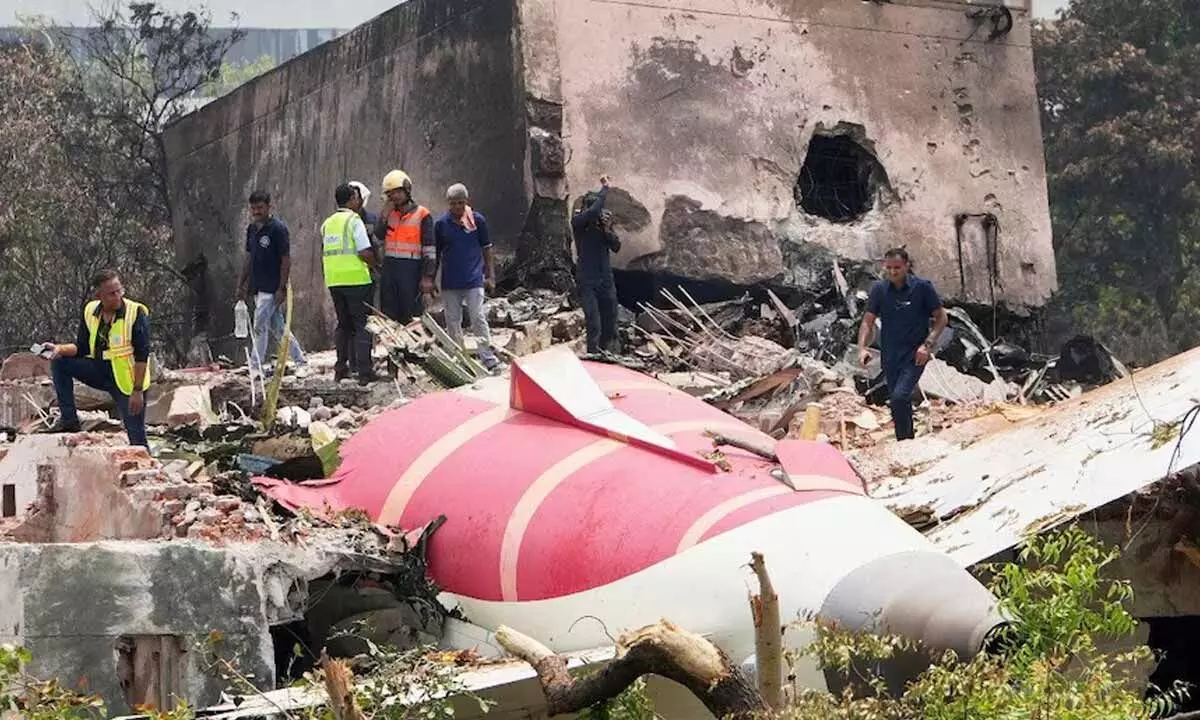
Civil Aviation Minister clarifies that Air India flight AI 171's black box remains in India for analysis by local investigators, contradicting reports about sending data recorders to US for examination.
India's Civil Aviation Minister Ram Mohan Naidu has officially confirmed that the flight data recorders from the crashed Air India aircraft continue to be examined within the country by domestic aviation safety authorities. The clarification addresses widespread speculation about the investigation's scope and international involvement.
As per sources, the minister's statement came in response to circulating reports suggesting that India planned to send the black box components to the United States for specialized data recovery services. These reports had indicated that the recording devices sustained significant external damage from the intense fire that followed the tragic crash, potentially necessitating advanced international expertise for data extraction.
However, the Director General of India's Aircraft Accident Investigation Bureau, GVG Yugandhar, formally dismissed these claims as "factually incorrect" in communications with international media outlets. The official did not provide additional details about the investigation's current status or methodology but emphasized that the analysis remains under Indian jurisdiction.
The tragic incident occurred on June 12 when Air India flight AI 171, operating between Ahmedabad and London, crashed shortly after takeoff from Sardar Patel International Airport. The Boeing 787 Dreamliner aircraft, carrying 242 passengers of various nationalities, struck a medical college hostel building in a devastating accident that claimed 274 lives, including passengers, crew members, and individuals on the ground.
The crash represents a significant milestone in aviation safety, marking the first fatal accident involving a Boeing 787 Dreamliner since the aircraft model entered commercial service in 2011. This distinction has drawn international attention to the investigation, given the aircraft type's previously strong safety record and widespread use in commercial aviation.
The intensity of the crash created extreme conditions at the impact site, with temperatures reaching approximately 1,000 degrees Celsius. These severe thermal conditions likely contributed to the external damage sustained by the flight data recording equipment, despite these devices being specifically engineered to survive catastrophic accidents and extreme environmental conditions.
Aviation investigators successfully recovered both critical recording components two days following the accident. The cockpit voice recorder captures all audio from the flight deck, including pilot communications and ambient sounds, while the flight data recorder maintains detailed information about aircraft systems, flight parameters, and performance metrics throughout the flight.
The Aircraft Accidents Investigations Bureau has been allocated a three-month timeframe to complete their comprehensive analysis of the incident. This investigation timeline is considered standard for complex aviation accidents requiring detailed technical analysis and coordination with multiple stakeholders.
Following the crash, aviation regulatory authorities implemented immediate safety measures across the Air India fleet. The Directorate General of Civil Aviation ordered comprehensive safety inspections of all Boeing 787 Dreamliner aircraft operated by the airline. Progress reports indicate that inspections have been completed on nine of Air India's 33 Dreamliner aircraft, with examinations continuing on the remaining fleet.
The black box analysis represents the most critical component of the investigation, as these recordings typically provide investigators with definitive information about the sequence of events leading to an accident. The data contained within these devices often reveals crucial details about aircraft performance, crew actions, and system failures in the moments preceding a crash.
While the complete investigation findings await the detailed analysis of the recovered data, aviation experts have begun offering preliminary theories about potential causes. Some specialists have suggested the possibility of dual engine failure based on observed aircraft behavior during the brief flight, though such assessments remain speculative pending official findings.
The investigation's outcome will likely have significant implications for Boeing 787 operations globally, particularly given the aircraft type's previous safety record. Aviation authorities worldwide typically review and potentially implement safety recommendations that emerge from major accident investigations, especially those involving widely-used commercial aircraft.
The domestic handling of this investigation demonstrates India's aviation safety infrastructure capabilities and commitment to maintaining control over critical safety analyses. The decision to retain investigation responsibilities domestically also reflects confidence in local technical expertise and investigative procedures.
As the investigation progresses, the aviation community awaits detailed findings that could influence future safety protocols and operational procedures for the Boeing 787 fleet worldwide. The comprehensive analysis of this incident will contribute to ongoing efforts to maintain and enhance commercial aviation safety standards globally.