Bridge of promise turns into corridor of peril

SC panel asks authorities to identify structural lapses of Haldiapadar bridge
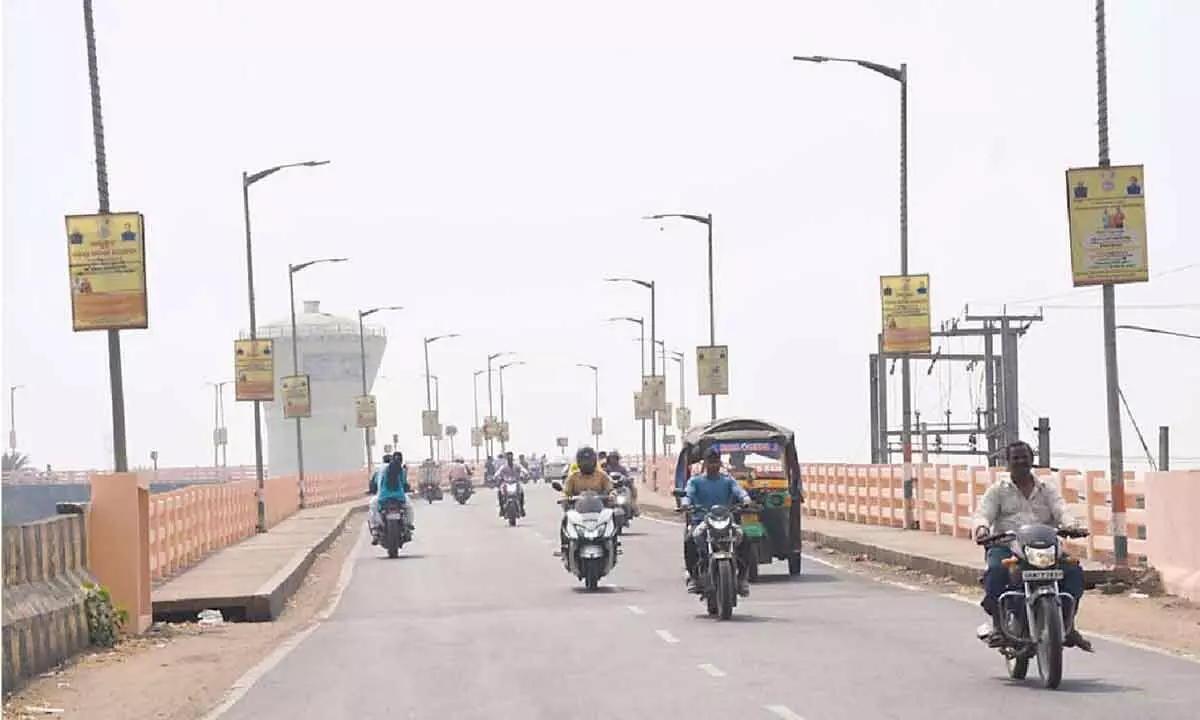
Berhampur: Once hailed as a milestone of urban connectivity, the Haldiapadar Railway Overbridge (ROB) has now become a symbol of mounting anxiety, grief and public outrage, as recurring fatal accidents expose what citizens call a dangerous flaw in both design and oversight.
Built in Berhampur to ease congestion over the busy railway crossing along National Highway 16, the bridge today carries a grim reputation. More than 20 lives have reportedly been lost in recent years, with the latest tragedy on January 31 claiming five lives and reigniting widespread concern over the structure’s safety.
Commuters allege that the overbridge’s geometric design itself is hazardous. Abrupt gradients, blind turns, U- and V-shaped curves, and narrow carriage space make navigation difficult, particularly for two-wheelers and small vehicles. During peak hours, congestion at entry and exit points turns the stretch into a chaotic bottleneck, increasing the likelihood of mishaps.
Public anger intensified after reports surfaced that the original alignment of the bridge was allegedly altered to avoid certain private land parcels, resulting in sharp and unsafe curves. The allegations have triggered a political war of words.
Sanakhemundi MLA Ramesh Jena has claimed that the faulty design was approved under external pressure and demanded immediate redesign of the structure. Actor-turned-politician and MLA Sidhant Mohapatra, who was the local MP when the project was planned, has called for a comprehensive investigation into why the design was modified. He stated that he had earlier raised the issue with successive senior officials.
Adding weight to public concern, Commerce and Transport Minister Bibhuti Bhusan Jena has acknowledged that the bridge has suffered from design deficiencies since its inception and assured that a redesign proposal would be taken up.
Meanwhile, the Supreme Court Committee on Road Safety has taken serious note of the recurring fatalities. The panel has sought a detailed report from the Odisha government by March 5, asking the authorities to explain the causes of accidents, identify structural or operational lapses, and outline both immediate and long-term corrective measures. The committee has also stressed strict enforcement against over-speeding and wrong-side driving, along with improved engineering safety and traffic management.
Following the recent tragedy, the State government ordered an intensive technical inspection. Officials are expected to examine structural geometry, traffic flow patterns and safety provisions before recommending remedial action.
Civic groups and transport operators, however, insist that temporary measures will not suffice. They have demanded structural correction of critical curves, widening of approaches, installation of barriers and illumination, speed-calming mechanisms, and round-the-clock traffic monitoring.
As vehicles continue to stream across Haldiapadar each day, the bridge stands at the crossroads of accountability. For the people of Berhampur, the demand is clear and urgent. They say infrastructure meant to connect lives must never become a passage to tragedy. Until lasting corrections are made, the Haldiapadar overbridge will remain not a symbol of progress, but a stark reminder that development without safety comes at a devastating human cost.