Economic reforms or electoral calculus as Bengal polls loom

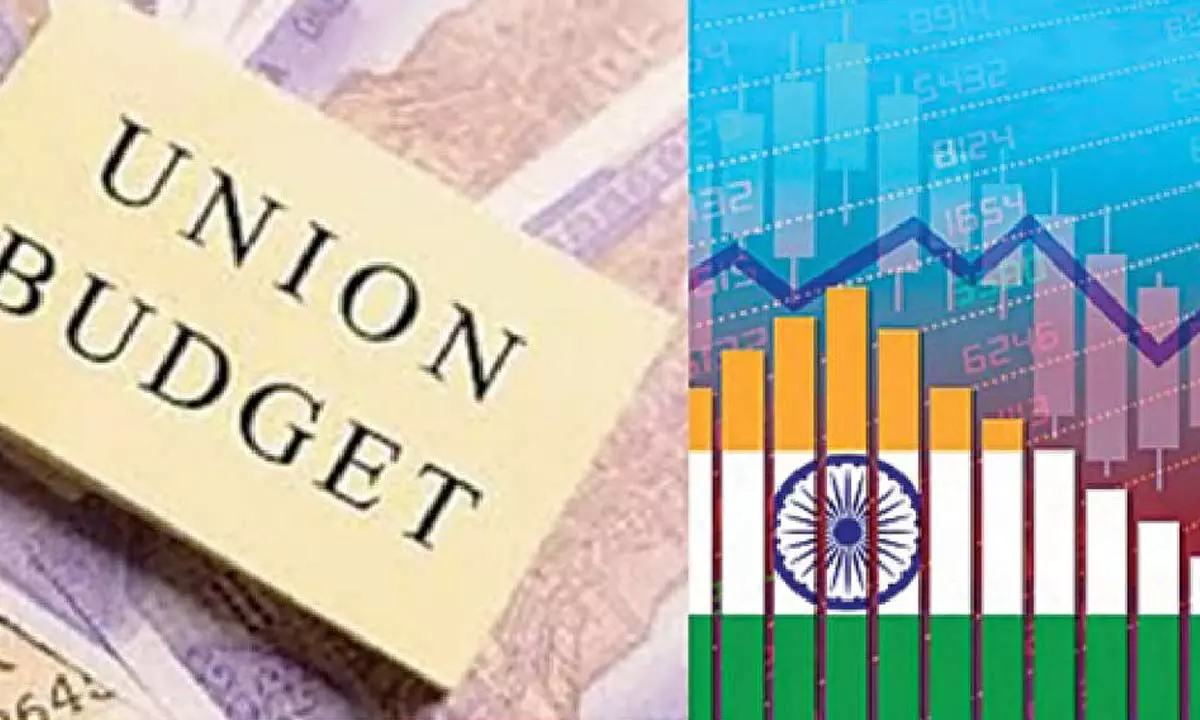
New Delhi: As the countdown to union Budget 2026-27 begins, all eyes are on Finance Minister Nirmala Sitharaman, who will present her ninth consecutive budget on February 1—an event that has become the country’s biggest annual economic and political moment. Coming early in the second full year of Prime Minister Narendra Modi’s third term, the 88th union Budget is expected to outline the government’s medium-term growth strategy.
Yet, with a clutch of crucial state Assembly elections due shortly—most notably West Bengal, where the BJP is going "whole hog” to unseat the Trinamool Congress—the question being asked in policy and political circles alike is whether Budget 2026-27 will be shaped as much by electoral arithmetic as by economic logic.
Sitharaman’s track record lends the moment added weight. She already holds the record for the longest budget speech in Indian history—two hours and 42 minutes in 2020—and is now just one budget short of Morarji Desai’s all-time record of 10. But symbolism aside, Budget 2026-27 arrives at a sensitive juncture: growth remains resilient but uneven, consumption has been propped up by fiscal measures, and states like West Bengal are heading into elections where economic messaging could prove decisive.
Media reports suggest the government will double down on priority sectors such as railways, MSMEs, defence, infrastructure and green energy, while sustaining last year’s consumption push. The breadth of expectations—from taxpayers to industry lobbies—underscores how politically consequential this budget could be.
Several economists argue that the budget must resist populist temptations and stay anchored in structural reform.
Piyush Doshi, Operating Partner at the Foundation for Economic Development, stresses the need for continuity and discipline. “The budget should build on deregulation, deepen customs reforms, liberalise FDI, and push asset monetisation, with a focus on sectors like tourism and labour-intensive manufacturing,” he says, cautioning that credibility with investors will matter more than short-term giveaways. Taxpayers, however, are watching closely. After last year’s sweeping overhaul of the new tax regime—effectively making income tax nil for those earning up to Rs 12 lakh annually—expectations of further relief remain high. Analysts points to the need for stability rather than surprise. More direct relief could also carry electoral overtones. Several economists have recommended that the basic exemption limit of Rs 4 lakh should be enhanced to Rs 6 lakh for salaried employees, a move that would benefit urban and semi-urban voters—an audience the BJP is keen to consolidate ahead of state polls, including in Bengal.
Employment creation—especially for youth—could be critical in states heading into elections. Reports highlight expectations of “investments in digital learning, AI, and infrastructure that create skilled jobs,” areas that allow the Centre to claim long-term vision while addressing immediate anxieties.
Green energy and agriculture are also likely to feature prominently. “The renewable energy sector expects strong policy continuity and enhanced incentives to accelerate the nation’s clean energy transition,” says Surbhi Puri, Director, Green Power International Pvt Ltd, noting that clean energy investments have both global credibility and local job potential.
The central question remains whether Budget 2026-27 will tilt towards electoral pragmatism or stay firmly reform-driven. Historically, Sitharaman has positioned herself as a fiscally conservative finance minister, often resisting overt populism even in politically sensitive years. Yet, with the BJP eyeing breakthroughs in upcoming Assembly elections—especially in West Bengal—the pressure to send a strong welfare-and-growth signal cannot be ignored.
© 2026 All Rights Reserved. Powered by Summit