What’s a security drill?

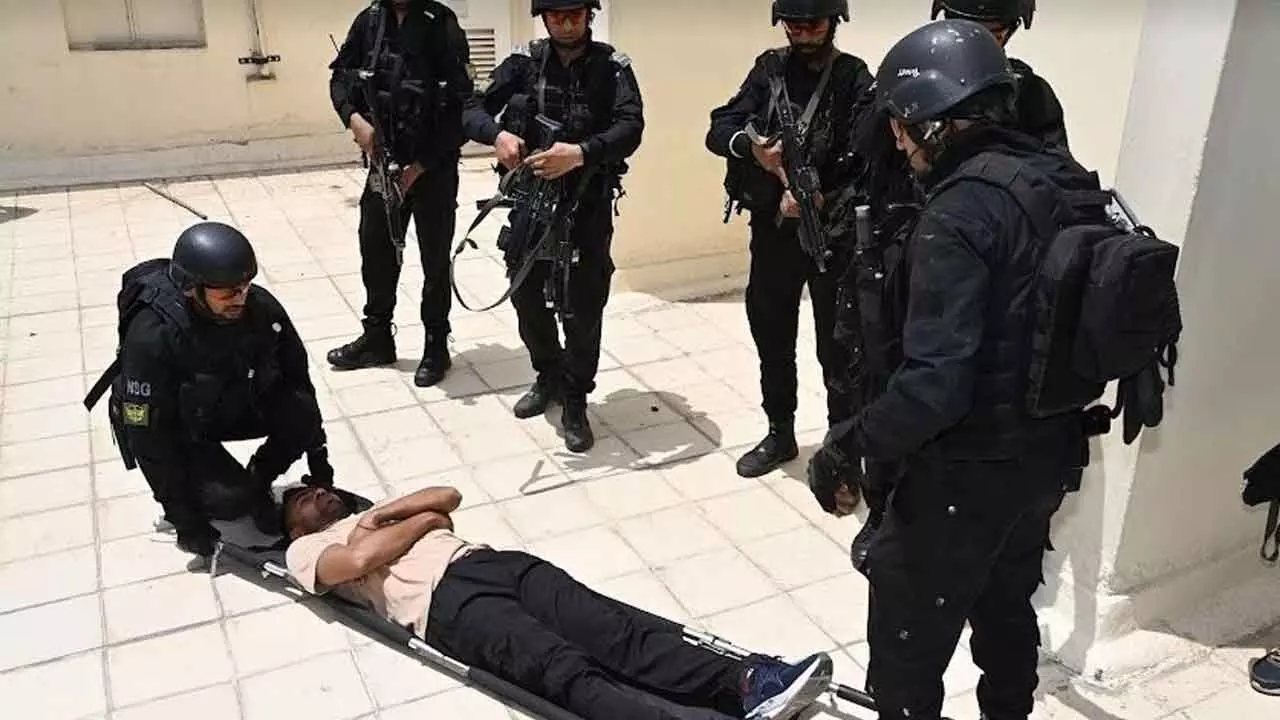
New Delhi: The Centre has asked all states and Union Territories to conduct a nationwide civil defence mock drill on Wednesday, to boost preparedness against a "hostile attack." This is the first such exercise since 1971, when India and Pakistan went to war.
A mock drill is a practice exercise that simulates an emergency, helping people and organisations practice their responses in a safe setting. These drills help people prepare to act quickly and effectively during real emergencies like fires, earthquakes, medical crises, or security threats.
In a mock drill, participants act out their roles as if a real emergency were occurring. This could involve evacuating a building, administering first aid, or following lockdown procedures.
According to the notification by the Union Home Ministry, the drill will assess how effective air raid sirens are in alerting people about aerial threats. It aims to train civilians to respond quickly and safely in case of an air strike. Hotline and radio links between civil authorities and the Indian Air Force will be activated and tested. The drill will check how well control rooms, and their backups (shadow rooms) perform during emergencies. People, including students, will be trained to protect themselves during hostile attacks through basic civil defence techniques.
The drill will include blackout exercises, where residents may be asked to switch off lights to simulate conditions during an air raid. Authorities will practice shielding critical infrastructure like airfields, refineries and rail yards from aerial detection or attack. The preparedness of rescue teams and firefighters will be tested. Evacuation plans will also be rehearsed to move people from danger zones to safer areas.
Civilians will receive hands-on training in providing basic first aid, handling fire-fighting equipment, and taking shelter during emergencies. Planned in nearly 300 civil defence districts, the drill will involve district authorities, civil defence volunteers, home guards, NCC, NSS, NYKS, and students. Civilians will also be trained to respond in emergencies.