Anyone cares for Ambedkar’s ideals?

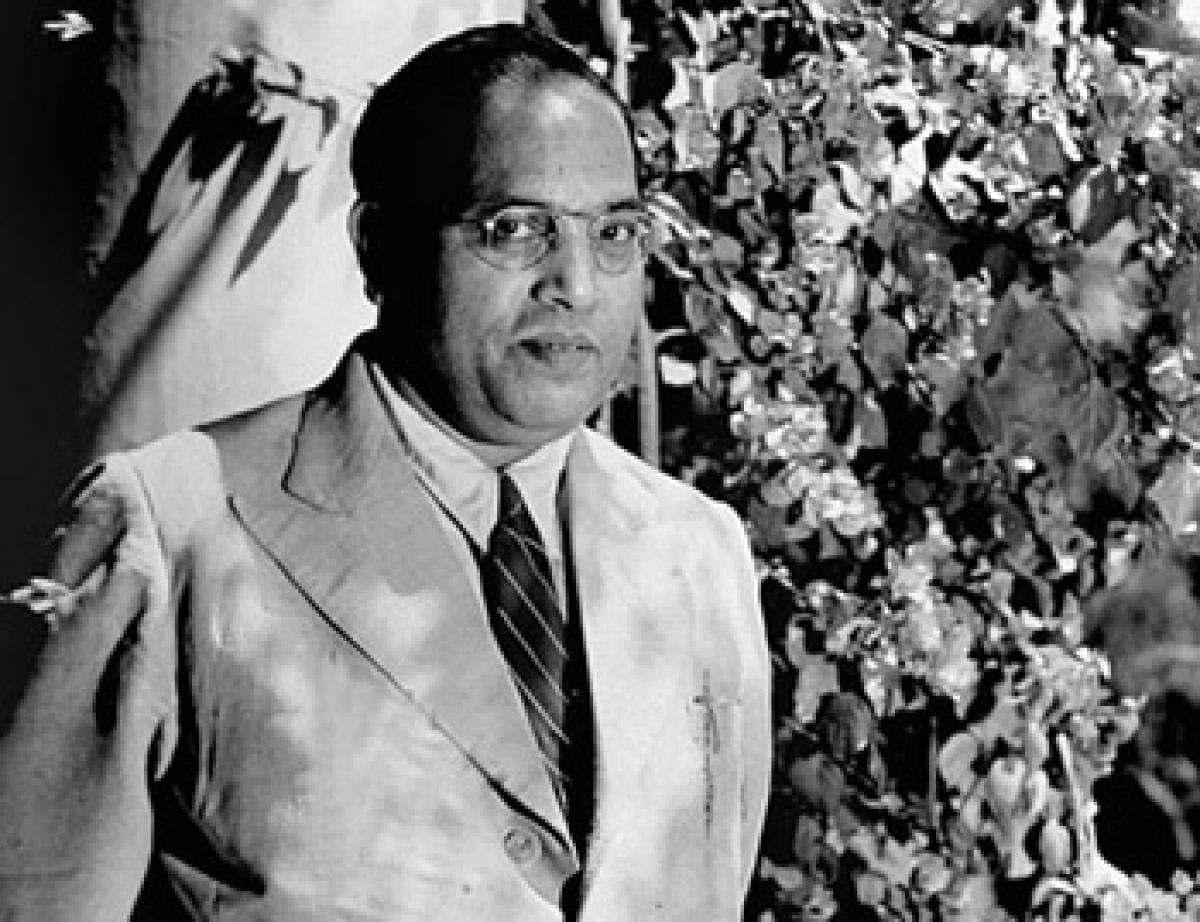
The Constitution Day events were a part of the year-long nationwide celebrations to mark the 125th birth anniversary of Ambedkar. We cannot prevent anyone from discussing Ambedkar, no doubt.
 Are we sure how many of the law makers and those who occupy positions of power beyond the elected ones keep reading the Constitution. This question remains pertinent because of the digressions that we see every time. It is also not known to us whether all those who routinely take Ambedkar's name, really read and understood the spirit of Baba Saheb. It is easier to drop Ambedkar's name when an injustice surfaces or an atrocity is committed. However, injustice and atrocities are not the only issues that Ambedkar had raised, or, was concerned about.
The beating that the fundamental rights had taken in this country in the last six-and-a-half decades makes a sad commentary. Baba Saheb not only talked about free speech and equal opportunities, he also spoke about guaranteeing cultural and religious rights. The recent attacks on individuals and groups and eliminations of dissenting voices, however, do not indicate that either the Constitution or Dr Ambedkar is respected in this country
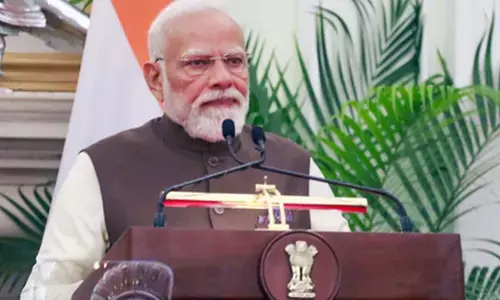
While laying the foundation stone of Dr B R Ambedkar Memorial in Mumbai in October, Prime Minister Narendra Modi announced that this year onwards, November 26, would be observed as the Constitution Day. Subsequently, we saw the Parliament debate on the same for two days during its just concluded winter session.
The Constitution Day events were a part of the year-long nationwide celebrations to mark the 125th birth anniversary of Ambedkar. We cannot prevent anyone from discussing Ambedkar, no doubt. But, how many men of good sense have spoken about Ambedkar of late, and with what intent remains to be answered.
On April 14 last, the Dalith History Month Collective questioned the political parties, especially the Congress and the BJP, asking them to keep their hands off Ambedkar if they really wanted to honour the Bharat Ratna.
Let us get to the basics of the Constitution making. It took 271 men and women who were part of the Constituent Assembly, to draft the Indian Constitution after three years of debate over the governing charter of India. The Constitution consists of 90,000 words carefully handwritten in English and Hindi. The books were also illustrated with events from Indian history, exquisitely prepared by the great national artist, Nandalal Bose, of Santiniketan.
There were no foreign consultants involved in framing the Constitution. The founders were particular that Indians should have full control over the drafting procedure. Thus, the assistance of several lawyer-members were sought and hence, Nehru, Rajendra Prasad, Ambedkar, and Alladi Krishnaswami Ayyar became a part of the team.
Based on expert inputs, the Assembly's Constitutional Adviser B N Rau, prepared an initial draft constitution in February 1948. Rau's draft was further revised by Ambedkar's drafting committee and issued in November 1948.
The Assembly took almost an year to discuss it. More than 2,000 amendments were considered and several, accepted. The drafting committee produced a revised draft, which was eventually adopted by the Assembly, with some changes, as the Constitution on November 26, 1949.
When the Assembly convened for its final session on January 24, 1950, its Secretary H V R Iyengar announced that Rajendra Prasad had been elected unopposed as India's first President. He invited members to sign the Constitution's calligraphic copies. Nehru was the first to do so and members from Madras followed him.
After the last member had signed the books, Prasad decided that he, too, must do so. But, rather than signing behind the last signatory, he inserted his name in the small space between the last line of the text and Nehru's signature (?). Two days later, the Constitution became fully effective. At a ceremony held in Rashtrapathi Bhavan's Durbar Hall, Governor General Rajagopalachari solemnly proclaimed India as a “Sovereign, Democratic Republic”.
In 1976, this became a "Sovereign, Socialist, Secular, Democratic Republic and ensure citizens of justice, equality and liberty and endeavour to promote fraternity among the citizens. Are we sure how many of the law makers and those who occupy positions of power beyond the elected ones keep reading the Constitution.
This question remains pertinent because of the digressions that we see every time. It is also not known to us whether all those who routinely take Ambedkar's name, really read and understood the spirit of Baba Saheb. It is easier to drop Ambedkar's name when an injustice surfaces or an atrocity gets committed.
However, injustice and atrocities are not the only issues that Ambedkar had raised, or, was concerned about. The beating that the fundamental rights had taken in this country in the last six-and-a-half decades makes a sad commentary. Baba Saheb not only talked about free speech and equal opportunities, he also spoke about guaranteeing cultural and religious rights.
What we heard in the Parliament the other day was a highly politicised version of these things which suits, perhaps, the professed ideologies of the political parties, but, certainly not the people, more so in case of the downtrodden and the unempowered and the disempowered segments of the society.
The Constitution expressly guarantees every citizen important fundamental rights, which may be subject to only certain restrictions. These rights include the ability to freely speak and express oneself; the freedom of conscience and to profess, practise, and even propagate a religion; basic protections against arbitrary arrest and detention by authorities, and various cultural and educational guarantees.
The recent attacks on individuals and groups and eliminations of dissenting voices, however, do not indicate that either the Constitution or Dr Ambedkar is respected in this country. The cause of concern is the primitivism that is being actively promoted. The practitioners of this primitivism - the primitivists - augur no good for this country. Their deeprooted conviction in the paradisal era or the 'golden age' is at loggerheads with not just the letter and spirit of the Constitution, but also the very Ambedkar philosophy.
The debate might have centred around the intrinsic values of our Constitution, but what is happening in the country, of late, is certainly not a happenstance. There is an ideological method to the madness. How do we justify the fact that Vishwa Hindu Parishad is bold enough to state that Ram Mandir's foundation will be laid sooneven as the matter is sub judice? What do the truck load of carved and uncarved stones displayed in neat piles in the precincts of the disputed land suggest to us?
Be it Muslims, Dalits and Tribals, could we ensure these sections total freedom? Alongside perhaps we may have to add rationalists and intellectuals opposed to the mainstream political ideologies to these groups. Then we may have to add leaders of the Opposition as well, some from within the ruling party who do not see eye to eye with the power centres, too, for a good measure to the list.
When every value and every fundamental right and the federal spirit is put on the chopping block, where does the Ambedkar's philosophy stand? As the Dalith Collective emphasises, they are "still fighting for justice for communities like Khandhamal, Laxman Bathe, Khairlanji, Tsunduru, and Bathani Thola. This list sadly goes on and on, because when it comes to Hindutva and caste atrocity, it is not about individual perpetrators and single localities it is about a culture of violence that perpetuates caste apartheid through a Hindutva-fuelled climate of terror. And it is abetted by a culture of impunity that rises from corrupt police officers directly to the highest elected office in our country that refuses to implement the rule of law for all.
Here is where we should wonder whether all those talking about Ambedkar have really read him. For, it is only then one would understand what secular egalitarianism is all about. Democracy for Ambedkar was all about a 'good society' based on "liberty, equality and fraternity" and he saw it as both the end and the means of the ideal. If it was with democracy that Baba Saheb wanted to achieve the goal, then he also saw it as coterminus with the realisation of the goals.
And “democracy” meant much more to him than the democratic government. It was a way of life: “Democracy is not merely a form of government. It is primarily a mode of associated living, of conjoint communicated experience. It is essentially an attitude of respect and reverence towards fellowmen” he said. Because, without economic and social democracy, a political democracy was meaningless to him. Does it mean anything to the present breed of politicians?