
Home Power Battery Backup: Features, Costs, and Top Options

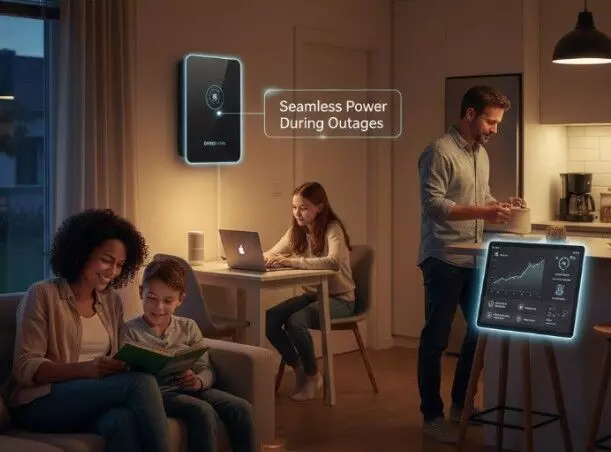
Home power battery backup systems are becoming part of normal home life. Many people now want more control over their power use, more protection from blackouts, and lower bills. A home battery gives you stored energy that you can use when the grid fails or when power prices are high.
This article will walk you through how these systems work, what features matter, how much they cost, and which options you should consider.
Home Power Battery Backup System Key Features
When you choose a home power battery backup system, you should pay attention to a few core features. These features have a big effect on performance, safety, and value.
Usable Capacity (kWh)
Every system has an energy capacity, usually measured in kilowatt-hours (kWh). This tells you how much energy the battery can deliver from full to its safe empty limit.
- A 5–10 kWh system can keep essential loads (lights, fridge, Wi-Fi, some plugs) running through most outages.
- A 10–15 kWh system can cover more of your house for longer.
- A 20 kWh or larger system can support big homes, home offices, or small businesses, especially when you pair it with solar.
You should always check usable capacity, not just nominal capacity. Usable capacity already accounts for depth of discharge limits.
Power Rating (kW)
Capacity tells you “how long.” Power rating tells you “how much at once.” A system with 10 kWh and 5 kW power rating can run loads up to 5 kW at any instant. That might be enough for fridge, lights, computers, and maybe a small air-conditioner.
If you want to run heavy loads like ducted air-conditioning, electric ovens, or EV charging during outages, then you should pick a system with higher continuous power and decent surge power.
Chemistry and Safety
Most new systems use lithium iron phosphate (LFP). This chemistry has good stability, long life, and strong safety. Other chemistries, such as NMC, have higher energy density but sometimes lower cycle life and tighter thermal limits.
You should check that the product has clear safety standards and certifications for your region. You should also ask your installer about safe clearances, mounting, ventilation, and how the system handles faults.
Cycle Life and Warranty
Battery life is not only about years; it is also about cycles. A cycle is one full charge and one full discharge. Many home batteries claim thousands of cycles, such as 6,000–10,000 cycles at a defined depth of discharge.
You should look for:
A clear time warranty (often 10 years).
A clear throughput warranty, which tells you how many total kWh the battery can deliver over its life. Many top systems now quote a minimum warranted throughput per usable kWh, which gives you a better sense of real lifetime value.
Efficiency
Round-trip efficiency tells you how much energy you lose in the charge and discharge process. Many modern systems reach 85–95% round-trip efficiency. Higher efficiency means lower losses and better value.
Installation Style: Wall Mounted Battery vs Floor Standing
You can often choose between a wall mounted battery and a floor-standing stack or cabinet. Each style has pros and cons.
- A wall mounted battery saves floor space and keeps the unit out of reach of small children and pets. It also keeps the battery above minor flood levels in garages or basements.
- A floor-standing cabinet can be easier to expand by stacking modules on top of each other.
If your space is cramped or if local rules limit floor space, a wall mounted battery design can make installation much easier.
Modularity and Expansion
Some batteries come as fixed-size units. Others use modular blocks that you can add later. If you expect your energy use to grow, for example with an EV or heat pump, then you should choose a modular system.
Modular designs also matter when you think about charging parallel batteries. You might see systems that link several battery modules in parallel. These modules share both charge and discharge current. A good BMS and well-designed busbars keep this safe and balanced.
Smart Features and Backup Modes
Modern systems often include:
- Time-of-use control, where the system charges when power is cheap and discharges when power is expensive.
- Backup mode, where the battery stays partly full to cover blackouts.
- Integration with smart meters, home automation, or virtual power plants (VPPs).
You should check that the app is stable, clear, and easy to use, because your long-term experience depends on it.
How Charging Works – Including Charging Parallel Batteries
Charging is a key part of safe battery operation. When you understand basic ideas, you can ask better questions and avoid risky setups.
Series vs Parallel
Battery banks may connect cells or modules in series, in parallel, or in a mix of both.
- Series connection raises voltage. For example, several 48 V modules in series move the system into higher DC voltage ranges.
- Parallel connection raises capacity and current. For example, several 48 V modules in parallel give more kWh at the same voltage.
Most home users never need to design these links themselves. The battery manufacturer and installer usually supply pre-built modules and clear cables. The BMS watches every module.
Charging Parallel Batteries Safely
Some people think about charging parallel batteries by themselves without a complete system. They might want to add an extra battery to a system that is already in place. This idea can be risky if the batteries do not match or if the system does not control them well.
If you put batteries in parallel, each unit will try to share charge and discharge current. If voltages or internal resistance are not similar, one battery can work harder than another. This problem can lead to uneven aging, overheating, or even failure.
Because of this, you should:
- Always use matching batteries of the same model, age, and state of charge when you link them.
- Always let a single BMS watch all parallel modules.
- Always rely on a qualified installer and follow local electrical rules.
Most branded home systems make this easy, because the manufacturer designs all parts as a set and provides clear rules for how many modules you can parallel on one inverter.
What Do Home Power Battery Backup Systems Cost?
Costs can vary a lot by country, brand, and system size, but you can still look at some common patterns.
Cost per kWh
Many experts like to compare systems using cost per kWh of storage. In 2026, several price guides show that installed home battery systems commonly fall in the range of roughly $800 to $1,200 per kWh for mid-size systems when you include hardware and installation.
That larger systems often have a lower cost per kWh, because fixed costs like the inverter and installation time spread across more capacity. If you look at cost per warrantied kWh over the life of the system, numbers can drop to only a few dozen cents per kWh, depending on brand and warranty terms.
Typical System Price Ranges
For a rough sense of full system prices in markets with strong solar uptake:
- Small battery systems around 5–6 kWh often sit around the lower end of the price range.
- Mid-size systems around 10–13 kWh commonly sit near the middle of the range.
- Larger systems around 15–20 kWh or more can reach the upper bands in total price but often show better cost per kWh.
In Australia, that installed solar plus battery packages like a 6.6 kW solar system with a 6–10 kWh battery can range from roughly $10,000 to $19,000, depending on brand and exact system size.
These numbers include hardware and typical installation, but they do not always include extra switchboard upgrades, smart panels, or backup rewiring.
Factors That Influence Price
Many factors can raise or lower the final cost:
- Brand and model: For instance, a brand like Avepower offers more robust warranties and software features. Their batteries can cycle more than 8,000 times, which means you can use them for over ten years.
- System size: Larger batteries cost more in total but usually less per kWh. The batteries of the Avepower brand are designed in a modular way. You can start with a smaller capacity and gradually increase it according to your household electricity consumption needs.
- Inverter type: AC-coupled systems often cost a bit more in hardware but can be easier to retrofit. Hybrid inverters can be cheaper if you install solar and battery at the same time.
- Backup level: Whole-home backup often needs more hardware and more labour than essential-load backup.
- Installation complexity: Older switchboards, long cable runs, wall repairs, and limited access can all push labour costs up.
Government incentives and rebates: Some regions offer rebates or tax credits that reduce the net price. In those places, you should always check current rules, because programs change over time.
Running Costs
Home batteries do not use fuel, but they still have running costs:
- Very small standby losses.
- Occasional maintenance visits, depending on installer rules.
- Possible app or monitoring fees with some platforms.
Most of your “cost” comes from battery wear over time. That is why it is useful to think about cost per warrantied kWh and not just up-front price.
Top Options and System Types
The best home battery for you will depend on your roof, your tariff, your budget, and your wiring. Still, you can look at several leading types and brands as reference points.
Smart Wall Mounted Battery Systems
Many of the most popular systems are compact wall units that combine elegant design with strong software. In recent years, lists of top home batteries often include:
- Tesla Powerwall 3, known for strong integration with solar and a sleek wall design.
- The Avepower wall-mounted battery can achieve energy independence by being used in conjunction with solar panels.
- BYD Battery-Box products, some of which can mount on walls or in slim cabinets.
These systems usually work well for homes that want clean looks, simple apps, and powerful backup in a small footprint.
Modular Floor-Standing or Rack Systems
For higher capacity, many makers offer modular systems that stack modules on a floor rack.
- These towers can start at 10 kWh and scale up to 30 kWh or more.
- Many use LiFePO₄ modules in metal cabinets.
- Electricians can install several cabinets in a row for small businesses or big homes.
Modular racks are also a common path when you want to expand in the future and when you are happy to give up some floor space.
Hybrid Inverter plus Battery Kits
Some options use a hybrid solar inverter plus one or more external battery modules. This setup can be cost-effective when you install solar and battery at the same time.
- The hybrid inverter charges the battery directly from DC solar.
- The same unit exports to the grid and feeds your home.
- The battery modules may mount on a wall or stand on the floor.
This type can be ideal if your home does not already have solar or if your current solar inverter is old and due for change.
Portable Whole-Home Backup Systems
A newer category is high-power “portable” systems that can still support whole-home backup with special switchgear.
Recent news has shown larger portable stations that start around 12 kWh and scale to more than 100 kWh, with high power output and smart panels. These systems often mount on wheels and connect to a smart home panel that splits backed-up loads from non-backed-up loads.
These products can be a good fit if you want backup that you can move or re-deploy, for example between a house and a holiday cabin.
Final Thoughts
A home power battery backup system is no longer a rare luxury. It is a practical tool that gives you backup, bill savings, and more control over your energy.
You should always work with a qualified installer, read the warranty carefully, and focus on usable capacity, real-world performance, and after-sales support. If you follow these steps, your home power battery backup system will serve you well for many years and will help you feel calm when the lights flicker and the grid goes down.


