Apple Set to Revolutionize iPhones with Satellite-Powered Maps and Messaging for No-Signal Zones

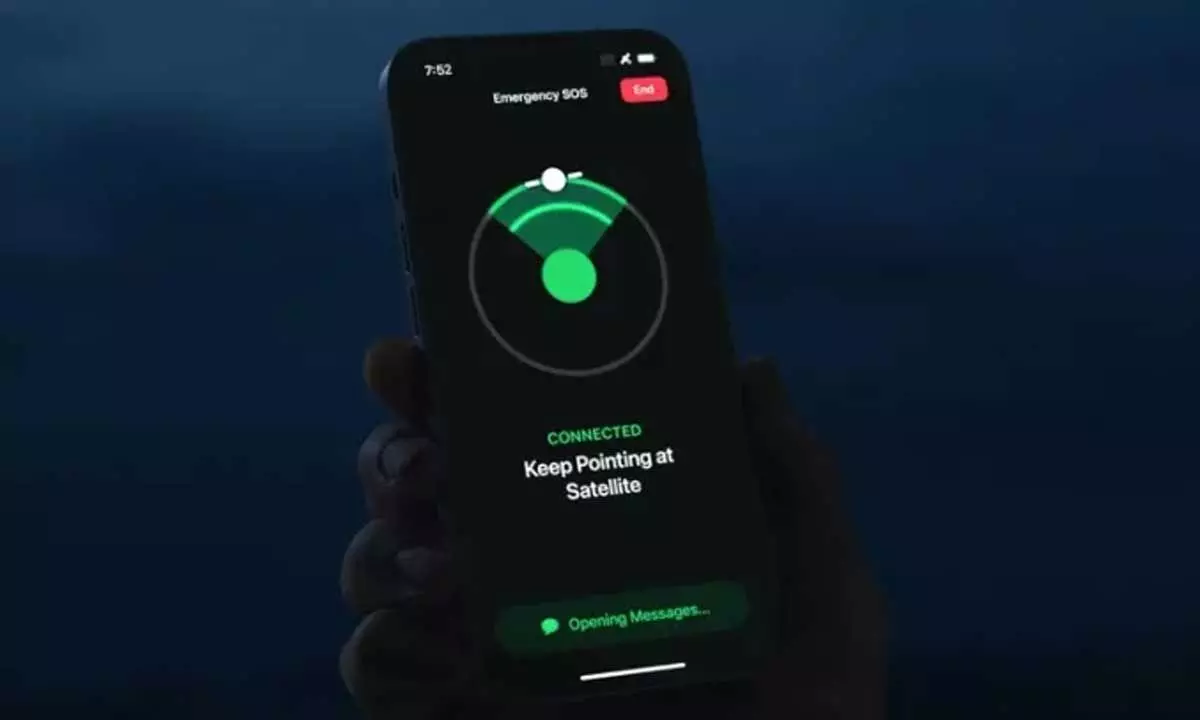
Apple is expanding satellite connectivity to make iPhones work with Maps and Messages even without mobile networks, ensuring true off-grid usability.
Apple is reportedly gearing up to make iPhones even more powerful in no-signal zones by introducing advanced satellite-based features for Maps and Messages. According to a Bloomberg report, the tech giant aims to enable navigation and communication without relying on traditional mobile networks — a move that could redefine how users stay connected in remote areas.
The initiative builds on Apple’s existing Emergency SOS via Satellite, first launched with the iPhone 14 in 2022. This feature allows users to contact emergency services when cellular coverage is unavailable. Later, Apple added roadside assistance via satellite to help stranded drivers in low-network areas. Now, the company’s next big leap is to bring everyday tools like Apple Maps and iMessage into the satellite era.
Apple’s Satellite Connectivity Group is at the heart of this development. The team is collaborating closely with Globalstar, the satellite operator that currently powers Apple’s emergency services. Though Globalstar’s network is smaller compared to SpaceX’s Starlink, it has proven reliable for Apple’s current offerings. In fact, Apple is said to be investing in upgrades to Globalstar’s infrastructure to support future satellite-enabled features.
One major improvement under development focuses on “natural usage.” At present, users must manually point their iPhone toward the sky to establish a satellite connection. Apple’s next-generation system aims to eliminate this requirement, allowing devices to stay connected seamlessly — whether kept in a pocket, car, or backpack.
In addition, the upcoming iPhones are expected to support 5G NTN (Non-Terrestrial Networks), which integrates traditional mobile towers with satellite systems. This hybrid connectivity could provide stronger, more consistent coverage in regions where mobile signals often fluctuate — including rural and remote parts of India.
Apple’s satellite push isn’t just limited to its own apps. Reports suggest the company is working on a developer framework that would let third-party apps tap into satellite connectivity. This means apps related to travel, safety, or health could function even when users are completely off the grid — a feature with immense potential for adventurers and emergency responders alike.
The move also comes amid rising competition in the satellite communication space. Elon Musk’s SpaceX has partnered with T-Mobile to bring satellite messaging to Android devices, while Verizon and AT&T are developing similar solutions. By expanding its satellite capabilities, Apple aims to maintain a competitive edge while reducing dependence on mobile carriers.
However, challenges remain. Globalstar, Apple’s key satellite partner, is reportedly exploring a sale — with SpaceX among potential buyers. Such a shift could force Apple to reconsider its long-term satellite strategy and partnerships.
Despite that uncertainty, Apple’s direction is clear. The company’s goal is to keep users connected anywhere, anytime, while maintaining its signature standards of privacy and security. Future upgrades may even allow photo sharing via satellite, though full-scale calling and browsing features are still under development.
If these innovations roll out as planned, iPhone users could soon navigate and communicate in even the world’s most isolated regions — bringing Apple’s vision of universal connectivity one step closer to reality.