Apple’s 20th Anniversary iPhone May Introduce a Seamless All-Screen Design

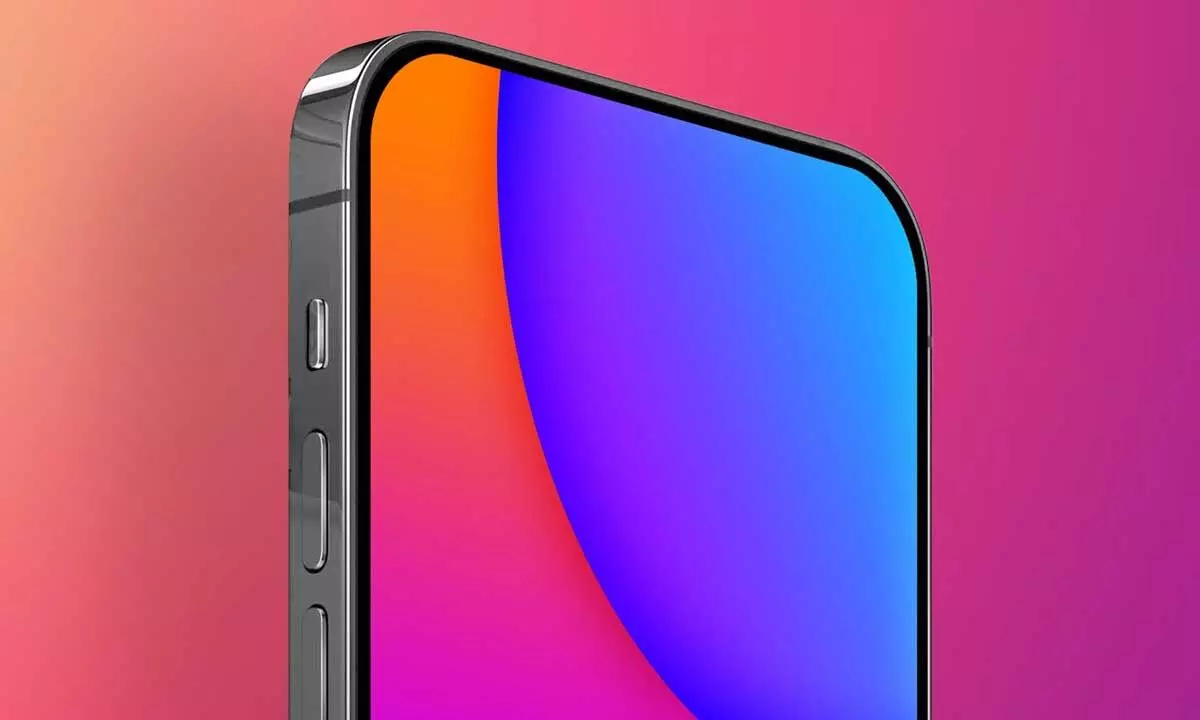
Apple’s 2027 anniversary iPhone could debut a seamless, cutout-free display with advanced under-screen technology, redefining smartphone design standards globally.
As Apple Inc. approaches the 20th anniversary of the iPhone in 2027, expectations are building around what could be one of its most ambitious design overhauls yet. Reports suggest the company is preparing a special edition model—widely referred to as the “iPhone 20”—that may introduce a radically new look, pushing closer to Apple’s long-envisioned all-glass smartphone concept.
According to recent insights, the anniversary iPhone could feature a quad-curved display that wraps around all four edges of the device. This design would significantly reduce visible bezels, creating an almost uninterrupted screen experience. Unlike current curved displays that typically bend along the sides, this approach aims to extend the curvature across the entire perimeter, offering a more immersive and futuristic appearance.
One of the most talked-about possibilities is a completely cutout-free display. Apple is reportedly exploring ways to integrate the front-facing camera and Face ID sensors beneath the screen. While earlier attempts across the industry have faced limitations—especially with image quality and sensor accuracy—Apple appears to be continuing its research in this area.
A report from 9To5Mac indicates that development is still ongoing, and it remains unclear how close the technology is to commercial readiness. However, the direction signals Apple’s commitment to eliminating notches, punch-holes, and other display interruptions that have defined smartphone design over the past decade.
Interestingly, even if Apple does not fully achieve a cutout-free display in time for the 2027 release, the quad-curved design alone could mark a significant shift. It may also tie into previous rumors suggesting that Apple is experimenting with haptic-based controls, potentially replacing physical buttons altogether. This would further reinforce the vision of a seamless, glass-dominated device.
Another key aspect under development is the integration of under-display Face ID. This has proven particularly challenging because Face ID relies on infrared light, which struggles to pass through standard display layers. To address this, Apple has reportedly explored innovative display structures that allow more light transmission.
A previously noted patent describes a system where specific subpixels are selectively removed or modified. This adjustment could enable better light penetration to sensors placed beneath the display, improving both facial recognition accuracy and camera performance. Such advancements would be crucial for maintaining Apple’s high standards in biometric security.
While many details about the device remain speculative, the anniversary iPhone is shaping up to be more than just an incremental upgrade. Instead, it could represent a broader evolution in design philosophy—one that prioritizes minimalism, immersion, and advanced material engineering.
If these innovations materialize, the “iPhone 20” could stand as a milestone product, celebrating two decades of the iPhone by redefining what a smartphone can look and feel like.