Supreme Court Warns WhatsApp Over Privacy: Follow India’s Laws or Face Consequences

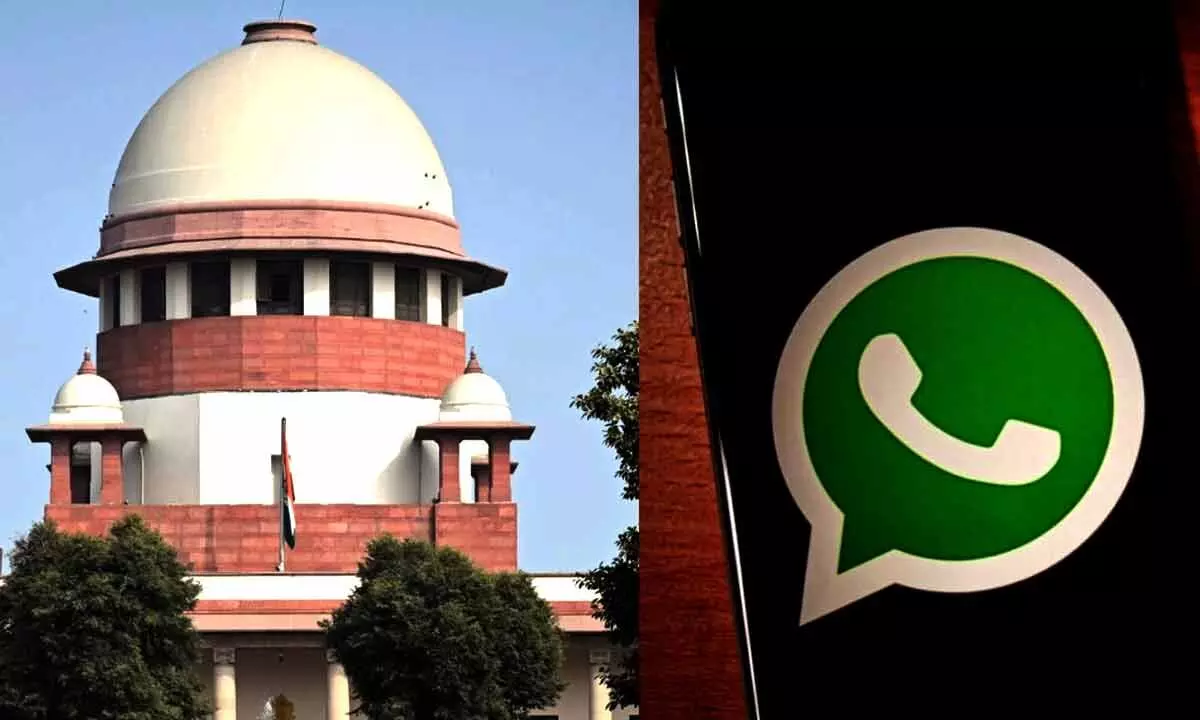
India’s Supreme Court sends a strong message to WhatsApp: user privacy is a constitutional right, not negotiable for business or data profits.
For millions of Indians, WhatsApp is more than just a messaging app — it is an everyday necessity. From family chats and office coordination to digital payments and small businesses, the platform has become deeply embedded in daily life. That’s exactly why the Supreme Court’s sharp rebuke to WhatsApp’s parent company, Meta, has sparked widespread concern and debate.
When the Chief Justice remarked, “If you can’t follow our Constitution, leave India,” it wasn’t just rhetoric. It was a powerful signal that India is prepared to draw a firm line when it comes to citizens’ privacy rights.
How the controversy began
The issue dates back to WhatsApp’s 2021 privacy policy update. The revised terms informed users that certain data could be shared with other Meta-owned companies to help “operate, improve, customise, and support” services and advertising.
Users faced a stark choice — accept the new terms or stop using the app. There was no clear option to opt out of data sharing while continuing the service. While WhatsApp maintained that personal chats remain protected through end-to-end encryption, information shared with business accounts could still be collected and used for commercial purposes.
That distinction failed to ease fears, especially in India, WhatsApp’s largest market.
Why the court stepped in
The case resurfaced during hearings related to appeals filed by WhatsApp and Meta against an order from the Competition Commission of India (CCI). The regulator had imposed a Rs 213.14 crore penalty, citing concerns over unfair practices, reduced competition, and lack of genuine user choice.
During proceedings, the Bench led by Chief Justice of India Surya Kant took a tough stance. The judges questioned whether consent could truly be voluntary when users were presented with what they described as a “take it or leave it” situation.
Justice Joymalya Bagchi called this “manufactured consent,” suggesting users were effectively pressured into agreeing.
The Chief Justice was even more direct: “Where is the question of opt out? This is a decent way of committing theft of private information.” He also observed that WhatsApp’s dominance leaves users with little alternative because “everybody uses it.”
The Bench made its position unmistakable: “We will not allow to share a single piece of information. You can’t play with the right to privacy in this country.”
WhatsApp’s defence
Meta’s legal team argued that WhatsApp is a free service and that only limited categories of data are shared. The company reiterated that it does not access private messages. However, the court appeared unconvinced, particularly given the platform’s massive scale and influence.
What happens next?
The Supreme Court has directed WhatsApp and Meta to submit an affidavit clearly stating that they will not share user data. The next hearing is scheduled for February 9. Failure to provide this assurance could weaken the company’s appeals.
Despite the stern warning, an immediate exit from India seems unlikely. India represents WhatsApp’s largest user base, making withdrawal impractical. Instead, the court’s message is clear: companies operating here must respect constitutional protections.
For Indian users, the outcome could redefine digital privacy and determine how much control they truly have over their personal data.