Uber and Nvidia Join Forces to Deploy 100,000 Self-Driving Cars by 2027

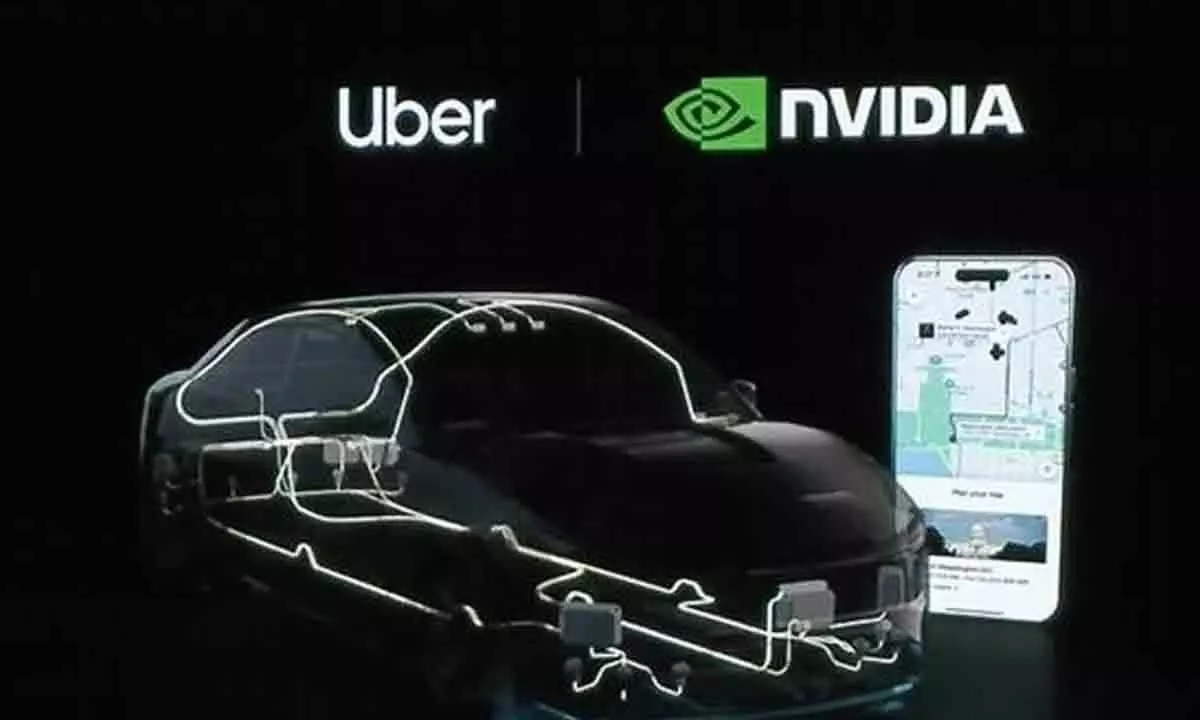
Uber partners with Nvidia and Stellantis to launch 100,000 AI-powered robotaxis by 2027, reshaping the future of ride-hailing.
Uber is accelerating toward an autonomous future with a bold plan to introduce 100,000 self-driving cars by 2027. The ride-hailing giant has announced a strategic partnership with Nvidia to build and operate a large fleet of robotaxis — a move that could redefine how people experience urban mobility.
The collaboration, unveiled at Nvidia’s GTC conference in Washington, DC, represents one of the most ambitious steps yet toward large-scale automation in ride-hailing. Nvidia’s cutting-edge AI computing systems and autonomous vehicle technology will power Uber’s future fleet, paving the way for robotaxis to become a mainstream option on the platform.
This initiative expands upon an earlier agreement between the two companies, under which Uber shared portions of its driving data to help Nvidia enhance its AI and self-driving models. During the event, Nvidia also showcased its latest innovation — the Nvidia Drive AGX Hyperion 10 platform — designed to provide car manufacturers with the hardware, sensors, and software needed for safe and efficient autonomous driving.
Under this alliance, Stellantis NV, the automotive group behind brands such as Jeep, Peugeot, and Chrysler, will supply at least 5,000 Nvidia-powered robotaxis to Uber. Foxconn will assist with hardware integration and systems assembly, with production expected to begin by 2028. Once these vehicles hit the road, Uber will manage all operational aspects — from remote assistance and charging to maintenance, cleaning, and customer support.
Although the large-scale rollout is still a few years away, Uber plans to begin pilot programs and testing soon. These early trials will gradually expand to meet the company’s ambitious target of 100,000 autonomous vehicles by the end of the decade.
The benefits for Uber could be transformative. A self-driving fleet promises to significantly reduce operational costs, increase reliability, and provide a more consistent customer experience. The company’s long-term profitability has often been challenged by its dependence on millions of human drivers worldwide. With robotaxis, Uber could achieve greater control and efficiency — provided the technology proves commercially viable and receives regulatory approval.
Uber already operates limited autonomous rides in Austin and Atlanta through a partnership with Alphabet’s Waymo and collaborates with WeRide in the Middle East. However, these programs currently involve only a few hundred vehicles. The Nvidia collaboration could dramatically expand Uber’s global footprint in autonomous mobility, giving it access to a broader ecosystem of AI developers and manufacturers.
In addition to the 100,000-vehicle target, Uber confirmed that it includes the 20,000 Lucid Gravity and Nuro cars previously committed under other agreements. Developers such as Avride, May Mobility, Momenta, Nuro, Pony.ai, Wayve Technologies, and WeRide are also expected to play vital roles in building this large-scale autonomous network.
Beyond the vehicles themselves, Uber and Nvidia are establishing a “robotaxi data factory” — a hub dedicated to collecting, labeling, and analysing over three million hours of driving data. This massive dataset will train and refine AI models to ensure safer and more efficient driverless systems.
In Uber’s own words, the partnership aims to create “a powerful data engine — spanning ingestion, labeling, scenario mining, synthetic data generation and large-scale training — that aims to shorten the path from pilot to profitable autonomy deployment.”