Chemically Ripened Mangoes Pose Serious Health Risks; Authorities Urged to Act Swiftly

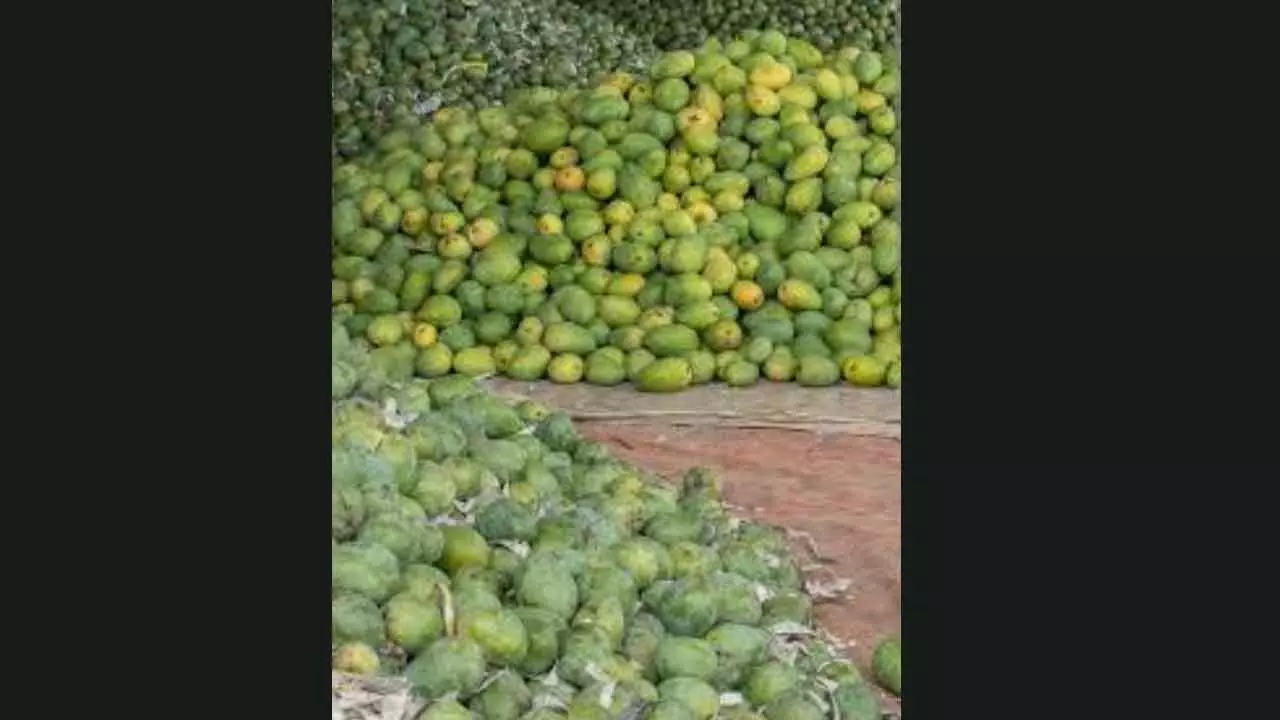
Gadwal: With the mango season in full swing, concerns are mounting over the illegal and dangerous practice of artificially ripening mangoes using banned chemicals like calcium carbide. Despite repeated warnings from food safety authorities, several fruit vendors and wholesale dealers continue to use harmful substances to speed up ripening, posing serious health risks to consumers.
The Dangerous Practice Behind the Scenes
Calcium carbide, a chemical compound commonly used in welding, is being misused to ripen mangoes. When it comes into contact with moisture, calcium carbide releases acetylene gas, a substance that mimics ethylene—a natural plant hormone responsible for fruit ripening. However, acetylene gas is toxic and unsafe for human consumption.
In addition to calcium carbide, other chemicals like Ethephon, a plant growth regulator, are also used. These substances can break down essential nutrients in the fruit and leave behind harmful residues that may lead to acute and chronic health problems.
Health Hazards of Artificial Ripening
Consumption of mangoes ripened with calcium carbide can cause a wide range of health issues:
Short-term effects: Headaches, dizziness, nausea, throat irritation, vomiting, skin rashes, and diarrhea.
Long-term effects: Hormonal imbalances, liver and kidney damage, nervous system disorders, and even cancer.
Residues can lead to the formation of arsenic and phosphorus hydrides, both of which are highly toxic.
Children, pregnant women, and the elderly are especially vulnerable to these health hazards.
How to Identify Artificially Ripened Mangoes
Consumers are advised to stay vigilant. Artificially ripened mangoes may:
Have a chemical smell instead of a natural fruity aroma.
Be unusually soft or mushy in texture.
Show patchy or pale yellow color with white or grayish spots.
Have a bland or bitter taste, unlike naturally sweet ripe mangoes.
Show external bruises or uneven ripening.
In water tests (though not foolproof), natural mangoes sink, while chemically ripened ones may float.
Legal Consequences for Sellers
Selling chemically ripened mangoes is a punishable offense under the Food Safety and Standards Act, 2006. Key provisions include:
Imprisonment up to 6 years and a fine of up to Rs. 5 lakhs for selling unsafe food.
Section 272 & 273 of IPC: Adulteration and sale of harmful food can lead to imprisonment and fines.
Use of calcium carbide is banned by the FSSAI, and violators may face prosecution, shop closures, license suspension, and even imprisonment in severe cases.
How to Report Such Cases
Citizens who suspect the sale of artificially ripened mangoes can take the following steps:
Call FSSAI's toll-free helpline: 1800-11-2100
WhatsApp photos or complaints to +91-9868686868
Report via FSSAI's online portal: https://foodlicensing.fssai.gov.in/cmsweb/Complaints.aspx
Use the “Food Safety Connect” app on Android/iOS.
Report to the local Food Safety Officer, municipal health department, or police station.
Complainants are encouraged to provide evidence such as shop details, photos, and medical symptoms (if applicable). Authorities can seize the fruit, penalize violators, and take legal action.
A Call for Awareness and Vigilance
Experts and health officials urge the public to buy mangoes from trusted sources, prefer seasonal local vendors who do not engage in forced ripening, and avoid overly polished, spotless fruits that may be artificially treated. A naturally ripened mango will always have a balanced aroma, color, and texture.
Authorities have been requested to intensify inspections across local markets, especially in Gadwal and surrounding mandals, to ensure public health is not compromised during the mango season. Citizen awareness and strict enforcement are crucial to curbing this dangerous practice.