Excessive urea use poses health risks in Telangana

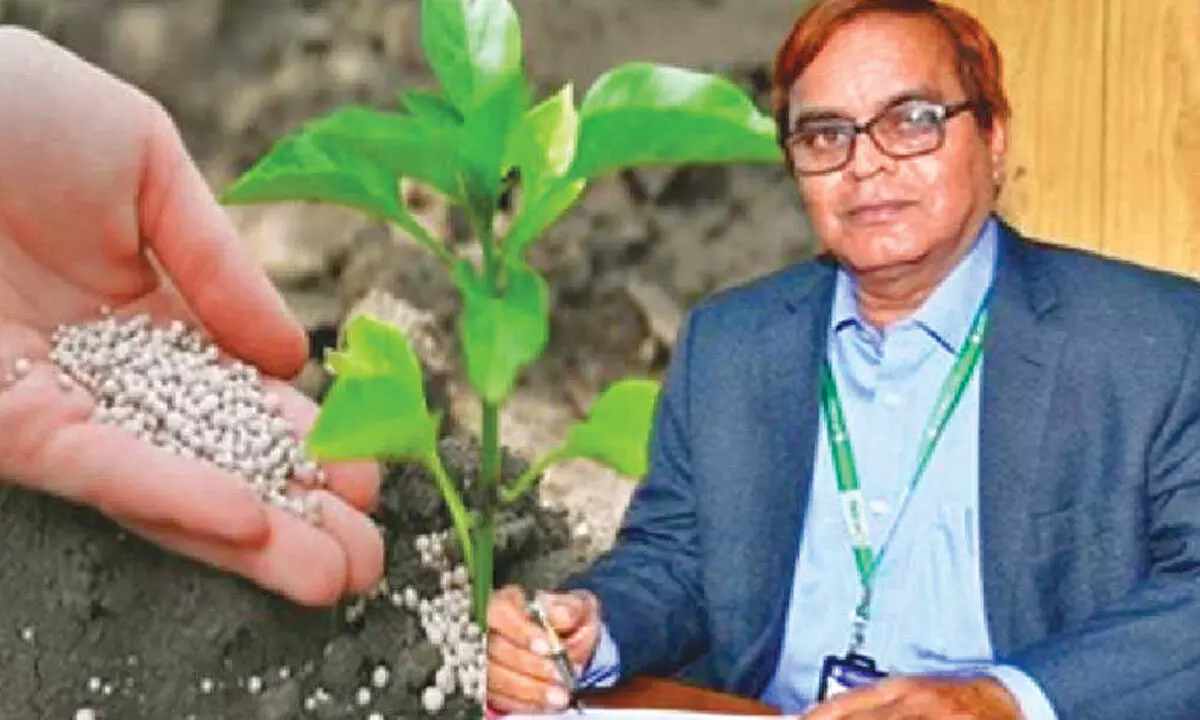
Hyderabad: Professor Aldas Janayya, Vice-Chancellor of Professor Jayashankar Telangana State Agricultural University (PJTSAU), has issued a strong caution to farmers across the state against the excessive use of urea fertilizer.
Addressing the media on Sunday, he emphasized that while urea is widely available at a lower cost, its overuse does not guarantee higher yields and instead poses serious risks to human health, soil quality, and future generations.
Based on preliminary data collected from several districts, Prof Janayya revealed that majority of farmers are using 50 to 100 per cent more urea than scientifically recommended levels. He noted that there is a widespread misconception among farmers that higher quantities of urea automatically lead to better crop yields. In reality, he explained, “excessive application results in chemical residues accumulating in food crops, which can cause severe health problems. Scientific experiments have confirmed that such residues contribute to long-term illnesses, including cancer and kidney-related diseases.”
He further warned that overuse of urea damages soil health by reducing nutrient availability and degrading its quality.
This imbalance weakens plant resistance, making crops more vulnerable to pests and diseases. Consequently, farmers are forced to rely on increased quantities of pesticides, which further compound environmental and health hazards.
Highlighting the nutritional needs of crops, Janayya clarified that while nitrogen is essential, it does not require excessive urea input. He urged farmers to adopt balanced fertilizer practices and avoid overdependence on urea simply because it is cheaper than other alternatives. “Responsible usage is vital to safeguard soil fertility, water quality, and the well-being of future generations,” he added.
Expressing grave concern, Janayya pointed to recent experimental findings that link consumption of food grown with excessive urea to reduced reproductive capacity in animals. He warned that similar risks could extend to humans, particularly youth, where fertility decline is a potential threat. He also cited the 2022 United Nations Environmental Assembly report on chemical fertilizers and health, which documented the global dangers of overusing synthetic fertilizers.
To address these challenges, he announced that PJTSAU’s Department of Food and Nutrition will conduct deeper research into the long-term impacts of urea on food safety and public health. He concluded by urging farmers to use fertilizers judiciously, protect natural resources, and prioritize sustainable agricultural practices for the benefit of society.