Is it time to scrap INTERMEDIATE EDUCATION?

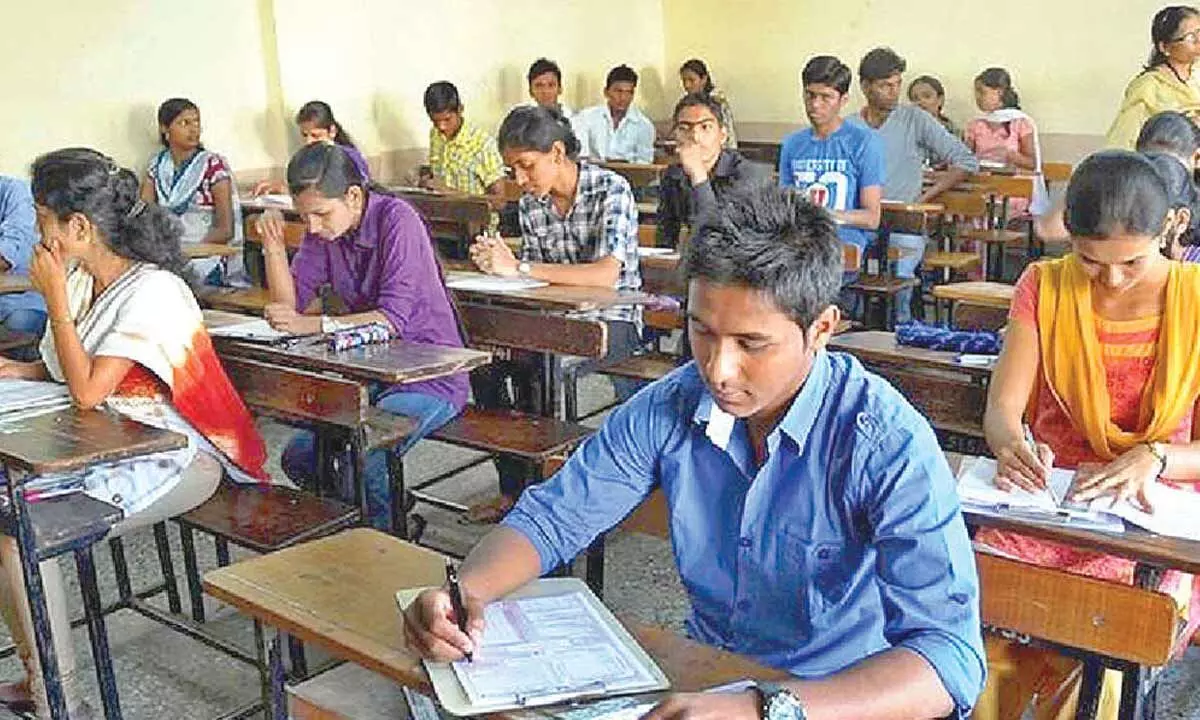
TheTelangana Education Commission (TGEC), along with the state government, has proposed a landmark merger of the Board of Secondary Education (BSE), which conducts Class X examinations, and the Board of Intermediate Education (BIE), responsible for Classes XI and XII. This move, inspired by the National Education Policy (NEP) 2020, aims to unify the secondary stage of schooling under one governance structure. Is it the right time to scrap intermediate education and go for the CBSE model?
The proposal has sparked a heated debate, with critics pointing to falling enrolment numbers and the lower pass percentage in BIE exams, compared to BSE. Concerns have been raised that such disparities could negatively impact the state’s Gross Enrolment Ratio (GER) at both secondary and higher secondary levels. Teacher associations have also questioned the practicality of the merger, arguing that separate job notifications will still be required for Class X, XI and XII faculty.
Despite these challenges, Telangana’s move aligns with NEP’s 5+3+3+4 model, which treats Classes IX–XII as a single secondary stage. The merger is expected to reduce dropouts, provide continuity in curriculum and pedagogy, and consolidate accountability under a uniform regulatory framework.
Meanwhile, running parallel to Telangana’s structural reform, the Central Board of Secondary Education (CBSE) has announced a major examination reform.
From 2026 onwards, Class X students will face two board exams annually—one in February and another in May. The first exam will serve as the main attempt, while the second will allow students to improve performance in up to three subjects. Results from the first exam will be uploaded to DigiLocker for provisional Class XI admissions, while final certificates and merit awards will be issued only after the second exam.
This dual-exam system directly addresses the high-stakes nature of board exams, offering flexibility and reducing stress. It also ensures inclusivity, with special provisions for sports students, winter-bound schools, and children with special needs (CWSN). Examination centres will be standardised, and schools will be assessed for suitability to maintain fairness and quality.
The broader vision of NEP-2020 is to achieve universal enrolment up to secondary education by 2030 and a 50 per cent GER in higher education. By focusing on skill development, holistic learning, and flexible subject choices, NEP aims to nurture a workforce that is innovative, employable, and globally competitive.
Education reforms are also expected to have a significant economic impact. According to the World Bank, each additional year of schooling can raise GDP growth by 0.37 per cent, while a one per cent increase in literacy adds 0.3 per cent. The National Bureau of Economic Research (NBER) estimates that if South Asian students attain basic skills, the region could gain $97.8 billion, with potential gains rising to $259.5 billion if all children acquire basic skills.
At a time when India is positioning education as a cornerstone of economic growth, Telangana’s proactive move to merge boards, and CBSE’s eventual dual exam reform, reflects NEP’s holistic approach to education, which can reduce stress, improve retention, and strengthen human capital formation. Together, these reforms represent a transformative shift in the country’s education system. By linking examination reforms and structural changes to GER improvements and GDP growth, India is building a future-ready education framework that supports both individual aspirations and national development goals. Telangana’s bold initiative could serve as a model for other states, which, when taken in earnest, can ensure that education becomes the engine of India’s fastest-growing economic story.