AP’s $2.3 billion seafood export industry in disarray

Shipping disruptions trigger shrimp price crash in the Godavari aquaculture belt
Amaravati: Escalating geopolitical conflicts involving Iran, Israel and the United States are beginning to negatively impact India’s seafood supply chain, with Andhra Pradesh, the country’s largest aquaculture hub, facing the brunt of economic fallout as shrimp exports from the Godavari region encounter disruptions.
Exporters and traders say the crises in West Asia have unsettled shipping routes and created uncertainty in international markets, particularly affecting shipments from aquaculture clusters in East and West Godavari districts. The region, widely regarded as the state’s aquaculture capital, exports large volumes of seafood through major gateways, including the ports at Visakhapatnam, Kakinada, and Chennai.
Industry sources say several containers carrying shrimp and other seafood products to the Gulf markets, Europe, and North America have been delayed, recalled, or cancelled amid growing concerns over maritime security near the strategic Strait of Hormuz. The disruption has particularly affected cargo movement to Gulf destinations such as Dubai.
The uncertainty has triggered panic harvesting among shrimp farmers, who fear that prolonged conflict could weaken global demand. Large quantities of shrimp are being rushed into domestic markets prematurely creating a supply surge that traders say has sharply pushed down farm-gate prices.
The Godavari aquaculture belt alone hosts around five major export companies, nearly 70 export firms and about 700 intermediaries who procure shrimp from farmers for exporters.
With exporters struggling to handle the sudden influx and facing limited cold storage capacity, the price pressure has intensified across the supply chain.
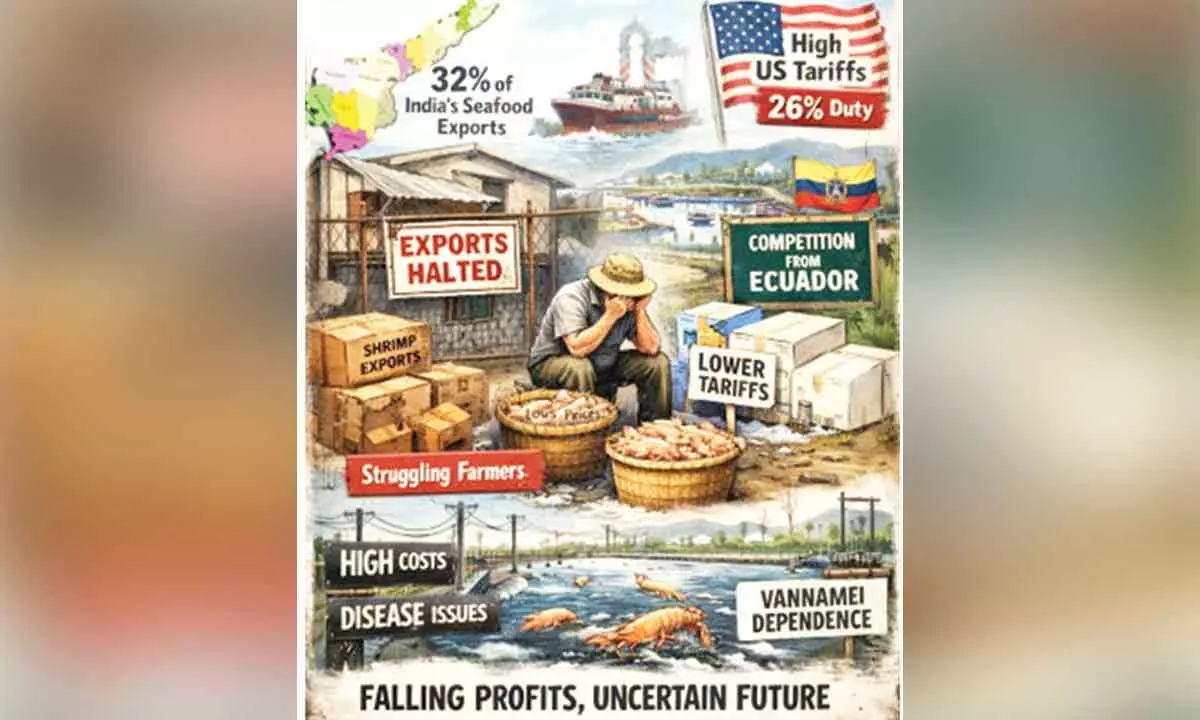
Farmers allege that some intermediaries are taking advantage of the situation by purchasing shrimp at depressed prices while maintaining higher margins in downstream trade. The crisis comes at a time when aquaculture producers are already grappling with rising feed costs, higher electricity tariffs, and recurring disease outbreaks in shrimp ponds.
The sector had only recently begun adjusting to tariff-related challenges in the United States market, prompting exporters to diversify shipments toward the Middle East, Europe, and Japan. However, the current tensions have now disrupted trade routes to several West Asian destinations as well.
Logistical pressures are also intensifying at the container terminal in Visakhapatnam. Port and shipping sources indicate that between 8,000 and 10,000 export containers could be forced to return if maritime routes remain unstable. Cargo from the port typically includes shrimp, medicines, meat, dairy products, pulses, fruits, rice and ferro alloys shipped to Gulf markets such as Oman, Qatar and Saudi Arabia.
Freight rates have also surged, with shipping companies reportedly increasing container charges by nearly US$ 3,000 due to war-risk surcharges imposed by insurers. Industry officials warn that if thousands of containers return simultaneously, port logistics and storage systems also could face severe strain.
Despite the immediate panic, some exporters believe the long-term impact may remain limited since a large share of India’s seafood exports to China, the United States, Europe and Japan typically move through shipping routes via Sri Lanka and Singapore.
Andhra Pradesh accounts for roughly 32–41 per cent of India’s seafood export value and nearly 80 per cent of its shrimp shipments, generating annual export earnings exceeding Rs 19,000 crore.
More than five lakh people depend directly or indirectly on the aquaculture sector for their livelihoods.
Industry stakeholders are now urging government agencies and the fisheries authorities to intervene quickly with market guidance and consultations to prevent panic harvesting and stabilise prices, warning that prolonged disruption could threaten one of India’s most valuable agricultural export industries.