Top 7 Best Ceramic Cookware In India 2026

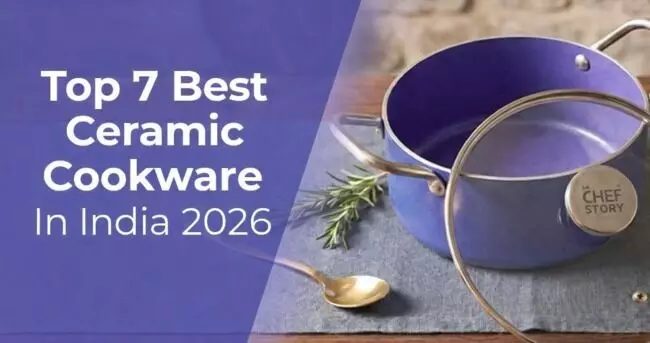
Discover the top 7 best ceramic cookware in India for 2026. Compare features, prices, pros & cons, and choose healthy, non-toxic ceramic cookware for your kitchen.
Over the last few years, Indian home kitchens have quietly changed. People are no longer just asking “what tastes good?” they’re asking “what’s safe to cook in every day?” That shift is one of the biggest reasons ceramic cookware is seeing strong demand across India.
Traditional non-stick pans often rely on chemical coatings that wear off quickly, forcing people to use more oil or replace cookware frequently. Ceramic cookware offers a middle path. It is designed to cook with less oil, heat evenly, and avoid the harsh chemicals that many home cooks are now actively trying to reduce.
Another reason for this rise is the cooking style. Indian food isn’t gentle it involves high heat, tempering, slow simmering, and frequent stirring. Ceramic surfaces, when made well, handle this balance better than many basic non-stick options.
Health awareness, oil control, and durability are no longer “nice-to-haves.” They are expectations. And ceramic cookware fits neatly into this mindset especially for households that cook daily and want consistency without compromising safety.
How We Chose These Ceramic Cookware Brands
Choosing the best ceramic cookware isn’t about labels or marketing claims. It comes down to how the cookware performs on a real Indian stove, with real Indian food.
The first factor we considered was coating safety. A good ceramic coating should be free from harmful chemicals and stable at the cooking temperatures commonly used in Indian kitchens. It should feel smooth not plasticky and should not degrade quickly with regular use.
Next is heat distribution. Uneven heating is one of the fastest ways to ruin both food and cookware. Ceramic cookware needs a strong base that spreads heat evenly, whether you’re making dosa on high flame or slow-cooking dal.
Indian cooking compatibility also mattered. From shallow frying to deep gravies, the cookware should handle frequent stirring, spices, and temperature changes without food sticking or burning.
We also evaluated gas and induction performance, since most Indian homes now use both. Cookware that performs well on only one surface no longer meets everyday kitchen needs.
Finally, long-term durability was critical. Ceramic cookware should perform consistently not just in the first few weeks, but after regular washing, daily cooking, and real kitchen wear and tear.
Top 7 Best Ceramic Cookware in India – 2026
1. The Chef Story
The Chef Story’s Calyx ceramic cookware is designed around everyday cooking habits rather than one-size-fits-all formats. The range focuses on medium-heat performance, low oil cooking, and ceramic coating safety instead of aggressive non-stick claims. Products like the ceramic dosa tawa, ceramic kadhai with glass lid, and ceramic fry pan are built for daily meals where control and consistency matter. The brand emphasises correct usage, material transparency, and long-term reliability, making it suitable for health-conscious home chefs across different cuisines.
2. Neoflam
Known for advanced ceramic coating technology and lightweight cookware aimed at low-oil cooking.
3. Xtrema
Specialises in pure ceramic cookware, appealing to users who prioritise material purity over convenience.
4. Royalford
Offers ceramic-coated cookware with a focus on everyday usability and modern kitchen appeal.
5. Korkmaz
Provides ceramic cookware with solid build quality, popular among users seeking European-style designs.
6. La Opala
Extends its ceramic expertise into cookware, suited for light, controlled cooking needs.
7. Cera+
Positions itself around ceramic-coated cookware for low-oil, everyday home cooking.
Buying Guide: How to Choose Ceramic Cookware in 2026
Ceramic cookware has improved significantly in recent years, but choosing the right option still requires attention to a few key details.
Start with coating thickness. A thin ceramic layer may look fine initially but tends to wear out faster. Thicker, well-bonded coatings generally last longer and retain their non-stick properties with regular use.
Next, examine handle quality. Handles should feel sturdy, balanced, and comfortable during longer cooking sessions. Loose or poorly fixed handles are often the first point of failure.
The base material is just as important as the coating. A solid base ensures even heat distribution and reliable performance on both gas and induction cooktops. Lightweight bases often lead to hot spots and inconsistent cooking.
Now for the part most brands avoid discussing: maintenance reality. Ceramic cookware is not “zero-maintenance.” It performs best when you:
- Preheat gently
- Avoid sudden temperature changes
- Use wooden or silicone utensils
If a brand promises “no maintenance at all,” it’s worth being cautious. Good ceramic cookware rewards basic care with long-term performance; it does not eliminate responsibility entirely.
Conclusion
Ceramic cookware is best suited for home cooks who value everyday safety, controlled oil usage, and consistent cooking results. It works particularly well in Indian kitchens, where cookware is used daily for a wide range of cooking techniques from high-heat tempering to slow-simmered curries.
When chosen thoughtfully, ceramic cookware offers a reliable middle ground between traditional non-stick options and heavier cookware. The key lies in understanding how it cooks, how to care for it, and what to realistically expect over time.
A well-designed ceramic range, such as the one from The Chef Story, fits naturally into this approach not by making exaggerated claims, but by supporting healthier, low-oil cooking in a practical and dependable way.