India cannot stay quiet to jihadist takeover of Dhaka

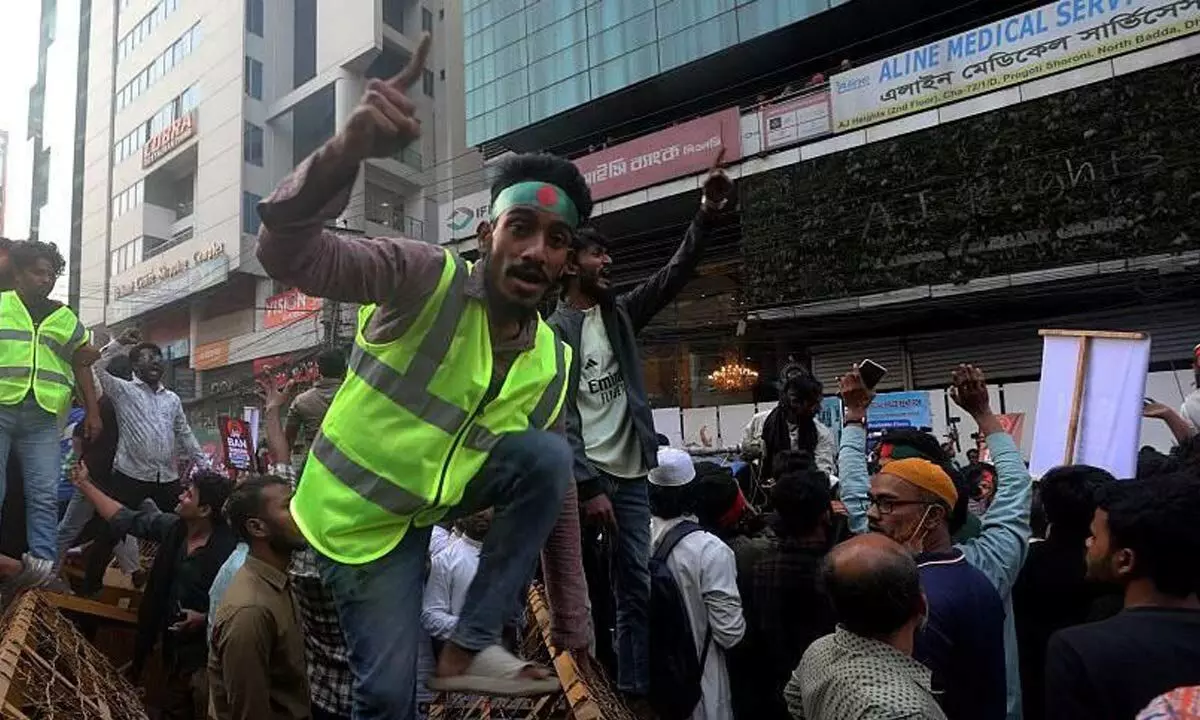
By burying Inquilab Mancha leader Sharif Osman Hadi, a fellow traveller of jihadists and a rabidly anti-India leader, next to the great revolutionary Bangla poet Kazi Nazrul Islam, the Muhammad Yunus administration has proved for the nth time that it has no regard for anything that is noble and virtuous in Bangladesh. The elevation of Hadi, who was assassinated last week, with Kazi Islam is an affront to Bangla patriotism, and the millions of people who died for independence from Pakistan in 1971, and, of course, literature. “Kazi Nazrul Islam was a symbol of tolerance and secularism. Osman Hadi represented extremism and identity-based hatred. Burying Hadi beside Nazrul is therefore a politically motivated decision,” said Awami League supporter Mostofa Amin on X. Hadi’s group reportedly provided muscle power and filled multiple voluntary organisations that gave life to the anti-Sheikh Hasina movement. He wanted Jamaat-e-Islami, a major fundamentalist force, to have a greater say in the state of affairs in the country. An Islamist, Hadi was among the leaders who violently overthrew the democratically elected government of Sheikh Hasina last year, indulged in violence and arson specifically targeting Hindus and other religious communities, and did everything to make Bangladesh a full-fledged Islamic state ruled by the Shariat.
He was assassinated on Thursday night, following which huge crowds, including many Islamists, unleashed mayhem on the streets of Dhaka. From attacks on cultural centres to vandalisation of the remnants of Sheikh Mujibur Rahman and targeting Indian diplomatic missions in many cities, Hadi’s followers carried out many violent acts. Media organisations like The Daily Star and Prothom Alo also suffered attacks. One of the victims was a Hindu youth, Dipu Chandra Das, who was lynched after a false accusation of blasphemy was slapped against him. A mob murdered him after a Muslim co-worker at his factory in Mymensingh district falsely accused Das of blasphemy. The Bangladesh government, however, has little regard for the safety and security of Hindus. This is not surprising as Yunus, himself an Islamist, showered fulsome praise on Hadi after his assassination,
In fact, he almost elevated him to the level of, say, the great Martin Luther King Jr. “O dear Osman Hadi, we have not come here to bid you farewell. You are within our hearts, and as long as Bangladesh exists, you will remain in the hearts of all Bangladeshis,” he said. For too long, the Indian government has allowed Yunus to run a government despite clear evidence of jihadist infiltration, anti-India hostility, and minority persecution. It is time New Delhi acted against his nefarious designs and actions. It needs to be emphasised that Bangladesh’s stability, pluralism, and secular character are not just internal matters; they are integral to regional security; and, therefore, India must be an active player, not a mute spectator, in the region. An Islamist-dominated Bangladesh emboldens radical networks, destabilises borders, and undermines decades of hard-won bilateral cooperation. The time has come for Delhi to reassess its approach. Diplomatic indulgence in the face of ideological subversion only strengthens those determined to erase Bangladesh’s secular soul. Standing up for the country’s founding values, its minorities, and its cultural icons like Kazi Nazrul is not interference—it is a defence of history, humanity, and regional peace. Our policy makers must seriously consider formulating and implementing some kind of Monroe Doctrine.