Trump’s men must be more circumspect in their remarks

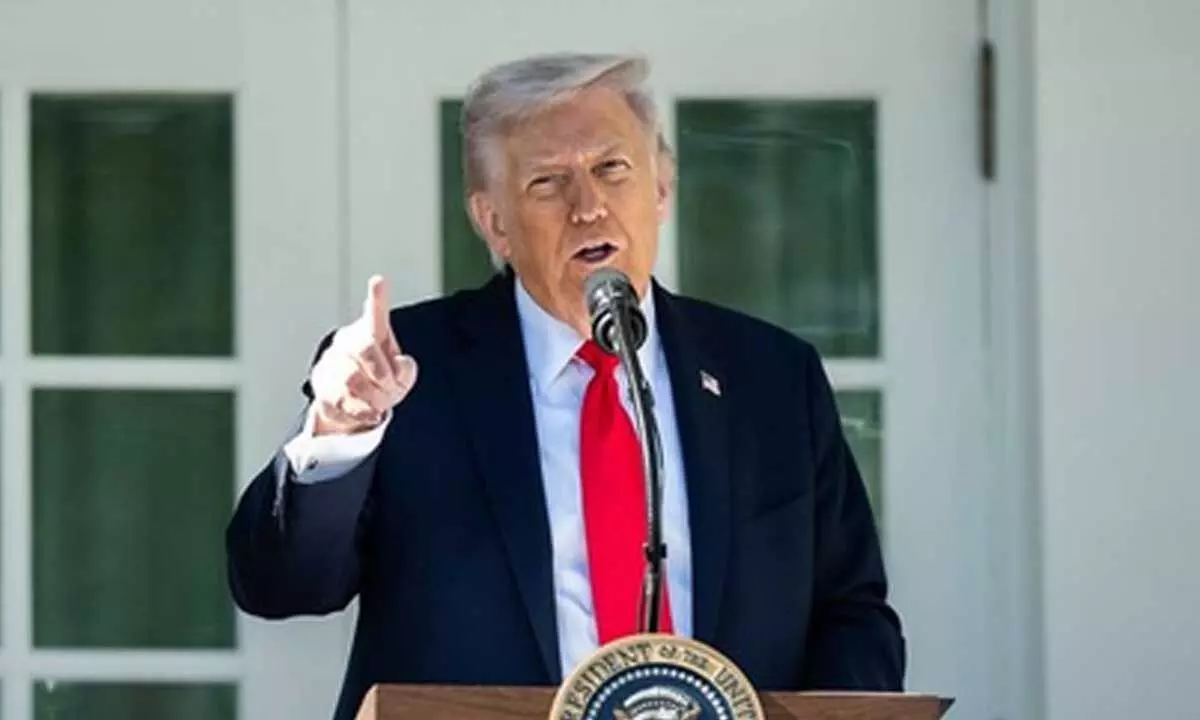
As it is, the Donald Trump administration is facing a lot of criticism from various quarters for the United States-Israel attack on Iran. Pointlessly provocative statements and actions by its functionaries make it more vulnerable to flak; the remarks on India purchasing Russian oil fall under this category. Thankfully, Trump himself has tried to ease tensions. But his administration should never have announced earlier that it had allowed India to import Russian oil shipments. Owing to rampant anti-Americanism, it is already very difficult to have any kind of Indo-US ties, be it the civil nuclear deal, the trade agreement, or tariff talks. Against this backdrop, US Treasury Secretary Scott Bessent comments in an interview to Fox Business on Friday were extraordinarily inconsiderate: “The world is very well supplied in oil. Yesterday, the Treasury (Department) agreed to let our allies in India start buying Russian oil that was already on the water.”
He went on to declare Indians as “very good actors. We had asked them to stop buying sanctioned Russian oil this fall. They did. They were going to substitute it with US oil. But to ease the temporary gap of oil around the world, we have given them permission to accept Russian oil.” The impression that such views, and that too from a senior official of the Trump administration, give is that White House is pulling strings in New Delhi, telling the Indian government what to do and what not to. And patting them on the back when they behave as “very good actors.” This wounds the esteem of the government of any self-respecting nation, especially the one run on macho nationalism. Trump has spoken on the issue of additional steps to stabilise markets: “If there were some, I would do it just to take a little of the pressure off.” Yet market stability cannot be achieved through supply adjustments alone. Confidence is a crucial factor. Financial markets react not only to actual disruptions but also to uncertainty about future developments. Clear communication from political leaders can therefore play a stabilising role.
When Trump suggests that he is prepared to take steps, if necessary, he is signaling to markets that the US is attentive to economic risks and willing to act if volatility becomes excessive. At the same time, such assurances must be backed by credible policy options. Investors and governments alike will closely watch whether Washington’s actions match its rhetoric. If tensions escalate further in the Middle East or if sanctions regimes create severe supply constraints, the US may find itself under pressure to make difficult trade-offs between geopolitical objectives and economic stability. Ultimately, the broader challenge lies in reconciling strategic confrontation with economic interdependence. Modern geopolitics operates in a world where conflicts in one region can quickly affect commodity prices, trade flows, and financial stability worldwide. The US, given its central position in the global system, bears a disproportionate share of responsibility in managing these spillover effects. Trump’s remark may therefore be read as an acknowledgment of this responsibility. He must also acknowledge his share of the responsibility in keeping relations with India more meaningful. In moments of geopolitical turbulence, the ability to stabilise markets becomes not merely an economic task but an essential component of diplomacy.