Home wood burning emerges as major winter pollution source: Study

Linked to thousands of premature deaths
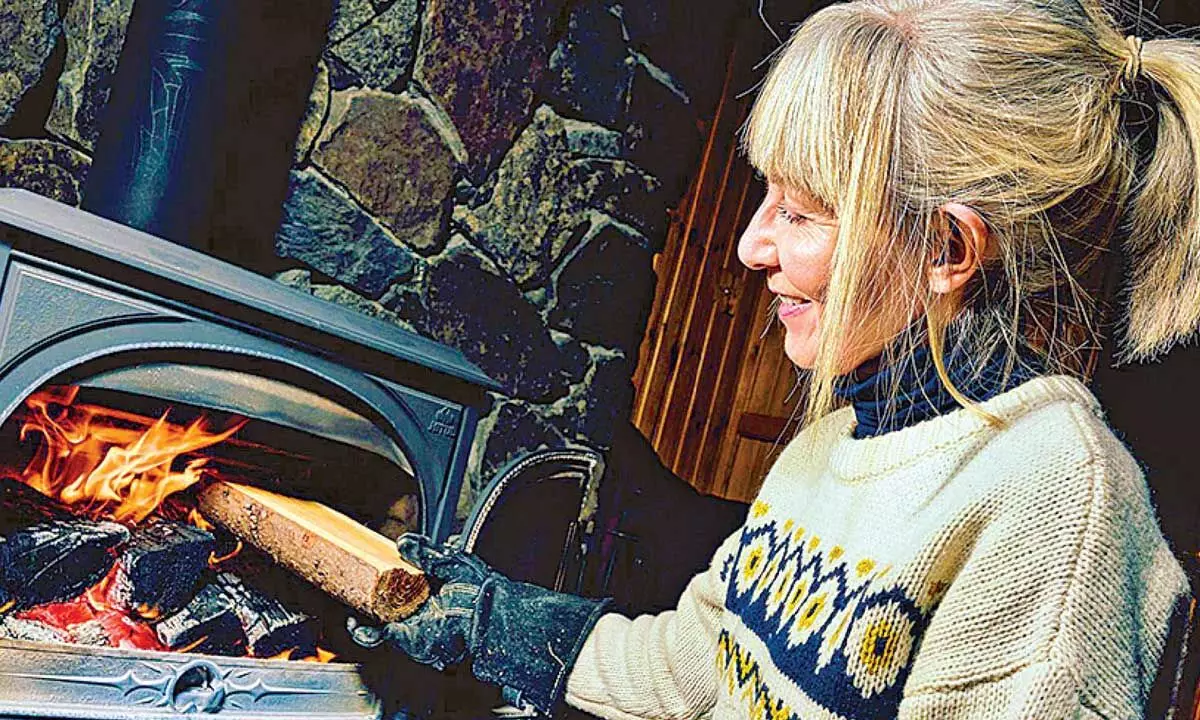
Burning firewood at home during winter months may pose far greater health and environmental risks than previously understood, according to a new scientific study that links residential wood burning to significant air pollution and thousands of premature deaths each year. The research, published in the journal Science Advances, identifies household wood burning as one of the leading contributors to fine particulate matter pollution during the cold season.
The study found that residential wood burning accounts for nearly 22 per cent of PM2.5 pollution in winter, making it one of the single largest sources of fine particulate pollution during the coldest months of the year. PM2.5 refers to microscopic particles that can penetrate deep into the lungs and bloodstream, increasing the risk of serious health conditions, particularly cardiovascular and respiratory diseases.
Led by researchers from Northwestern University in the United States, the modelling-based study estimates that pollution from residential wood burning is associated with approximately 8,600 premature deaths annually across the country. The findings highlight a largely overlooked source of air pollution, which often escapes the level of scrutiny directed at industrial emissions or wildfire smoke.
“Wildfire smoke receives significant attention for its harmful health impacts, but the pollution created by burning wood inside or around our homes is often ignored,” said Daniel Horton, Associate Professor of Earth and Planetary Sciences at Northwestern University and a lead author of the study. He noted that while only a relatively small percentage of households rely on wood burning as a primary heating source, the environmental and health impacts are disproportionately large.
The researchers argue that encouraging households to shift away from wood-burning appliances to cleaner or non-combustion-based heating systems could deliver substantial improvements in winter air quality. According to the study, even limited transitions could significantly reduce fine particulate pollution and lower associated health risks.
The analysis focused on various forms of residential wood burning, including emissions from wood-burning stoves, fireplaces, furnaces, and boilers. Using a high-resolution atmospheric model, the research team simulated how pollutants from these sources disperse and evolve in the atmosphere over time. The model incorporated a wide range of variables such as wind patterns, temperature changes, terrain, weather conditions, and atmospheric chemistry to generate detailed air quality estimates.
Horton explained that emissions from wood burning include both primary pollutants, such as black carbon, and secondary pollutants that form after interacting with other atmospheric components.
“Once these emissions enter the atmosphere, they are shaped by meteorological conditions and chemical processes, which can create additional particulate matter that further degrades air quality,” he said.
The study also revealed that the impact of wood-burning pollution is especially severe in urban and suburban areas.
High population density, combined with concentrated emissions and atmospheric transport, amplifies health risks. In many cases, smoke generated in suburban neighbourhoods drifts into densely populated city centres, where fewer homes burn wood but more people are exposed.
Notably, the research found that even cities in warmer climates are not immune.
Short-term cold spells, recreational wood burning, and long-distance atmospheric transport can expose these regions to elevated pollution levels, despite limited local reliance on wood heating.
The findings underscore the need for greater public awareness and policy attention around residential wood burning, particularly during winter. As communities look for effective ways to improve air quality and reduce preventable health risks, the study suggests that cleaner home-heating alternatives could play a crucial role in protecting public health.