Lines of memory: Syed Rayees Ahmed’s architectural meditations in ink
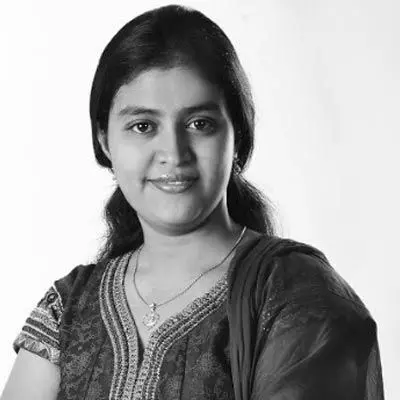
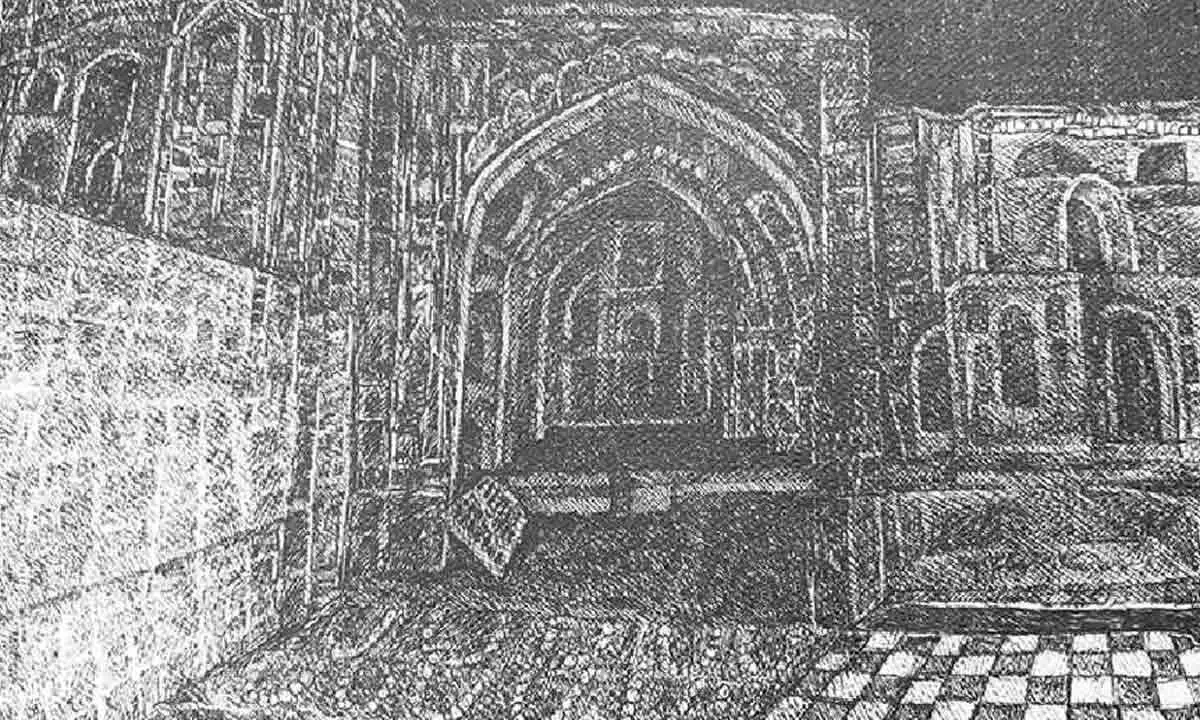
At the elegant halls of Chitramayee State Gallery of Art in Madhapur, art lovers are being invited to slow down and look closely. Parichay Arts Foundation has brought to the city a compelling solo exhibition of pen-and-ink drawings by artist Syed Rayees Ahmed — an exhibition that transforms line into memory and architecture into meditation.
Rayees, who completed his Master’s in Fine Arts from the University of Hyderabad, has steadily built a reputation through numerous solo and group exhibitions over the past few years. Yet this show feels particularly intimate. Rooted deeply in his lived experiences within Hyderabad’s historic quarters, his monochrome works move beyond simple representation. They are patient acts of observation — the result of decades of looking, studying, and absorbing the layered character of the city.
His drawings capture the quiet dignity of old streets, archways, balconies, and fading facades. The influence of Hyderabad’s Islamic, Mughal, and Indo-Persian architectural traditions is unmistakable, yet he never quotes them literally. Instead, these architectural memories dissolve into intricate networks of lines that reconstruct the city stroke by stroke.Art historian Koeli Mukherjee Ghose situates Rayees’ practice within a broader lineage of Indian modern and contemporary art. She observes that his meticulous attention to architectural detail recalls the urban studies of Ghulam Mohammed Sheikh, while his spatial sensitivity echoes the abstractions of Anwar Jalal Shemza. The textured environments in his work evoke the sensibility of Laxma Goud, and one might also draw parallels with Thota Vaikuntam, who transformed Telangana’s rural life into a deeply personal visual language.
Yet Rayees remains distinctly his own. While artists such as Jogen Chowdhury have used dense linear textures to convey psychological tension, and Sudhir Patwardhan has employed drawing for sociopolitical mapping, Rayees approaches the line as an architectural instrument. His strokes are structural rather than declarative, building cities without overt ideological commentary.
There is something almost archival about his process. His practice resonates with India’s rich traditions of architectural draftsmanship — from Mughal and Deccan atelier practices to colonial-era survey drawings and post-Independence heritage documentation. But unlike formal documentation, his drawings breathe. They are less about preservation and more about presence.
Ultimately, Rayees’ work reaffirms line as a form of care. Each stroke becomes an act of attentiveness, urging viewers to pause and recognize the cultural intelligence embedded within everyday structures. In an age of speed and spectacle, his pen-and-ink worlds offer quiet resistance — a reminder that cities are not merely built spaces, but repositories of memory.
The exhibition remains open to visitors until 7:00 pm on 15th February, offering one last opportunity to experience a city rendered in patient lines and enduring devotion.