The power of iconography: Encoding memory across time

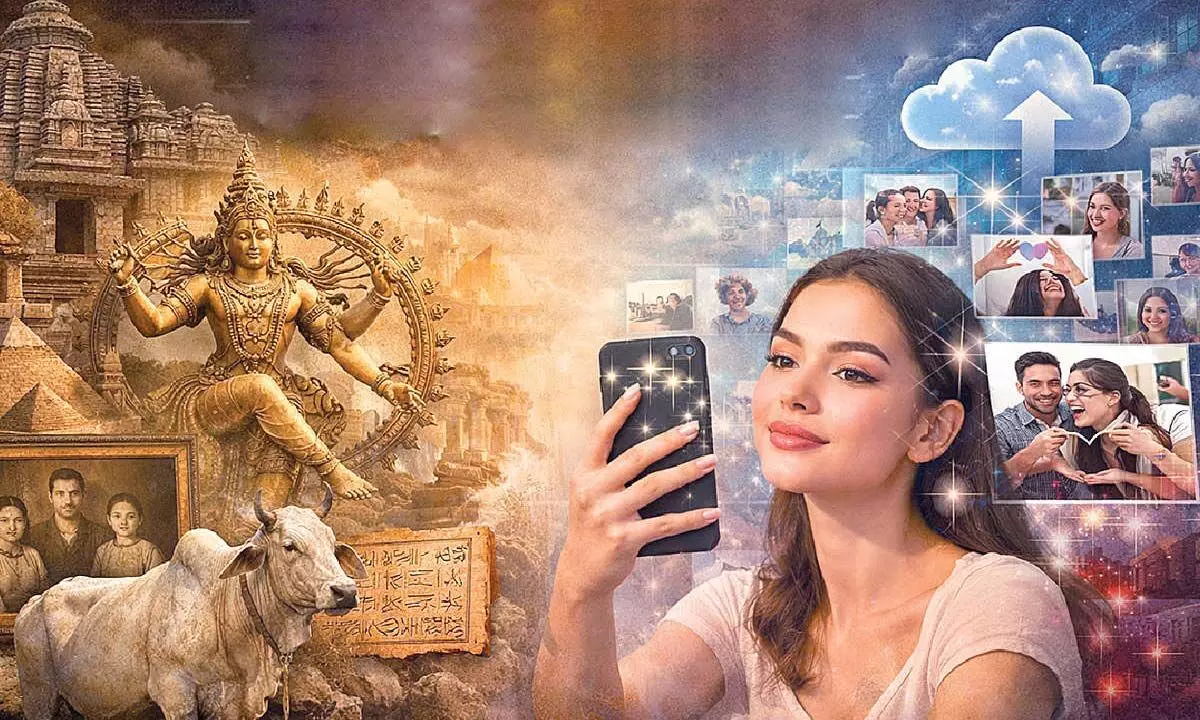
Every generation leaves behind images that shape memory. From temples and portraits to symbols layered with meaning, visuals were once deliberate acts of remembrance. Today, selfies, filters, and cloud albums are our icons—raising the question: what story will they tell the future?
Every generation leaves behind memories. Earlier generations left temples, paintings, family portraits and symbols layered with meaning. These were not random visuals; they were deliberate acts of remembrance.
Iconography is a system of memory. Through symbols, forms, postures and repeated visual codes, societies store knowledge, values and lived wisdom across generations. What we are witnessing today is not the disappearance of iconography, but a shift in who codes memory and how a shift with deep cultural consequences.
Our generation is leaving behind selfies, filters, cloud albums and face-altering apps. The uncomfortable question is this: what story will these images tell our great-grandchildren about who we were?
This is not a complaint against technology. It is a reflection on iconography—how societies choose to remember themselves.
Visual Algorithms of the Past
Ancient iconography functioned like a visual algorithm designed to be remembered, repeated and transmitted without distortion. Gestures (mudras), vahanas (associated animals), proportions of idols, materials, colours and directions were never decorative choices. They were carriers of meaning.
Posture reflected states of awareness. Weapons symbolised inner faculties. The number of arms represented a range of functions, not physical exaggeration. Through repetition in temples, homes, festivals and crafts, continuity was ensured.
Long before cameras, societies relied on images to store meaning. The purpose was not personal display but collective memory. An image was expected to last generations, which is why it carried philosophy, values and identity in a compressed visual form.
Contemporary Iconography: What Changed?
Contemporary iconography reveals how visual memory evolves—and sometimes erodes.
The cow is a clear example.
The introduction and normalisation of HF and Jersey crossbreeds altered farming practices and gradually reshaped visual memory. Indigenous breeds faded from posters, textbooks and public imagination. The humped cow, once a familiar sight, is now one of the few visual clues through which children can understand the role of cattle in agriculture before mechanisation.
Spiritual imagery offers another illustration.
Modern representations of Shiva in stylised Adiyogi forms or contemporary interpretations like Linga Bhairavi are minimalist and aesthetic-driven. These forms did not exist historically, yet they have spread rapidly through digital platforms. Today, they appear in cars, dining rooms, corporate spaces, social media feeds and personal spiritual spaces.
Creation is not the issue. Replacement without context is.
Semantic Drift: When Meaning Slips
This replacement leads to semantic drift where images survive but meanings slide.
In classical iconography, Shiva consuming poison symbolised absorbing toxicity without transmitting it, representing restraint, responsibility and cosmic balance. In many contemporary visuals, this narrative has slipped. The symbol remains, but its ethical depth is diluted.
At the same time, collective memory is shifting into personal memory, preserved primarily through selfies. Look at what dominates phone galleries today:
●Exaggerated facial expressions
●Trend-based hairstyles
●Identical poses copied from social media
●Faces optimised for attention rather than authenticity
Seventy years from now, when a great-grandchild opens these archives, they may not see family resemblance, cultural context, or social values. They may only see performance. When such images become the primary historical record, memory turns into a mood momentary, exaggerated and detached from deeper identity.
When Faces Lose Lineage
Earlier generations could trace ancestry visually. Facial features carried continuity, nose lines, jaw structures, expressions passed down across decades.
Today, advances in cosmetology and digital enhancement have changed this:
●Filters reshape facial structure
●Cosmetic procedures standardise appearance
●Apps smooth away age, texture and regional traits
For the first time in history, human faces are being edited away from ancestry. Future generations may struggle to see where they came from not because records are missing, but because faces no longer carry lineage. This is a quiet but profound break in visual memory.
Who Is Coding Memory Today?
Memory today is coded by designers, influencers, brands and algorithms, driven by visibility, engagement and monetisation rather than continuity. Accountability is fragmented, context is optional and popularity decides permanence. What spreads fastest becomes memory, regardless of depth or accuracy.
From Sacred Responsibility to Content
The real rupture lies here: ancient societies treated iconography as a sacred responsibility. Modern society treats it as content.
The way forward is not rejection but anchoring new forms. This means sensitising creators to symbolic lineage, teaching children to read images rather than merely admire them and preserving indigenous visual memory alongside innovation to ensure continuity.
How Should We Archive Our Era?
Every smartphone owner today is an icon-maker. With taps and uploads, we are shaping public memory.
Visual literacy is essential. It begins by asking:
●What elements are present or omitted?
●Does this image have historical or cultural roots?
●What was its original intent?
●What new meaning is being added or removed?
●Who benefits from this reinterpretation?
●What values does this image normalise?
●What memory will future generations inherit?
Let us give our digital children a meaningful inheritance content that helps them understand life simply, not archives that confront them with complex, disconnected visual puzzles.
(The writer is a creative economy expert)