Classical Dance Festival celebrated

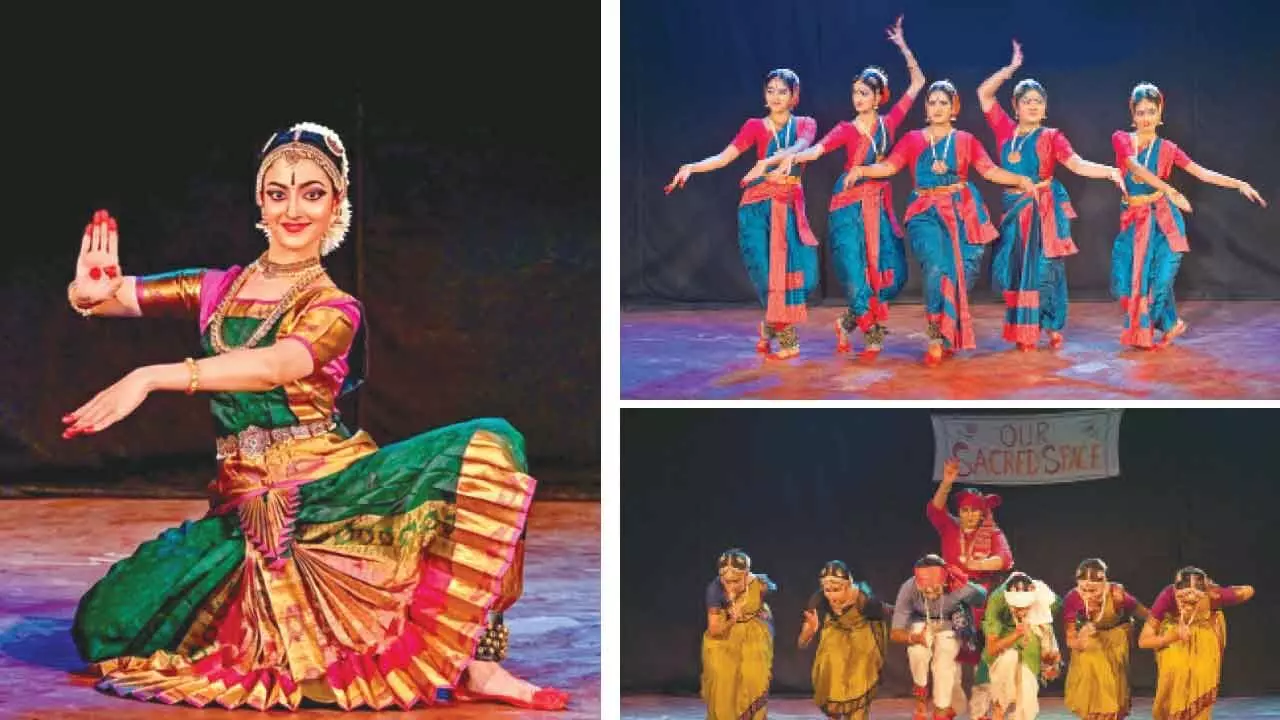
The Sankranti festival was celebrated at Our Sacred Space Auditorium, Secunderabad, with classical dance performances on 16th and 17th January. The first day was inaugurated by the solo Bharatanatyam recital of Aishwarya Valli Kakulapati. She started with a vibrant ‘Thodayamangalam’ in ‘Ragamalika,’ uniquely depicting the greatness of five deities. The lively jathis stood out as Aishwarya went through the composition with lithe grace. She looked pretty as a picture in green and pink ‘aharya.’
Ganesha was radiantly described as Mahaganapathi, Murugan as processing on a peacock with his consorts. Nataraja, of fiery mien, burns away negative energies; Ambika as Shakthi is valorous and compassionate. Chandikeshwara, immersed in prayer, grants boons.
The ‘Mahalakshmi Kauthuvam’ was soulfully done as her blessings are invoked—she who resides in Vishnu’s chest, represents prosperity, and bestows happiness. This item gave scope for both nritta and abhinaya, superlative in quality. ‘Kadana Kuthuhalam’ brimmed with energy as the crisp ‘Thillana’ included elegant lyrics beautifully brought out in abhinaya by Aishwarya.
The next Kuchipudi group performance included Dr. Himabindu Kanoj’s senior students Meghana, Pranathi, Laasya, Keerthana, and Kina. ‘Gajananayitham’ in ‘Vegavahini’ was full of sculptured poses as the students formed groups to depict the composition in arresting stances. The Lord of Ganas came to life.
‘Jaya Sur Nayak’, a bhajan by Tulsidas, was an excerpt from Ramcharitmanas. A very melodious song, it showcased the students’ abilities to perfection. This bhajan glorifies Vishnu as the immortal Mukunda who resides in all our hearts. He is truth, consciousness, and bliss combined.
‘Revathi’ ragam is popularly used in Vedic chants. ‘Mahadeva Siva Shambho’ describes Lord Shiva as the protector and provider, embodiment of kindness, and Lord of the Universe, balancing it with the cycles of birth and death. The cosmic dancer enchants with his fierce tandava and gentle lasya. He holds the River Ganga (shown in the sanchari) and is Lord of Animals too.
‘Nada Tanumanisham’ of Thyagaraja praises Shiva as the Lord of Art. The profound composition was expertly done, as the exemplifier of music bestows the essence of the Samaveda. The ‘swaras’ are said to be derived from animal sounds.
The guests who attended were Rama Bharath, Joint Secretary, Kalasagaram, and U V L Ananda, author.
The second day of the festival opened with a Kuchipudi solo by Sathwika Reddy. Sathwika was astonishing in her proficiency as, in orange ‘aharya,’ she showcased her skill through an outstanding interpretation of ‘Pari Pari Nee Padame’ by Balamurali. This kriti is a passionate outpouring of surrender at the divine feet of the magnificent Lord Ganesha—the compassionate one who is the symbol of sanctity and auspiciousness, and the first of the deities ritually propitiated in prayers.
Sathwika’s sense of balance was precise as she went through ‘angika abhinaya’ of excellent fidelity to her style, exhibiting the flowing patterns of Kuchipudi.
‘Singarinchukoni Vedalere’ is an excerpt in ‘Suruti ragam’ from Thyagaraja’s famous musical opera ‘Nauka Charitram.’ A predominantly ‘abhinaya-based piece,’ its intricate rendition delighted the audience. The gopis, getting ready for a boat ride in the company of Krishna, are excited with anticipation. They prepare themselves in delicious awareness that they have to look their best, combing their tresses, arranging flowers in their hair, and decking themselves in jewelled ornaments, getting ready to tease the Lord—all shown in picturesque detail through measured gestures.
The last piece in ‘Ragamalika’ was the Shiva Tarangam ‘Shiva Shiva Bhava Bhava’ of Narayana Teertha. Competently executed with flexible vigour, it addresses the Lord of Kailasa as revelling in his own dance of bliss. The five faces of the Lord were likened to the five elements.
The Bharatanatyam students of Praveena Vadapalli started with a sprightly and stirring Surdas bhajan, ‘Gopi Gopala’, celebrating the ‘Rasleela.’ The dance of love of Krishna and the gopikas was stirringly enacted as they formed groups, broke off, alternated, and pirouetted on stage, while the choreography symmetrically aligned the students without missing a beat. Though quite young, the talented students carried off the composition with aplomb.
Packed with energetic rhythm, the sounds of the ‘mridangam’ and the jingling of ornaments were rendered emphatically.
An ‘Annamacharya keertana,’ ‘Brahmam Okate’, was crisply rendered with folksy movements between the ‘charanams,’ enunciating the Advaita philosophy that the supreme reality is the same in essence wherever the individual soul may be contained.
‘Krishnam Kalaya’ is a lilting tune where Krishna is praised in rhyming stanzas describing him as the absolute truth, quintessence of the Vedas, and embodiment of love. The students were graceful in their steps as they moved to the jathis.
The concluding concept item fittingly ideated the traditions of Sankranti, throwing light on fire kindled for Bhogi, snacks prepared, wandering minstrels, and gaily decked bulls which nod their heads and dance to their keeper’s music. The students, in apt costumes, were heartily applauded by the audience as their novel theme caught attention.
The last day of the festival was graced by guests—senior Bharatanatyam Guru Dr. Rajeswari Sainath and Rajeswari Kalyanam, Editor, fridaywall.com.