Building future-ready classrooms through interdisciplinary education

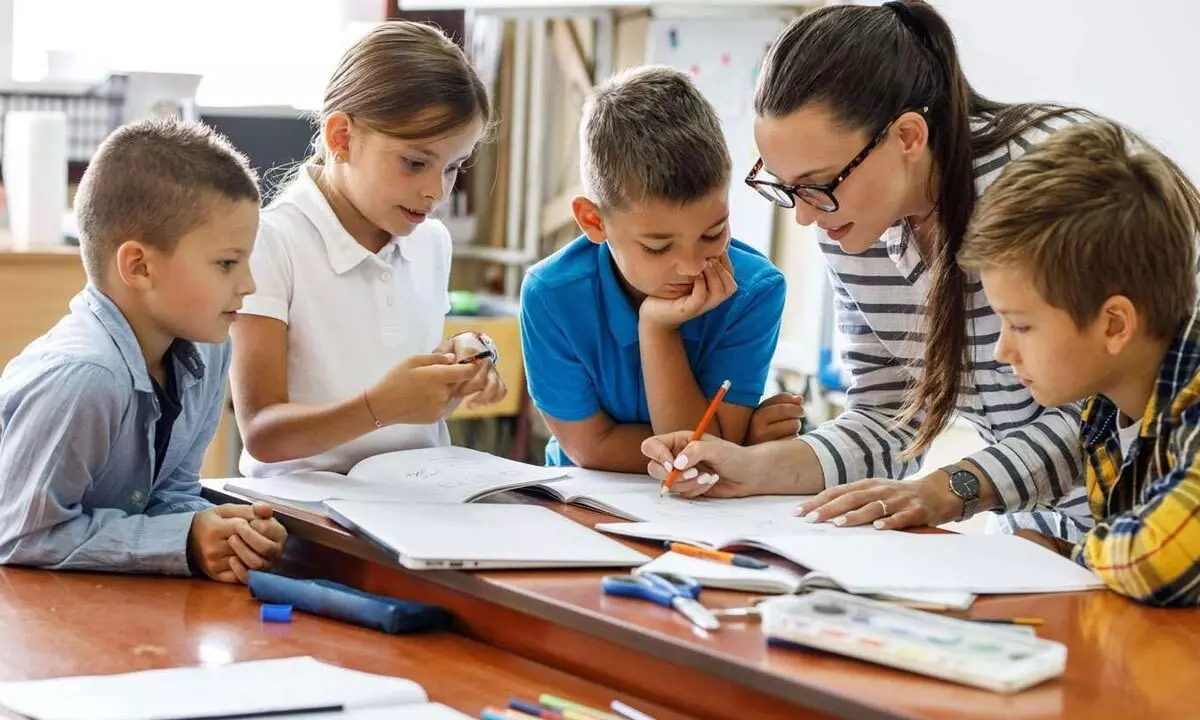
Indian education today is being shaped by the demands of a global economy, the influence of digital transformation, a growing recognition of the importance of experiential learning and real-world challenges over examination results
Indian education today is being shaped by the demands of a global economy, the influence of digital transformation, a growing recognition of the importance of experiential learning and real-world challenges over examination results.A 2024 Ministry of Education report revealed that over 68% of students in grades 6–12 still rely on rote memorization, with fewer than 30% engaging in critical thinking or problem-solving, highlighting the urgent need to rethink not just what children learn, but how and why they learn it. This is where holistic learning becomes essential. By weaving together interdisciplinary approaches,arts, science, technology, and social awareness, students are prepared not just for exams, but for life. They gain the creative, analytical, and adaptive skills needed to navigate an increasingly complex world with confidence and purpose.
Get, Set, Action - Learning Beyond the Page
Schoolsneed to design their curriculum around interdisciplinary learning, which integrates knowledge, methods, and perspectives from multiple subjects to solve problems and explore complex topics more holistically. For example, a project designing a sustainable home may combine physics (energy efficiency), mathematics (measurement and budgeting), and art (aesthetic design). Students learn how disciplines interact, how science enhances design, or how storytelling can amplify a scientific message. Whether it’s creating animations to explain climate change, building robots that respond to environmental cues, or composing music to simulate ocean waves in an ecology lesson, interdisciplinary education brings abstract concepts to life. This approach not only deepens understanding but also equips learners with the adaptability and creativity essential in the real world.
Codes, canvas and collaboration
Implementing interdisciplinary education requires dynamic tools and strategies that make learning immersive and experiential. Several schools are moving beyond textbooks and investing in sessions or events with emerging technologies like Augmented and Virtual Reality (AR/VR), enabling students to explore topics such as space through immersive, hyper-realistic experiences.Students are encouraged to take part in coding contests and model-making events, fostering their scientific curiosity and presentation skills. Art workshops, led by industry professionals, introduce them to ideation, visual storytelling and character design.By integrating these methods, classrooms transform into active labs of discovery, where science meets storytelling, and logic pairs with imagination.
Suiting Up Our Superheroes, Investing in Teacher Excellence
Teacher training is the cornerstone of successful interdisciplinary education. To effectively blend disciplines like science, arts, and technology, educators need robust support and upskilling. This is being addressed through hands-on workshops, cross-disciplinary seminars, and collaborative lesson planning where, for instance, an art teacher might work with a biology teacher to help students explore anatomy through creative visualizations.
According to a 2024 UNESCO education report, schools that invest in teacher training for integrated learning see up to a 27% improvement in student engagement. Online communities and peer mentoring further enable teachers to share resources, co-create modules, and stay updated with global best practices. With guidance from experienced mentors and the integration of digital tools, teachers are not just facilitators, they’re catalysts of a more connected, creative learning experience.
From Outdated Templates to New Blueprints, Moving Ahead Together
For interdisciplinary education to truly take root across Indian schools, its implementation must be thoughtfully tailored to meet the diverse needs of learners across age groups. Curriculum frameworks need to be redesigned to encourage seamless connections between subjects, like blending science with storytelling or math with music, to spark curiosity and deeper learning. Bringing real-world challenges into classrooms through partnerships with industries and NGOs helps keep education relevant. Students should have more choice in what and how they learn, allowing for creativity and ownership through hands-on, cross-domain projects. Teachers need ongoing support, not just one-off workshops, through mentorship and peer collaboration to confidently deliver such learning experiences. Lastly, to ensure all students benefit, schools must be equipped with accessible resources like modular kits, mobile labs, and digital tools, even in under-resourced areas.
To prepare students for a fast-changing world, schools must adopt interdisciplinary learning that blends arts, science and technology. This shift demands immediate action from educators, policymakers and communities to build future-ready classrooms that empower students to lead with confidence, innovate boldly and thrive in a fast-paced world.
(The author is Principal at Orchids The International School, Thoraipakkam, Chennai)