Engineering education in agriculture, nutrition, and holistic health stabilisation

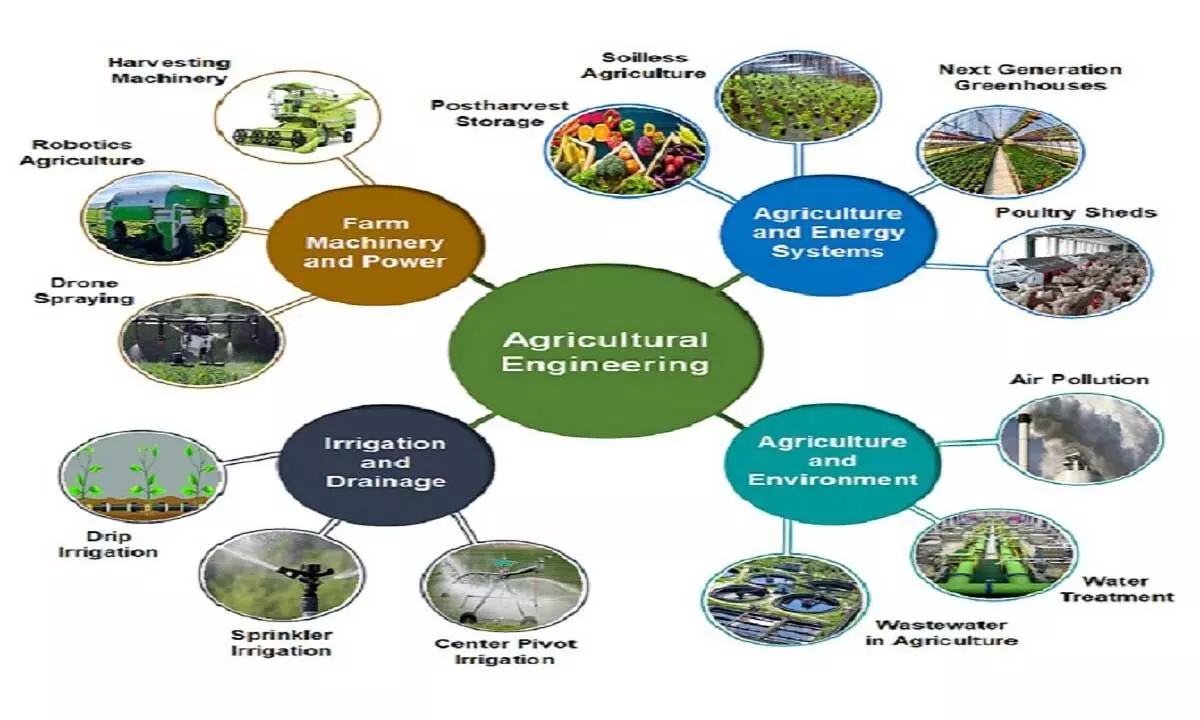
Engineering education is increasingly recognised as a cornerstone in addressing global challenges related to agriculture, food security, nutrition, and population health.
Engineering education is increasingly recognised as a cornerstone in addressing global challenges related to agriculture, food security, nutrition, and population health. As the world grapples with rising populations, climate change, and dwindling natural resources, integrating engineering principles into agriculture and health systems has become essential. Here are a few insights into engineering students that present a broader perspective of the role of engineers and their education, playing a vital role in the changing landscape of its practical applications.
Addressing global food security challenges
With the global population expected to exceed 9 billion by 2050, meeting the increasing demand for food poses a significant challenge. Shrinking arable land and climate variability further complicate the issue.
Engineering education prepares students to address challenges using advanced technologies such as precision farming, drip irrigation, automated machinery, and vertical farming. These innovations enhance agricultural productivity while also conserving land and water resources. For example, controlled-environment agriculture methods, such as hydroponics and vertical farming, enable high yields in limited spaces, directly boosting food availability and stability.
Enhancing nutritional quality through technology
Beyond simply increasing food quantity, engineering also improves food quality. Engineering-led innovations in food preservation, cold chain logistics, packaging, and biofortification help maintain nutrient integrity and extend shelf life. Advances in biotechnology contribute to the development of fortified crops and functional foods, addressing micronutrient deficiencies that affect large populations. Through these methods, engineering plays a direct role in improving health outcomes via better nutrition.
Promoting sustainable agricultural practices
Sustainability lies at the core of engineering contributions to modern agriculture. B.Tech programs emphasise eco-friendly technologies such as renewable energy-powered equipment, soil and water conservation techniques, and waste recycling systems. Precision agriculture, powered by data analytics, sensors, and GPS, enables resource-efficient farming, reducing environmental harm. These practices help maintain ecosystem integrity and ensure long-term food production.
Integrating holistic health and agricultural systems
Engineering education supports the creation of integrated systems that connect agricultural practices to health outcomes. Innovations such as wastewater treatment, safe irrigation systems, and rural infrastructure development mitigate disease risks and promote better sanitation. Access to clean water and hygienic conditions is essential for proper nutrient absorption and overall health, illustrating how engineering enhances holistic well-being.
Building resilience to climate change and environmental stress
Climate change poses an increasing threat to the stability of agriculture and public health. Engineering programs train students to develop infrastructure and technologies that can withstand climate stress, such as flood-resistant storage, drought-resilient irrigation systems, and renewable energy sources. Landscape engineering, which reshapes terrain for better water management, helps buffer the effects of extreme weather and stabilise food production.
Driving agricultural transformation and economic growth
Engineering education acts as a catalyst for the transition from subsistence farming to commercial, technology-intensive agriculture. This transformation drives productivity, creates jobs, and increases income levels. For instance, increased focus on agricultural engineering in the development strategies like ‘Drone Didi’s in the national agriculture development strategy is an indicator of improved mechanisation and value addition. Engineering graduates are well-equipped to lead such modernisation efforts, fueling both food and economic security.
Fostering interdisciplinary collaboration
Agricultural and health-related challenges require input from multiple disciplines. Engineering education is increasingly incorporating interdisciplinary components, integrating fields such as biology, environmental science, nutrition, and social science. For example, integrating food technology with environmental engineering helps develop systems that balance crop yield, food safety, and ecosystem health. The collaborations enable holistic and scalable solutions.
Empowering rural and smallholder farmers
Engineering innovations adapted for rural settings help smallholder farmers access affordable and efficient tools. Programs emphasising appropriate technology development bridge the gap between research and practical application. Empowering farmers with these tools improves productivity, boosts incomes, and enhances health outcomes, stabilising communities economically and socially.
Advancing research and innovation
B.Tech programs foster research and innovation, encouraging students to explore new technologies and methods that improve agricultural practices and health outcomes.
Thus, engineering education plays a vital role in shaping a sustainable and healthy future for agriculture and nutrition on national and global fronts.